

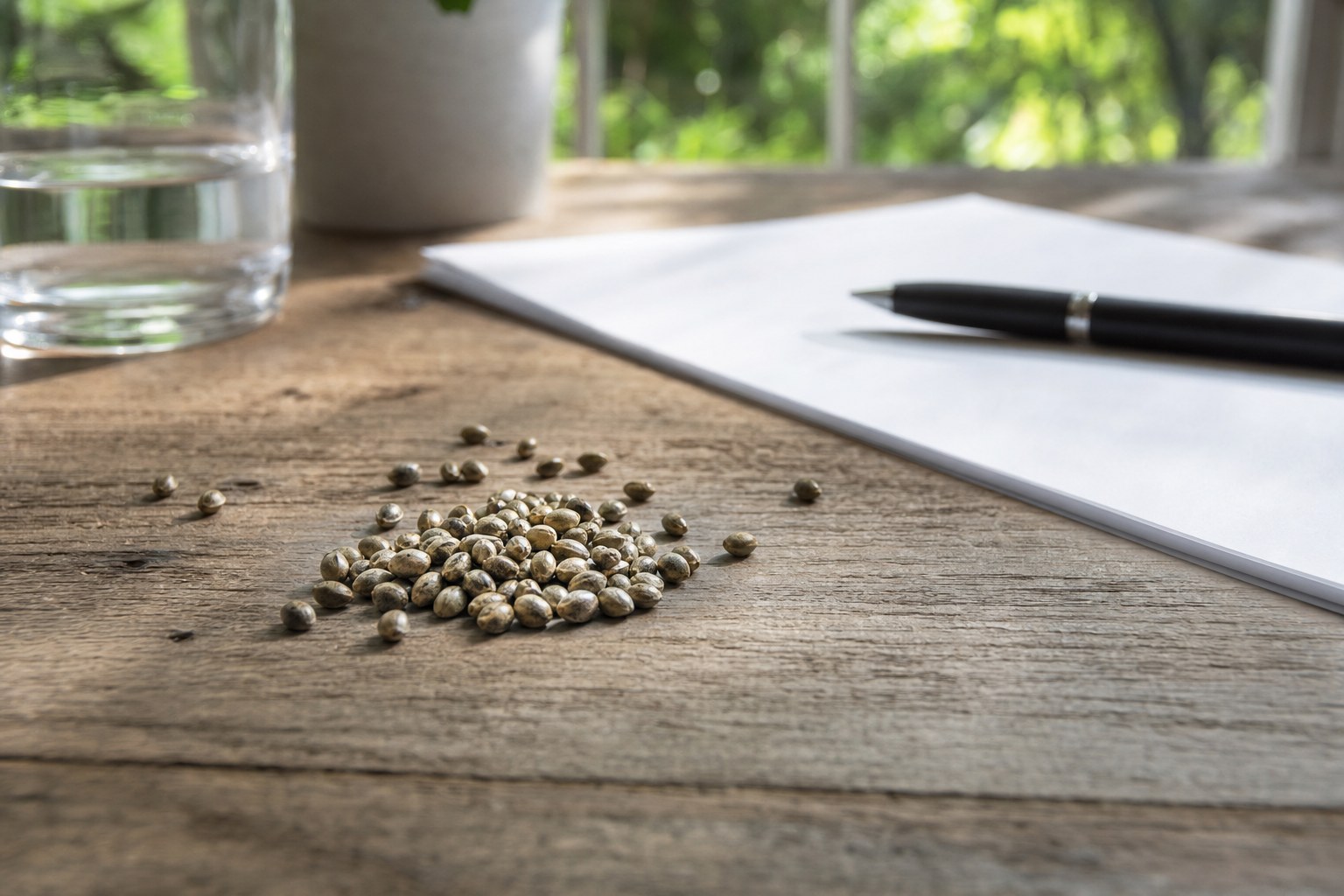
Are cannabis seeds legal in Australia? There is no single yes-or-no answer. Legality can depend on the seed’s viability, your location, how it is supplied or imported, and what you intend to do with it. Buying, importing, possessing, germinating and cultivating cannabis seeds are separate legal questions, so permission for one activity does not automatically permit another.
By the Outback Seed Bank grow team
Key takeaways
- Cannabis seed laws involve both Commonwealth requirements and the criminal or regulatory laws of each state and territory.
- A seed may be assessed differently according to whether it is viable, sterilised, intended as food, held for an authorised purpose or connected with planned cultivation.
- Purchasing seeds within Australia does not by itself establish that possession, germination or cultivation is lawful.
- Seeds ordered from overseas must satisfy import and biosecurity conditions as well as any other applicable controls.
- A prescription for a cannabis product generally does not give a person authority to import seeds or grow cannabis at home.
- Rules and enforcement settings can change. Check current official requirements for your location and obtain independent legal advice when your circumstances are unclear.
The short answer: are cannabis seeds legal in Australia?
People asking whether cannabis seeds are legal in Australia often expect one nationwide rule. In practice, several legal layers can apply at the same time. Commonwealth law governs matters including international importation, customs controls and biosecurity. States and territories separately regulate possession, supply and cultivation within their borders.
The physical seed also matters. Some legal frameworks distinguish between viable seeds capable of germination and non-viable or processed seeds intended for permitted commercial uses. Labels such as souvenir, novelty, collectible or bird seed do not necessarily decide the legal character of an item. Authorities may consider what the product actually is, whether it can germinate and the surrounding circumstances.
Purpose can also be relevant. Seeds held under a valid commercial, research or industrial hemp authority are not in the same position as seeds acquired by an individual for unauthorised home cultivation. Documentation, licence conditions and approved supply channels may all affect the outcome.
For that reason, a statement that cannabis seeds are simply legal to buy can be incomplete and potentially misleading. The more useful question is whether a particular person may lawfully acquire, receive, possess, import or use particular seeds in a particular jurisdiction.
Why the legal status depends on the circumstances
Australian cannabis rules focus on more than the point of sale. A transaction can involve an advertiser, seller, payment, postal carrier, recipient and intended use, potentially across several jurisdictions. Each stage may raise a different issue.
Relevant facts may include where the seller and buyer are located, whether the package crosses the Australian border, the species and variety represented, seed viability, quantity, packaging, accompanying documents, and any evidence of an intention to cultivate. No single factor should be assumed to settle every case.
Buying seeds within Australia
A domestic purchase avoids the international border, but that does not make it automatically lawful. State or territory controls may apply to the seller, buyer, seed and intended activity. Postal carriage between two Australian jurisdictions can also involve different local rules at dispatch and destination.
Buyers should be cautious about relying on website wording or a seller’s claim that seeds are lawful as souvenirs. Commercial descriptions do not override legislation. A seller accepting an order is not confirmation that the recipient may legally possess the contents.
Industrial hemp seed is another area where context matters. Low-THC hemp programs operate under regulated licensing systems, and seed used for food may be processed so it is not viable. The existence of lawful hemp industries does not create a general right to acquire viable cannabis seed for personal cultivation.
Importing seeds from overseas
Importing is a distinct legal step. Goods entering Australia are subject to Commonwealth border and biosecurity controls, regardless of whether the same item could be possessed in some domestic setting. Cannabis seeds may require specific permissions, documentation, processing or an approved end use. Some consignments will not qualify for entry.
Australia’s biosecurity system also examines plant material for pest, disease and environmental risks. A seed order can therefore raise biosecurity issues independently of drug-control laws. Small quantities, discreet packaging, a gift description or a claim that seeds are collectibles do not create an exemption.
Consignments that do not meet entry conditions may be held, inspected, exported, destroyed or referred for further action. Additional consequences can depend on the facts and applicable law. Before placing an overseas order, check the current conditions for the precise commodity, origin, intended use and destination rather than relying on an old forum post or general summary.
Possession, germination and cultivation are separate issues
Possessing a seed is not legally identical to germinating it. Germination begins the process of producing a cannabis plant, while cultivation laws can apply to growing, tending or maintaining plants. The point at which conduct falls within a statutory definition depends on the wording used in the relevant jurisdiction.
This distinction means that even where possession of certain seed is not expressly prohibited, germination may still expose a person to cultivation offences. Equipment, communications, growing media and other surrounding facts may be considered when authorities assess intention. Conversely, a person operating under a valid licence must still remain within the licence’s scope, location, plant type, quantity and record-keeping requirements.
Harvested cannabis, live plants, viable seeds and processed hemp foods may also sit in different legal categories. Do not assume that a rule applying to one category applies to all the others.
How federal, state and territory rules may apply
Australia has a federal system, so Commonwealth and local rules can overlap. A person may need to satisfy both. A local allowance does not remove Commonwealth border requirements, and Commonwealth permission does not necessarily authorise possession or cultivation under state or territory law.
Commonwealth import and biosecurity requirements
At the national level, importing controlled plant material can require an import licence, permission or other formal authority. Biosecurity conditions may separately specify eligible seed types, required declarations, commercial packaging, testing, processing or end uses. Conditions can vary according to the seed and country of origin.
Import requirements apply when goods cross the border, including items sent by ordinary post or courier. The fact that seeds are easy to mail does not change their legal status. Travellers carrying seeds in luggage are also importing them and must comply with border declarations and entry conditions.
Prospective importers should identify the exact product rather than search only for “cannabis seeds”. Viable propagation seed, sterilised food seed and seed intended for licensed research may have materially different requirements. If a permit or licence is needed, it should generally be in place before shipment, with all conditions followed precisely.
State and territory cannabis laws
Each state and territory has its own legislation covering cannabis possession, supply and cultivation. Offence definitions, available exceptions, police practices and penalties are not uniform. Quantity, number of plants, cultivation method, location and evidence of supply may affect how conduct is classified.
The Australian Capital Territory has limited rules allowing some conduct by eligible adults in specified circumstances, but these rules are narrow. They do not establish a commercial market, permit every method of cultivation or override Commonwealth law. Seeds, supply, public places, household limits and federal land can raise additional questions. Anyone relying on an ACT provision should read its current terms carefully.
Elsewhere, personal possession or cultivation may remain an offence even if a jurisdiction uses diversion, cautions or civil responses in some circumstances. A less severe response is not the same as general legality. Administrative policies may also have eligibility limits and do not bind every decision.
Moving seeds across a state or territory border can change which laws apply. The buyer’s home jurisdiction is especially important because receipt, possession and any later activity occur there.
Licence, permit and prescription considerations
Australia permits regulated cannabis and industrial hemp activity through formal frameworks. Businesses, researchers, farmers and other authorised participants may hold licences or permits covering defined activities. These authorities commonly impose strict limits involving security, approved genetics, sites, responsible personnel, reporting and disposal.
A licence is not a broad permission for any cannabis-related conduct. It applies only to its holder and authorised activities. Employees, contractors and recipients must also act within the relevant framework. Seed acquired outside an approved channel may not become lawful merely because the buyer participates in another authorised activity.
A prescription authorises access to the product specified through the applicable regulated pathway. It generally does not authorise a patient to import viable seed, produce seed, germinate cannabis or cultivate plants at home. These are separate activities governed by different rules.
Industrial hemp licences likewise apply to approved low-THC varieties and defined commercial purposes. They are not ordinary gardening permissions. Eligibility, land approval, testing and seed provenance requirements may apply, and crops outside authorised thresholds can create serious compliance issues.
What to check before buying cannabis seeds
Before making a purchase, work through the legal questions in order. Start with the destination jurisdiction, then determine whether the seeds are domestic or imported, viable or non-viable, and connected with an authorised purpose. Avoid assuming that payment availability, delivery estimates or product listings establish compliance.
- Identify the state or territory where the seeds will be received and kept.
- Check how current law defines cannabis, cannabis seed, a cannabis plant and cultivation.
- Determine whether viability or processing changes the seed’s classification.
- Consider whether quantity, packaging or intended use affects the position.
- If goods cross the border, check Commonwealth import and biosecurity conditions before ordering.
- Confirm that any claimed licence, permit or exemption actually applies to you, the seed and the proposed activity.
- Keep accurate copies of genuine approvals and required commercial documents.
- Seek independent legal advice where the answer remains uncertain.
Confirm the rules in your state or territory
Read the current legislation and official guidance for the place where possession or use would occur. Pay attention to commencement dates and recent amendments, as summaries can remain online after rules change. Definitions and exceptions are particularly important; everyday language may not match the wording used by legislation.
If you live near a jurisdictional border, travel frequently or plan to change address, consider every place in which the seeds may be carried or stored. A position that applies at home may differ once an item is transported elsewhere.
Legal advice can be valuable when viability is uncertain, an overseas package has been detained, a commercial hemp activity is proposed, or an existing authority has complex conditions. Advice should be tailored to the actual facts rather than a hypothetical online description.
Check current import conditions before ordering from overseas and seek independent legal advice if unsure, as laws can change and individual circumstances differ.
Do this before paying or arranging shipment. Import conditions may change, and a previous delivery does not establish that a future consignment is permitted. Confirm whether the specific seed can enter Australia, whether prior approval is required, and whether the proposed use is eligible.
In summary, cannabis seeds are not universally legal or illegal in every Australian circumstance. Their status depends on overlapping Commonwealth, state and territory rules, along with viability, origin, purpose and intended activity. Careful checking before purchase is the safest practical approach; possession of a seed should never be assumed to authorise germination or cultivation.