

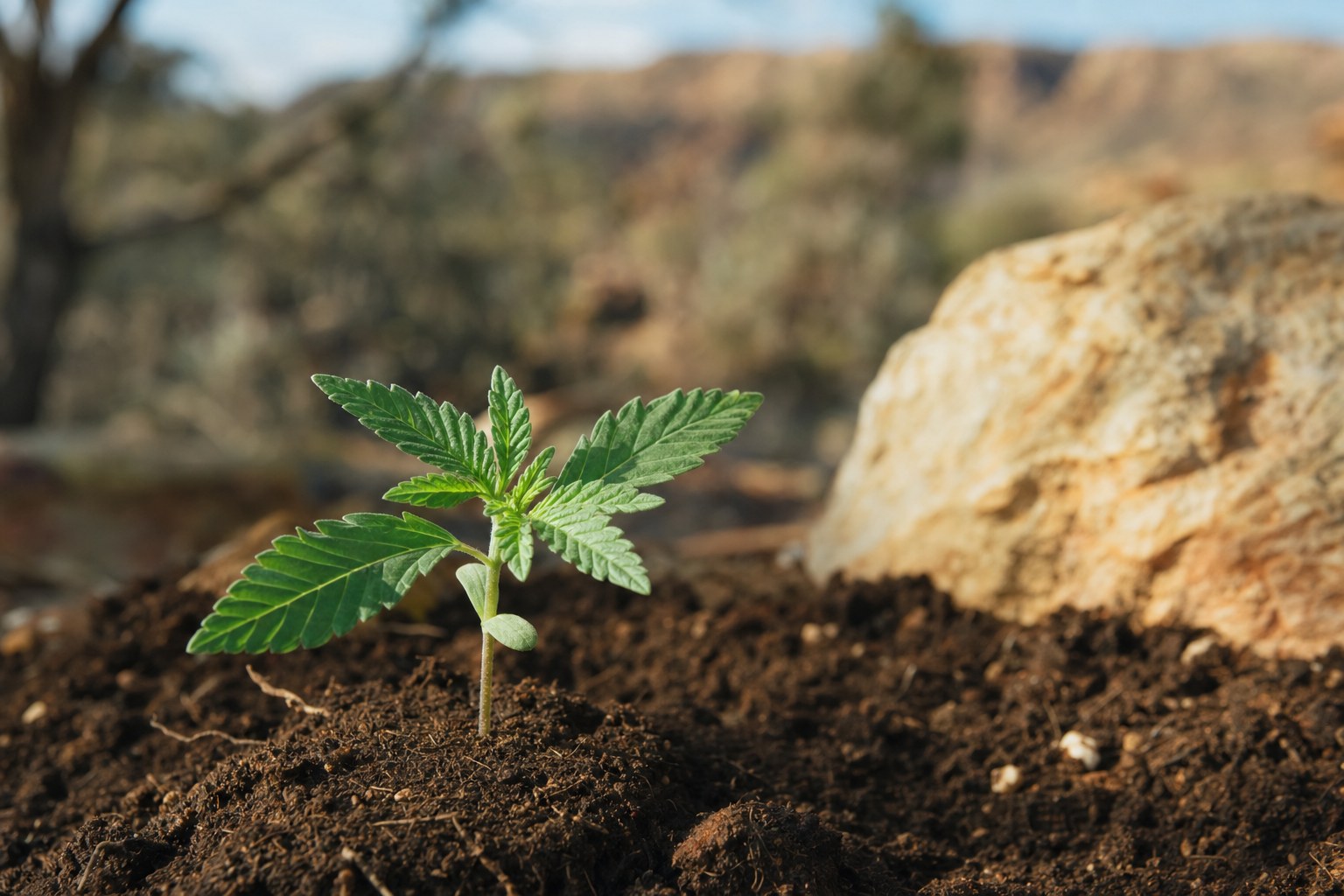
Cannabis seedling care during the first two weeks centres on gentle light, lightly moist growing media, mild temperatures, stable humidity and soft airflow. Avoid saturated media, strong feeding and sudden environmental changes. Observe the cotyledons, first true leaves and stem daily, adjusting conditions gradually while allowing the young root system time to establish.
By the Outback Seed Bank grow team.
Key takeaways
- Keep moisture balanced: Aim for evenly damp media rather than soil that is dripping wet or repeatedly soaked.
- Use gentle, consistent light: Seedlings need enough light for compact growth without excessive heat or bleaching.
- Prioritise stability: Sudden changes in temperature, humidity, light intensity or airflow can place unnecessary pressure on young plants.
- Delay heavy feeding: Cotyledons and a suitable seed-starting medium generally support early development without concentrated nutrients.
- Read the whole plant: Leaf angle, stem length, colour, media moisture and daily progress are more useful together than any single sign.
- Account for region: Australian spring conditions differ greatly between tropical, subtropical, temperate, arid and cool-climate areas.
Cannabis seedlings in their first two weeks
The seedling stage begins when the shoot emerges from the growing medium. During the following 14 days, the plant shifts from relying on stored energy in the seed to producing energy through its expanding leaves. Above the surface, the stem straightens and foliage opens. Below it, the young root extends and begins developing side branches.
This is a sensitive stage because the plant has limited leaf area and a small root system. It cannot respond to environmental swings as readily as an established plant. Consistency is therefore more valuable than aggressive intervention. Check seedlings at least once each day, but avoid repeatedly moving pots, touching leaves or changing settings in response to minor fluctuations.
Use a clean, free-draining seed-starting medium in a container with unobstructed drainage holes. The medium should hold some moisture while allowing air around the root zone. A large volume of wet media surrounding one small seedling can remain damp for too long, so watering decisions should reflect the size of the plant rather than the size of the container.
Apply water slowly and in modest amounts around the seedling’s active root area. Do not follow a rigid daily schedule. Instead, assess the surface, the weight of the container and the moisture slightly below the top layer. If the media remains clearly damp, wait and check again later. Persistent saturation can limit oxygen around developing roots, while severe drying can interrupt growth.
Gentle air movement helps exchange air around leaves and encourages gradual stem strengthening. Airflow should not make the plant shake continuously or dry the media within hours. Position a fan indirectly so that air circulates through the space rather than blasting the seedling. Keep the immediate area clean and remove standing water from trays.
Cotyledons and the emergence of the first true leaves
Cotyledons are the first smooth, rounded or oval seed leaves visible after emergence. They differ from the serrated true leaves that appear next. Cotyledons contain stored resources that support the seedling while the first functional leaves unfold and begin gathering light.
Healthy cotyledons commonly open and face the light. A small amount of seed casing may occasionally remain attached after emergence. Maintain suitable humidity and allow normal expansion to loosen it. Pulling at attached material can damage delicate tissue, so avoid unnecessary handling.
The first true leaves usually begin as a small serrated pair above the cotyledons. Later leaf sets become larger and develop a more recognisable shape. Progress varies among individual seeds, and emergence on different days does not automatically indicate a problem. Compare each seedling with its own development over several days rather than expecting every plant to match precisely.
Cotyledons may gradually become paler after true leaves establish. This can be part of the normal shift away from stored seed energy. Early yellowing is more concerning when it appears alongside stalled growth, drooping, saturated media or discolouration in new leaves. Examine all conditions before adding nutrients, because excess moisture and concentrated media can produce overlapping signs.
For seedlings in a lightly amended medium, avoid strong fertiliser applications during this early period. Rich mixes can be too intense for new roots, and extra inputs do not force faster development. If a low-nutrient, inert medium is being used, follow its established seedling method cautiously and begin at low strength. Never assume that more nutrient solution means more growth.
Early stem, leaf and root development
A young stem should generally support the cotyledons and first leaves without collapsing. Some elongation is normal, but a very long, thin stem can indicate that light is too weak, too distant or poorly distributed. Increase light exposure gradually rather than making a sharp change. Excessive intensity can cause upward leaf edges, pale tissue, dry media and heat stress.
If supplementary lighting is used, follow the light manufacturer’s seedling guidance because output varies substantially between fixtures. Distance alone is not a reliable universal measure. Watch plant response and check temperature at canopy height. A simple timer can maintain a consistent daily pattern, but seedlings also need a regular dark period.
Do not routinely bury or brace every slightly elongated seedling. First correct the light and airflow conditions. If a stem cannot support itself, a loose temporary support may help while it strengthens. Keep ties away from tender tissue and avoid compressing the stem. When potting on later, additional media can sometimes support a bare lower stem, provided the container still drains freely.
Roots need both moisture and oxygen. This balance explains why drainage and watering restraint matter so much during the first two weeks. Waterlogged media fills air spaces, while severely dry media may pull away from container edges and leave roots without reliable moisture. Aim for a gradual wet-to-damp cycle, not a swing between saturation and complete dryness.
Transplant timing depends on container size, growth rate and root development. There is no requirement to transplant simply because the plant reaches day 14. Consider moving a seedling when roots are holding the media together, growth remains active and the current container dries noticeably faster. Handle the root ball rather than the stem, and prepare the receiving container before beginning.
Australian spring spans September to November
Australian spring runs from September through November. Day length, solar intensity and temperatures generally rise through this period, but local conditions can change quickly. A September seedling in southern Australia may face cold nights, while a November seedling in northern Australia may experience substantial heat and humidity.
Two-week spring grow calendar
- Days 1 to 3: Confirm that the emerging shoot can access soft, consistent light. Keep the medium lightly moist and avoid fertiliser. Protect the container from cold surfaces, heavy rain, hot windows and direct fan pressure.
- Days 4 to 7: Look for open cotyledons and the beginning of the first serrated leaves. Check stem length and adjust light gradually if stretching is pronounced. Maintain gentle airflow and inspect drainage after every watering.
- Days 8 to 10: Expect increasing true-leaf area and more active water use. Continue assessing container weight rather than watering by calendar. Rotate containers only if light distribution is uneven, taking care not to change conditions abruptly.
- Days 11 to 14: Review root-zone drying, leaf expansion and stem strength. Do not rush transplanting or feeding if growth is steady. Prepare for the next stage only when the plant and container indicate that more root space or adjusted nutrition is appropriate.
Outdoor spring exposure should be introduced carefully. Seedlings raised under protected lighting can react poorly to immediate full sun, even on a mild day. Begin with a sheltered period in gentle morning light, then extend exposure over several days. Bring plants out of severe wind, intense midday sun, hail and sudden cold where practical.
Indoor seedlings also experience seasonal effects. Rooms near windows may warm sharply during sunny afternoons and cool overnight. Measure conditions where the leaves are located rather than relying on a reading elsewhere in the house or growing space. Stable conditions are the goal; chasing a precise number can lead to constant adjustment.
Spring conditions vary across Australia’s climate regions
Australia does not have one spring growing environment. Latitude, elevation, distance from the coast and local weather patterns all influence seedling management. Our guide to Australia’s climate regions provides broader regional context, but local observation remains essential.
Tropical northern Australia
Spring can be hot and increasingly humid across tropical northern areas. Media may stay wet longer when humidity is high, even though warm conditions can also increase plant water use. Prioritise drainage, space between containers and continuous gentle air exchange. Protect young foliage from intense direct sun and heavy rain.
Subtropical coastal areas
Subtropical spring may combine warm days, mild nights and variable humidity. Check for rapid changes after rain or coastal weather shifts. Sheltered spaces can become hotter than expected during clear afternoons, so monitor canopy-level temperature and avoid enclosing seedlings without ventilation.
Temperate southern regions
Temperate areas can have bright days followed by cold nights throughout September and October. Keep seedlings away from frost pockets and cold, wet ground. If plants move between protected and outdoor positions, make changes gradually. By November, stronger sunlight and warmer afternoons may require added attention to heat and drying.
Arid and inland regions
Dry air, wind and large differences between daytime and overnight temperatures are common challenges inland. Small containers can lose moisture rapidly, but frequent heavy watering is not the answer. Use a sheltered position, check media more often and provide indirect airflow. Avoid placing seedlings where reflected heat builds around walls or paving.
Cool-climate and elevated areas
At elevation and in cooler southern locations, spring growth may begin slowly. Cold root zones can limit activity even when daytime air feels pleasant. Keep containers off cold concrete and protect plants from frost. Avoid compensating for slow growth with extra water or fertiliser; improving environmental stability is usually the better first step.
Natural variation in seedling colour, posture and growth
Seedlings are living plants, not identical manufactured units. Minor differences in height, leaf width, colour and emergence speed are normal. New leaves may begin lighter and deepen in colour as they expand. Leaves can also change angle through the day in response to light, moisture and their natural daily rhythm.
Short-lived drooping immediately after watering, moving or a temperature shift may resolve once conditions stabilise. Persistent drooping calls for a review of root-zone moisture, drainage, heat and airflow. Resist changing several variables at once. One measured adjustment followed by observation makes it easier to identify what the plant is responding to.
Small marks or slightly uneven first leaves do not always affect later development. Focus on whether new growth is expanding normally. Escalating discolouration, damaged growing tips, a pinched or darkened stem base, unpleasant media odour, or growth that remains stalled deserve closer attention to cleanliness and environmental conditions.
Keep simple daily notes covering watering, visible growth, light changes and unusual weather. Photographs taken from a consistent position can help reveal progress that is difficult to notice from hour to hour. This record also discourages unnecessary intervention based on a single moment.
Finally, check the rules that apply in your state or territory before germinating or cultivating cannabis seeds. Requirements can differ by location and circumstance. Sound seedling care depends on patient observation, restrained watering and stable conditions, but it should always occur within the applicable legal framework.