

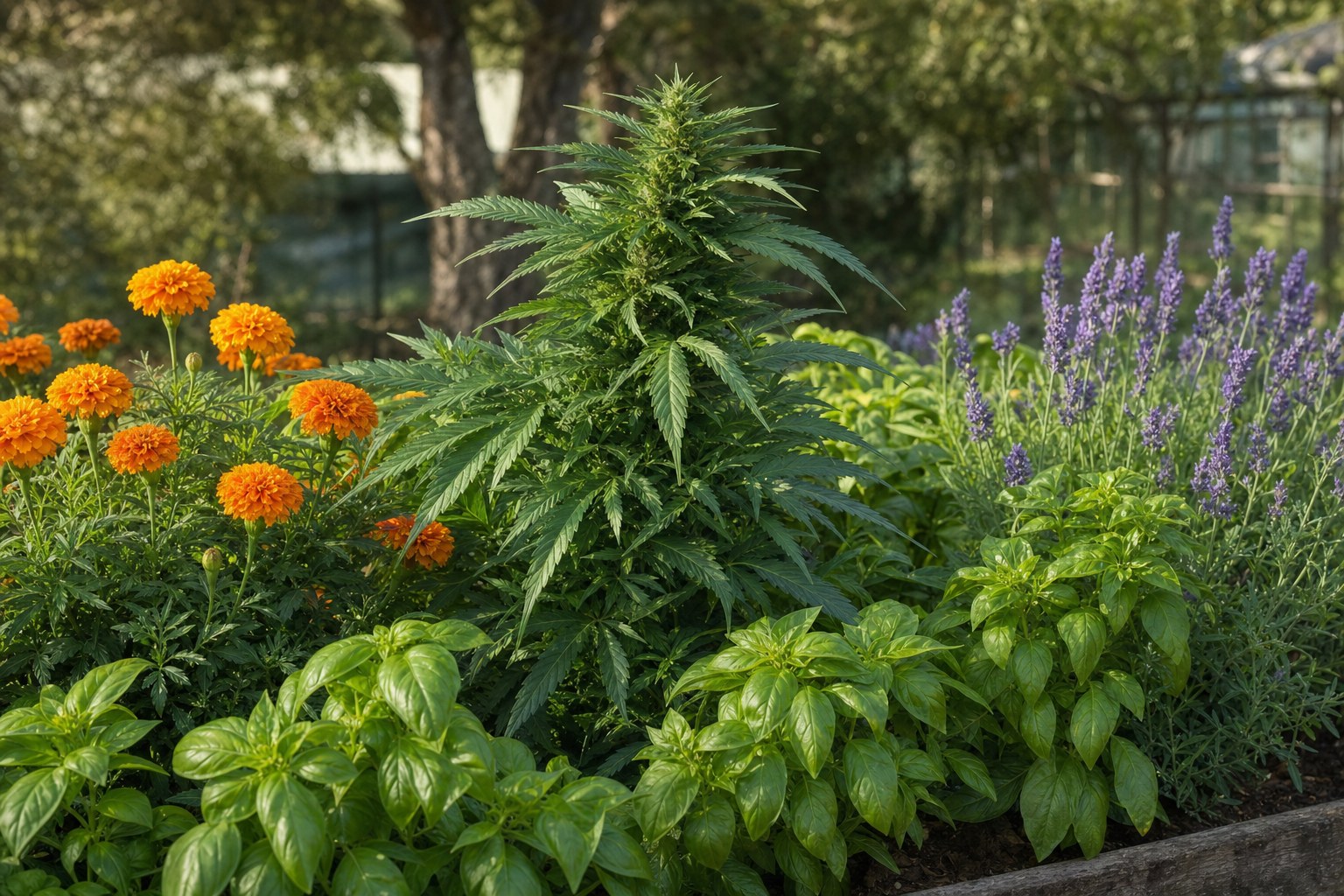
Companion plants for cannabis can include marigolds, basil and lavender, provided each species receives suitable light, water, airflow and root space. In Australian gardens, these plants are best viewed as biodiversity and design partners rather than guaranteed pest controls. Their success depends on local climate, spring timing and thoughtful spacing.
Key takeaways
- Marigolds, basil and lavender have different water, soil and seasonal requirements, so they should not automatically share one irrigation schedule.
- Companion planting can increase floral variety, create layered garden structure and support a wider mix of visiting insects.
- Generous spacing and airflow remain important around cannabis, particularly in humid coastal and subtropical conditions.
- Australian spring runs from September to November, but safe planting times vary considerably between tropical, subtropical, temperate and cool regions.
- Companion plants are not a substitute for regular inspection, garden hygiene or climate-appropriate cultivation practices.
- Always check the laws and local rules that apply to cannabis cultivation where you live.
Companion plants and cannabis in Australian garden settings
Companion planting is the practice of growing different plant species near one another to create a diverse, functional garden. Around cannabis, gardeners often consider aromatic herbs, compact flowering annuals and small shrubs. Marigolds, basil and lavender are familiar options because they offer contrasting forms, colours and flowering patterns.
The most useful approach is to assess each plant on its own horticultural needs. Cannabis typically develops a broad root system and expanding canopy when given sufficient space. A companion placed too close can compete for moisture, nutrients and sunlight. Dense foliage at soil level may also restrict air movement or hide early signs of stress.
Rather than packing every available space, arrange companions in loose groups beyond the main stem and expected canopy edge. Containers can be especially useful. They allow basil to receive more frequent watering while lavender remains in a freer-draining mix. Pots also make it easier to reposition plants as sunlight angles and canopy dimensions change through spring and summer.
No companion plant can guarantee the absence of unwanted insects or disease pressure. Flowers and herbs may contribute to a more varied garden ecosystem, but their effects differ between sites and seasons. Direct observation remains essential. Check leaf undersides, stems, flowers, pot rims and nearby ground regularly, while removing fallen or damaged plant material from the growing area.
Botanical characteristics of marigolds, basil and lavender
Marigolds
Garden marigolds are generally compact, warm-season flowering plants with divided foliage and bright flower heads in yellow, orange, red or mixed tones. Depending on the type, plants may form low edging mounds or taller, upright clumps. This range makes them useful for defining a bed without necessarily creating a dense screen around cannabis.
Marigolds favour sun and soil that drains reliably. They can flower over an extended period when old flowers are removed and conditions remain warm. In mixed plantings, their strong colour helps mark paths, bed corners and irrigation zones. Avoid allowing broad marigold clumps to press against the cannabis stem or block access needed for inspection.
Basil
Basil is a tender, aromatic herb with soft stems and broad leaves. It grows rapidly in warm weather but reacts poorly to cold soil and frost. Many forms branch readily when young tips are pinched, producing a rounded plant that may become quite leafy in fertile ground.
Basil generally needs more consistent moisture than lavender. In hot Australian weather, a container-grown plant can dry quickly, yet persistently wet soil may cause weak growth. If basil and cannabis are grown near each other, assess the moisture around each root zone rather than watering the entire bed by habit.
Once basil flowers, its upright spikes introduce another layer to a mixed planting and can attract visiting insects. Flowering also changes the plant’s form and leaf production. Gardeners seeking a compact leafy shape can pinch selected tips, while those prioritising flowers can allow some stems to bloom.
Lavender
Lavender is a woody, aromatic shrub with narrow foliage and flower spikes held above the leaves. Its silvery or grey-green colour contrasts strongly with broad green cannabis foliage. Mature size varies, but even compact selections may widen substantially, so placement should account for future growth rather than the dimensions of a newly purchased plant.
Lavender generally prefers full sun, open airflow and sharply drained soil. It often performs poorly when kept continually moist or planted in heavy ground without adequate drainage. In regions with humid summers, an elevated position or separate pot may provide a better fit than the frequently watered centre of a garden bed.
Because lavender is longer lived than annual marigolds and basil, it can act as a permanent structural plant. Position it where its woody framework will not crowd future seasonal plantings or limit access to cannabis. Pruning should retain green growth and the naturally open form of the shrub.
Plant form, flowering habits and seasonal life cycles
Plant form influences how successfully companions share a garden. Cannabis can develop vertically and later spread through branching. Low marigolds may occupy the foreground, basil can fill the middle layer, and lavender can provide a stable outer anchor. This arrangement creates visual depth without requiring companions beneath the densest part of the canopy.
Seasonal life cycles also guide planning. Marigolds and basil are commonly grown as warm-season annuals. They establish, flower and decline within a comparatively short period, although timing depends on climate. Lavender is a perennial shrub and remains in place across seasons. Its permanent roots and canopy therefore require more long-term space.
Flowering times may overlap, creating colour and varied flower shapes across the bed. This diversity can make a garden more attractive to a broad range of visiting insects. Not every visitor is beneficial, however, and flowers can also host insects that warrant attention. Inspect companion plants as carefully as the central crop rather than assuming they provide automatic protection.
Root competition is easy to overlook because it occurs below ground. Keep fast-growing companions outside the immediate root crown, and avoid disturbing established roots when adding new plants. A surface mulch can moderate moisture loss, but it should remain clear of stems. Deep, damp mulch piled against plant bases can limit airflow and create sheltered spaces for unwanted garden activity.
Australian climate regions and local garden conditions
Australia includes tropical, subtropical, arid, temperate and cool climate zones. Rainfall patterns, frost dates, humidity and summer heat differ sharply, so a companion plan that suits one city may be unsuitable elsewhere. The Australia climate regions guide provides a useful starting point for matching seasonal garden decisions to regional conditions.
Tropical and subtropical regions
In northern and humid eastern areas, warmth may arrive early and plant growth can be rapid. Heavy rain, high humidity and dense foliage make spacing particularly important. Choose open positions, avoid overcrowding and ensure containers drain freely after storms. Lavender may be easier to manage in a raised position with excellent drainage, while basil and marigolds may respond more readily to warm, moist conditions.
Warm temperate and Mediterranean-style regions
Many southern coastal and south-western gardens experience mild spring weather followed by dry summer conditions. Marigolds and basil can establish as soil warms, while lavender often suits sunny, free-draining sites. Hot northerly winds may dry containers rapidly, so check moisture manually and shelter tender young plants without enclosing them in stagnant air.
Cool temperate and elevated regions
Frost can continue well into spring in inland, elevated and southern districts. Basil is especially cold-sensitive and should not be rushed outdoors simply because daytime temperatures feel mild. Marigolds also establish more reliably after frost risk eases. Lavender tolerates cooler conditions better once established, but young plants still need drainage and suitable acclimatisation.
Arid and inland regions
Strong sun, low humidity and large differences between daytime and night-time temperatures can place young plants under stress. Temporary afternoon shade may help newly established companions during abrupt heat, while mulch can reduce rapid surface drying. Irrigation should be directed to individual root zones. Lavender generally needs less frequent moisture than actively growing basil.
Spring from September to November across diverse regions
September
September is a planning and observation month in much of Australia. Review sun exposure, drainage, access and likely mature plant dimensions before planting companions. In frost-prone districts, start tender basil and marigolds in protected conditions or wait for warmer soil. Tropical and some subtropical gardens may already require summer-style attention to rainfall, humidity and vigorous growth.
Prepare separate planting pockets or containers based on water needs. Confirm that drainage holes are open, and avoid placing pots where runoff will keep another plant’s root zone constantly wet. If cannabis cultivation is lawful in your circumstances, leave enough room for its expected canopy and for access from multiple sides.
October
October often brings stronger growth, longer days and increasing warmth. In many temperate locations, this is a practical period for gradually acclimatising basil and marigolds to outdoor sun. Begin with exposure suited to the plants’ previous conditions, as tender nursery or indoor-grown leaves may scorch when moved directly into intense sunlight.
Monitor spacing as companions branch. Thin or reposition containers before foliage interlocks. Check irrigation after hot or windy days instead of relying solely on a fixed timetable. A finger check in the upper soil layer, the weight of a container and the appearance of new growth can all help inform watering decisions.
November
By November, many regions are approaching summer conditions. Marigolds may be flowering strongly, basil may need regular tip management, and lavender flower spikes may add height and movement. Maintain a clear zone around main stems, remove spent annual growth and keep paths open for inspection.
In tropical regions, November may bring intense rain and humidity. In southern and inland areas, heatwaves and drying winds become more likely. Adjust placement and irrigation to actual weather rather than the calendar alone. Secure tall containers, maintain free drainage and avoid wetting dense foliage late in the day where humidity already remains high.
Garden biodiversity and the visual structure of mixed plantings
A mixed planting works best when it looks intentional and remains practical. Repeat marigold colours along a bed edge, use basil as a soft middle layer and position lavender at outer corners where its woody form has room to expand. Leave visible gaps between groups so every plant retains airflow and can be inspected without trampling neighbouring roots.
Colour and texture can guide the design. Marigolds contribute saturated warm tones, basil supplies fresh green leaves, and lavender adds fine foliage with purple or blue flower spikes. Against cannabis foliage, these differences create contrast across height, leaf shape and seasonal bloom. Containers in consistent colours can unify plants that require different soils and watering routines.
Biodiversity is broader than adding three named companions. Where space permits, a garden may include varied flower shapes, shallow water for insects managed safely, undisturbed habitat zones away from the crop, and low-impact maintenance. Avoid broad assumptions about any single species. Local insect populations, weather and surrounding vegetation all affect what appears in a garden.
Good companion planting is ultimately an exercise in observation. Record planting dates, flowering periods, water use and any crowding issues. At the end of the warm season, note which combinations remained healthy and manageable. Those records provide a stronger basis for the next Australian spring than universal planting formulas.
Marigolds, basil and lavender can complement cannabis through colour, structure and floral variety, but suitable spacing, drainage and region-specific timing remain the foundations of a balanced garden.