

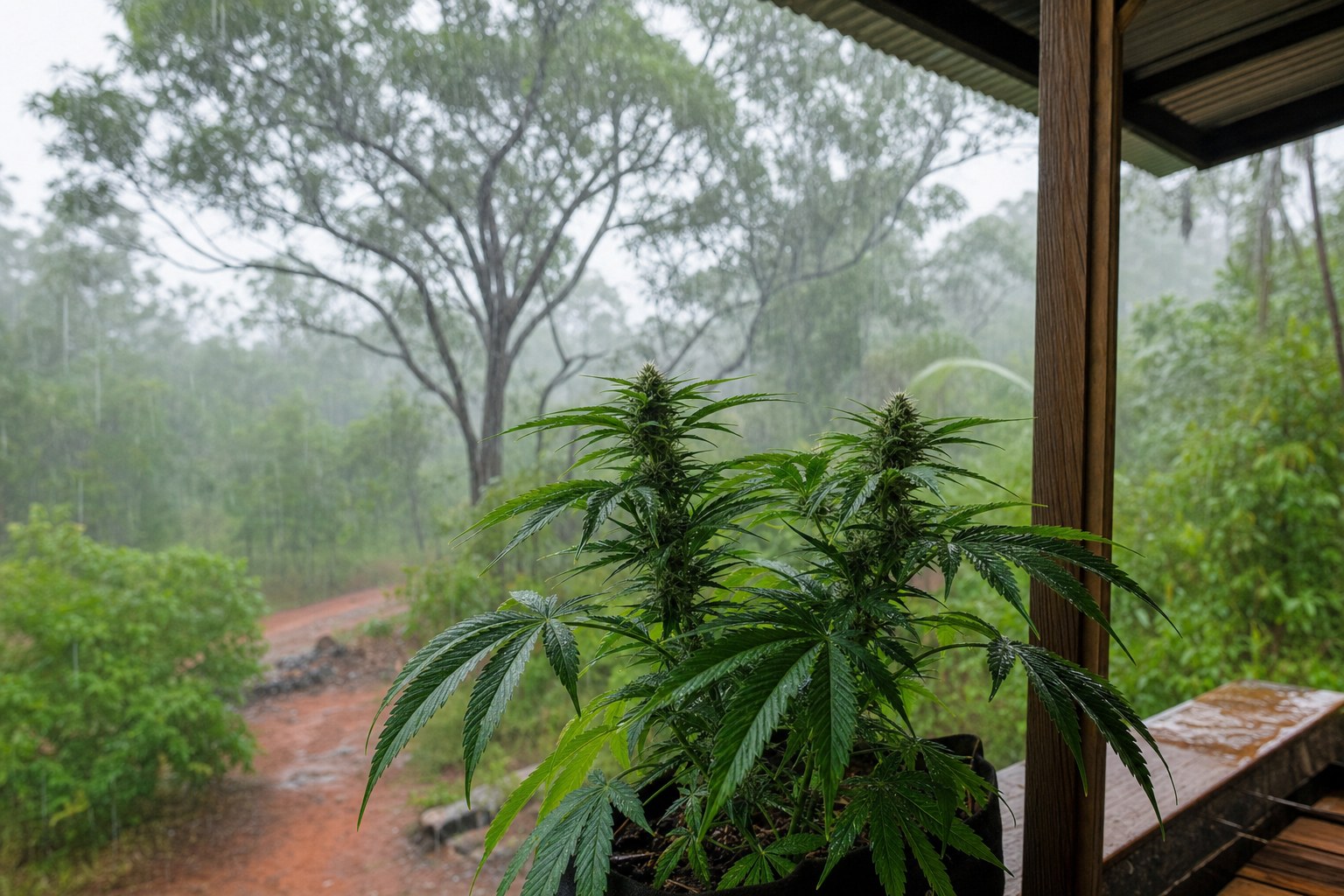
Growing weed in Darwin means planning around a tropical wet season with intense rain and humidity, followed by a warm, sunny dry season. Spring, from September to November, is a demanding transition period: heat and moisture rise before monsoonal rain becomes established. Cannabis cultivation must also comply with all applicable Northern Territory and Commonwealth laws.
Key takeaways
- Darwin has two dominant seasons: a humid wet season and a warm, relatively rainless dry season.
- Top End spring is the build-up: September to November commonly brings increasing heat, humidity, storms and plant stress.
- Airflow matters: dense foliage, still air and prolonged leaf wetness can raise the risk of fungal damage.
- Containers offer flexibility: they allow lawful growers to move plants away from driving rain, flooded ground or extreme afternoon sun.
- Central Australia is different: low humidity, limited rainfall, intense sun and large temperature swings create a separate set of challenges.
- Genetics do not override climate: plant structure, growth stage, root health and day length all influence performance.
Northern Territory cannabis and its contrasting climate regions
The Northern Territory is not one uniform growing environment. Its northern districts have a tropical climate shaped by monsoonal rain, while the southern interior is arid and subject to wider temperature variation. Advice suited to Darwin can therefore be poorly matched to Alice Springs, and the reverse is equally true.
Darwin, Palmerston and surrounding parts of the Top End experience warm conditions throughout the year. Seasonal change is expressed mainly through rainfall, humidity, cloud cover and wind patterns rather than through four sharply divided temperature seasons. Farther south, the landscape becomes progressively drier. Central Australian days can be intensely sunny, but nights and winter periods may become cold.
These differences affect how quickly growing media dry, how much water a plant loses through its leaves, and how long foliage remains damp after rain. They also influence root-zone temperature, pest activity and the physical stability of tall plants during storms. See our guide to Australia’s climate regions for broader national context.
Before germinating or cultivating cannabis, check the laws that apply to your location and circumstances. Rules can differ between jurisdictions, and possession of seeds does not by itself establish permission to cultivate. The following information concerns climate and plant botany rather than legal authorisation.
Darwin’s tropical wet season and dry season
Darwin’s climate is often understood through two broad periods. The dry season generally offers lower humidity, little rainfall and more comfortable conditions. The wet season brings much higher humidity, heavy downpours, thunderstorms and periods of extensive cloud. The change between them is gradual, and individual years vary.
The late dry season may appear favourable because rain is limited, but exposed plants can face strong sunlight, dry winds and rapid moisture loss from containers. As the build-up develops, daytime and overnight conditions become hotter and more humid. Evaporation from the growing medium may remain substantial even while damp air slows moisture loss from leaves.
Once frequent wet-season rain arrives, water management changes significantly. Open garden beds may become saturated if drainage is slow. Containers without ample drainage holes can hold water around the roots, limiting oxygen in the root zone. Covered outdoor positions can offer some protection from direct rain, provided that the cover does not trap hot, motionless air.
A shaded verandah may moderate harsh midday sun and shield foliage from repeated downpours. However, deep shade can produce weak, stretched growth. A better position provides bright ambient light, some direct morning sun and unrestricted airflow around the plant. Any structure must be stable in severe weather, and containers should not obstruct drains, exits or shared areas.
Wet-season priorities around Darwin
- Keep drainage paths open and elevate containers above surfaces where water pools.
- Leave space between plants so air can move through and around the foliage.
- Avoid leaving fallen leaves or saturated organic debris against stems.
- Inspect leaf undersides, branch junctions and dense growth after humid nights.
- Support long branches before storms rather than after wind damage occurs.
- Keep electrical equipment designed for indoor use away from rain and wet surfaces.
Heavy rain can also wash nutrients from freely draining containers. That does not mean concentrated feeding is automatically appropriate after every storm. Wilting, pale leaves or slow growth can have several causes, including saturated roots, heat stress and unsuitable root-zone acidity. Make one measured adjustment at a time and observe the plant’s response.
Spring from September to November across the Top End
Australian spring runs from September through November. Across the Top End, these months correspond with the shift from dry-season conditions into the humid build-up. September may still deliver many clear days, while October and November commonly feel hotter, more humid and increasingly stormy.
For people researching growing weed in Darwin, this seasonal transition is crucial. A routine that worked during the dry season may become unsuitable within weeks. Watering frequency, shade, airflow and storm protection all need regular reassessment. Calendar dates are useful prompts, but current conditions and the moisture within the growing medium are better guides than a fixed timetable.
Top End spring grow calendar
- September: Check whether containers have enough volume for continued root growth. Assess sun exposure as the solar angle changes, inspect supports and confirm that excess water can drain freely. Plants in small dark pots can become very hot during clear afternoons.
- October: Expect rising humidity and hotter nights. Increase observation of crowded foliage and avoid automatic watering when the medium remains damp below the surface. Prepare a bright, ventilated position protected from the hardest rain.
- November: Thunderstorms and intense downpours become a greater consideration. Secure supports, keep plants away from runoff and examine them after severe weather. Remove badly damaged plant material with clean tools where cultivation is lawful.
Spring day length in the Top End changes less dramatically than it does in southern Australia. Cannabis is sensitive to the duration of uninterrupted darkness, so tropical latitude can affect developmental timing differently from temperate regions. Artificial light from verandahs, windows or security fixtures may also interrupt darkness. The response varies with the plant’s genetics and growth stage.
Heat management should focus on the entire root-and-shoot system. A plant may receive acceptable light while its container overheats on concrete or metal. Raising the pot slightly, using a light-coloured outer cover that does not block drainage, or relocating it away from reflected afternoon heat can reduce root-zone stress.
Monsoonal rain, humidity and cloud cover around Darwin
Monsoonal weather combines several pressures. Rain can be physically forceful, humidity slows surface drying, and cloud can reduce daily light levels. When these conditions continue together, soft growth and dense canopies may stay wet for long periods. The objective is not to exclude every drop of rain, but to avoid persistent saturation and stagnant air.
Air movement is especially important within the centre of a plant. Leaves packed closely together create humid pockets even when there is a breeze outside the canopy. Gentle spacing and selective removal of dead or badly damaged material can improve circulation. Excessive pruning during hot, humid weather can add unnecessary stress, so changes should remain modest.
Water early enough for exposed surfaces to dry before night where practical. Check moisture below the top layer rather than judging by colour alone. A dry-looking crust can sit above wet material, particularly in large pots. Conversely, a brief shower may wet the surface without reaching the full root zone.
Cloud cover can make a protected site unexpectedly dim. If stems stretch and spacing between leaves increases, assess whether roofing, walls or surrounding vegetation block too much light. Moving a container abruptly from shade into intense sun can scorch foliage. Increase exposure gradually and prioritise gentler morning light.
Storm preparation also protects people and property. Tall, top-heavy plants and loose equipment can become hazards in strong winds. Do not rely on a narrow pot to support a broad canopy. Use stable supports suited to outdoor conditions, and follow official weather and cyclone advice whenever severe conditions are forecast.
Central Australia’s arid climate and seasonal temperature range
Central Australia presents almost the opposite moisture profile. Alice Springs and surrounding arid districts typically have low humidity, irregular rainfall and high evaporation. Summer days can be extremely hot, while winter nights can become cold. Large differences between daytime and overnight temperatures are common.
Containers may dry quickly under strong sun and wind, especially when they are small or made from porous material. Yet frequent shallow watering can leave roots concentrated near the surface. Where lawful, watering should moisten the root zone evenly without leaving it continuously saturated. Mulch may slow evaporation, but it should not be piled against the stem.
Intense sunlight is not always equivalent to useful plant growth. When leaves overheat, they may curl, droop or develop dry margins even if the root zone contains water. Temporary afternoon shade can moderate extreme exposure. Windbreaks may reduce moisture loss and branch damage, but solid barriers can create turbulence or trap radiant heat.
Cold is another consideration. A site that is hot in summer may experience frost or near-freezing conditions in winter. Containers cool more rapidly than deep ground, leaving roots exposed to overnight temperature changes. Local microclimates matter: low points can collect cold air, while walls may retain warmth after sunset.
Regional notes for lawful Northern Territory cultivation
- Darwin and the coastal Top End: Prioritise airflow, storm stability and rapid drainage during humid months.
- Katherine region: Expect a tropical seasonal pattern, but assess local heat, rainfall and water availability rather than copying a Darwin schedule.
- Tennant Creek and the Barkly: Plan for strong sun, wind, limited rainfall and substantial temperature variation.
- Alice Springs and Central Australia: Protect roots from extreme container temperatures and account for cold winter nights as well as summer heat.
Cannabis botany in tropical and arid environments
Cannabis is an annual plant whose form reflects genetics and environment. Light duration influences developmental timing, while light intensity affects the energy available for growth. Temperature, water, root oxygen and nutrition interact, so a single visible symptom rarely identifies one cause with certainty.
Broad leaves exchange water and gases through tiny openings. In hot, dry air, water loss can be rapid. In humid air, the gradient driving that loss is smaller, which can alter nutrient movement and slow surface drying. This explains why identical watering routines perform differently in Darwin and Alice Springs.
Roots need both moisture and oxygen. Waterlogged media displace air, while severely dry media may repel water or leave fine roots stressed. Structure is therefore as important as the amount applied. A stable, free-draining medium helps maintain a workable balance across changing weather.
Plant architecture also matters. Compact branching may handle wind better but can hold humid air within dense foliage. Open structure improves airflow but long branches may require support. Regular observation is more valuable than forcing every plant into the same shape.
Finally, seasonal planning should remain flexible. Tropical storms, arid heatwaves and unusual cold spells do not follow a perfect calendar. Keep simple records of rainfall, shade hours, watering and visible changes. Those observations can help lawful growers make restrained, climate-aware decisions without assuming that one season or location represents the whole Northern Territory.