

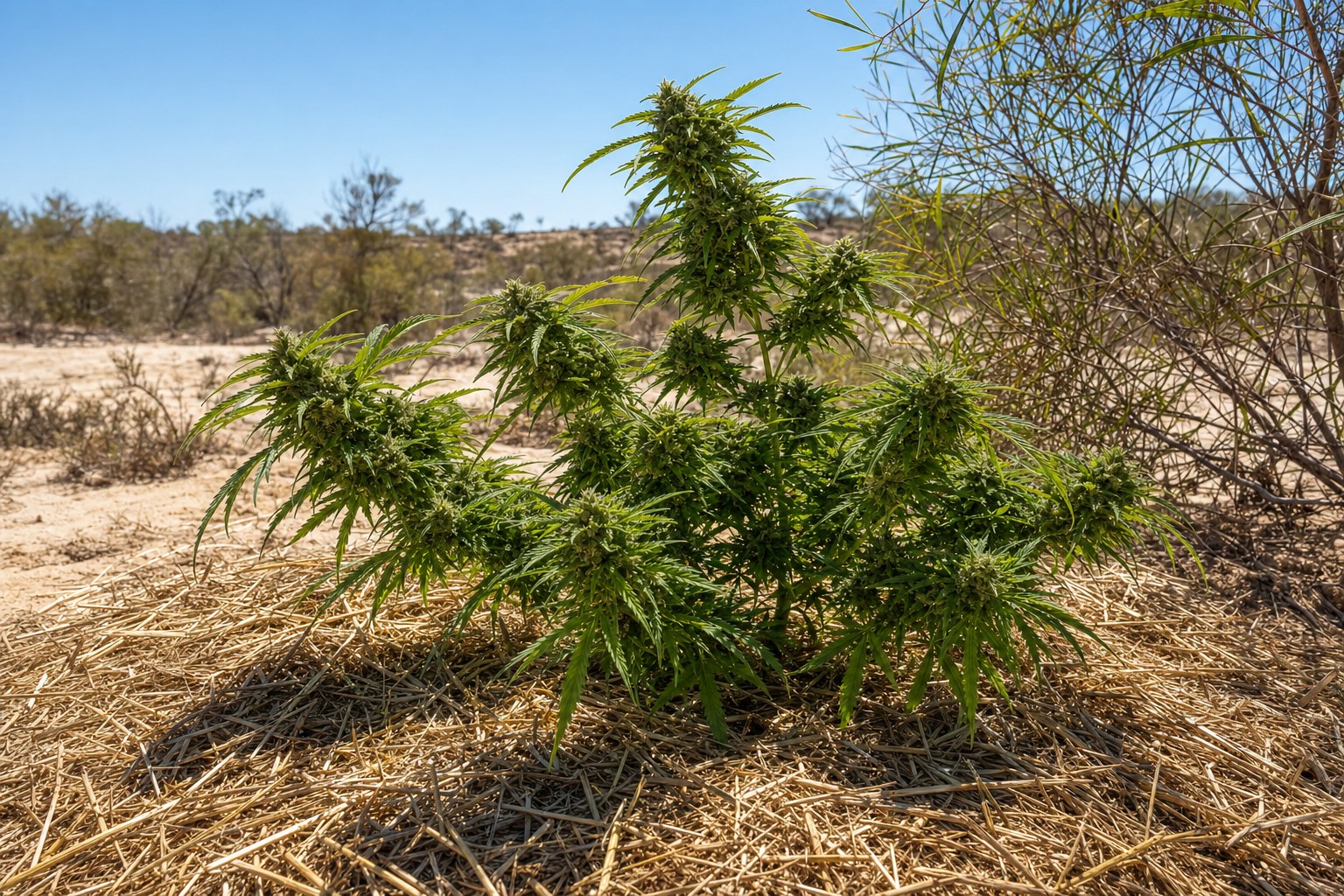
Growing cannabis in Perth requires careful legal checking, soil preparation and water management. Western Australia’s pale sandy soils can dry rapidly, while intense sun, drying winds and summer heat place extra pressure on roots. Where cultivation is lawful, spring preparation should focus on organic matter, breathable mulch, reliable drainage and irrigation guided by actual soil moisture.
Key takeaways
- Check current laws first: seed possession and cannabis cultivation are separate legal questions, and rules can differ by location and circumstances.
- Build better sandy soil: incorporate stable organic matter before planting to improve moisture and nutrient holding.
- Mulch generously: a breathable layer helps moderate surface temperature and slow evaporation, but should remain clear of the stem.
- Water by observation: check moisture below the mulch rather than relying on a rigid timetable.
- Plan for regional differences: coastal Perth, the South West, inland districts and northern WA present very different spring and summer conditions.
Prepared by the Outback Seed Bank grow team for general cultivation education. This guide does not authorise activity prohibited under state, territory, local or Commonwealth law.
Growing cannabis in Perth and regional Western Australia
Western Australia is too large for a single outdoor growing formula. Perth generally combines mild spring weather with increasingly dry conditions, strong sunlight and regular coastal winds. Inland districts can experience sharper day-to-night changes, lower humidity and more severe heat. Farther north, spring may already feel like summer, while tropical areas face a different rainfall and humidity cycle.
For anyone researching growing cannabis Perth conditions, site assessment matters as much as the broader climate. A pale sandy block exposed to afternoon sun behaves differently from a sheltered garden with improved soil. Nearby walls, paving and metal fencing may reflect heat onto plants and containers. Wind corridors between buildings can also accelerate moisture loss.
Begin by observing where sunlight falls through the day, how quickly water penetrates, where wind is strongest and whether runoff moves towards drains or neighbouring property. Where lawful, broader Australian planning principles are covered in our Australian cannabis growing guide.
Check Western Australian laws before planting
Do not assume that possessing seeds means germination or cultivation is allowed. Cannabis laws can distinguish between seeds, plants, plant material, cultivation methods, quantities, locations and personal circumstances. Commonwealth requirements may also apply alongside Western Australian rules.
Read current official information that applies to your situation before acquiring seeds, germinating them or preparing a cultivation site. Local planning, tenancy, strata, fire-safety, water-use and environmental rules may create additional obligations. Laws and policies can change, so an old forum post or personal account is not a dependable basis for a decision.
Seed possession, cultivation and local restrictions
Seed status should be considered separately from permission to grow. Our general explainers on cannabis seed laws in Australia and Australian cannabis cultivation laws outline questions to investigate, but they are not a substitute for current information relevant to Western Australia.
Also consider whether outdoor gardening activity could affect neighbours, shared spaces, rental conditions or property access. Never divert water, modify buildings or install equipment without the required permission. If the legal position is unclear, pause before planting and seek appropriately qualified guidance.
How Western Australia’s spring conditions shape outdoor growing
Spring in the southern hemisphere runs from September through November. In Perth, this period often marks a transition from cooler, wetter conditions towards stronger sun, warmer afternoons and declining rainfall. The shift may occur unevenly, with cool fronts followed by clear, drying days. Planting by date alone therefore overlooks soil temperature, exposure and short-term weather.
Young plants have compact root zones that can dry quickly, yet persistently wet soil can limit root aeration. Spring management is a balance: support steady establishment without leaving the root area saturated. Our guide to when to plant cannabis in Australia provides wider seasonal context.
Dry heat, intense sun and coastal winds
Clear WA skies can produce strong radiant heat even when air temperatures appear manageable. Dark containers absorb heat, while paving and walls can raise the temperature around leaves and roots. Smaller pots are particularly exposed because their limited soil volume changes temperature and moisture rapidly.
Coastal breezes provide airflow but can also dry foliage and soil. Strong gusts may rock stems, shift irrigation lines and damage branches. Permeable wind moderation is generally more useful than a solid barrier that creates turbulence. Any support or shade arrangement should be stable, lawful and positioned without creating persistent darkness or stagnant air.
Perth conditions compared with inland and northern regions
Perth and nearby coastal districts may experience sea breezes, salty air in exposed locations and occasional humid periods. The South West is generally cooler, with spring rain sometimes lasting longer and local pockets that retain moisture. Inland gardens can face hotter, drier air, hard winds and rapid evaporation. Northern areas may require planning around extreme heat and distinct wet-season patterns rather than copying a Perth calendar.
Genetics also influence plant structure, timing and environmental response. Where acquisition and cultivation are lawful, review broad selection considerations in our outdoor strain guide for Australia without assuming any cultivar will guarantee a particular result.
Preparing pale sandy soil for spring planting
Many Perth gardens contain sand that drains rapidly and holds limited moisture or nutrients. Water may disappear from the surface yet leave parts of the root zone dry, especially where old sand has become water repellent. Preparation should create an even, workable soil profile rather than a small rich pocket surrounded by unimproved sand.
Inspect the area after slow watering. If water beads, runs sideways or channels down one path, improve the bed before planting. Loosen compacted layers carefully and remove building debris. Avoid working soil when it is saturated, and keep amendments generic and suitable for the site.
Improving water retention with organic matter
Well-finished compost and other stable organic matter can increase the soil’s capacity to hold moisture and nutrients. Blend material through a broad planting area instead of placing a concentrated layer directly against roots. Gradual improvement supports more even wetting and gives expanding roots access to prepared soil.
More is not automatically better. Excessively rich or poorly decomposed material may create uneven nutrient conditions, settle heavily or interfere with drainage. After incorporation, water slowly and inspect several points to see whether moisture spreads through the profile. Allow time for the amended bed to settle before transplanting.
Using mulch to moderate soil temperature
A substantial layer of breathable organic mulch helps shade pale sand, reduce surface evaporation and buffer rapid temperature changes. Apply it across the expected root area while leaving a clear gap around the stem. Mulch piled against the base can hold persistent moisture and restrict airflow.
Check beneath the layer regularly. Mulch may shift in wind, compact after rain or hide uneven wetting. A dry surface does not prove the soil below is dry, just as damp mulch does not confirm that water has reached deeper roots. Replace displaced material and inspect for pest activity without disturbing the root zone unnecessarily.
Checking drainage and nutrient balance
Fast-draining sand still needs a balanced structure. Fine material or heavy amendment placed in a confined hole can create a sharp boundary where water behaves unpredictably. Containers require open drainage holes and should not sit in pooled water for extended periods. Pot feet may assist drainage and airflow where appropriate.
Use restrained, gradual soil adjustments and observe plant response. Unsupported additives and improvised mixtures can disrupt the root environment. Leaf colour alone does not identify a specific soil issue, so consider moisture, heat, root space, wind and recent changes before altering the growing medium.
Planning irrigation for hot, dry weather
Match irrigation to soil, heat, wind and plant demand
There is no reliable universal watering schedule for Western Australia. Timing changes with soil composition, container size, mulch depth, plant size, sunlight, wind and recent weather. Water deeply enough to wet the active root area, then allow drainage and reassess before watering again. The aim is even moisture without persistent saturation or severe drying.
Test moisture several centimetres below the surface at multiple points around the plant. For smaller containers, lifting the pot can help compare weight over time. Leaf posture offers context, but drooping does not always mean thirst; heat, root conditions and other stresses can look similar. Consider soil moisture and weather together before adding water.
Moisture check: look beneath the mulch, compare several parts of the root zone and adjust gradually. Do not judge the entire bed from one dry or damp spot.
Where sandy soil repels water, apply water slowly in repeated passes so it can soak in rather than race across the surface. Hand watering should use a gentle flow over a broad area; a hard jet may displace mulch or expose roots. Drip irrigation is one option, not a requirement. Emitters should be checked for blockage, leaks and uneven delivery, then repositioned as roots spread.
Watering during cooler parts of the day can reduce evaporation. Keep foliage dry where practical, particularly when coastal humidity rises or rain arrives. Do not keep the stem base constantly damp. Inspect irrigation equipment after wind, gardening activity or animal disturbance, and comply with current local water-use requirements.
Containers generally need closer observation than garden beds because they hold less soil and are exposed on every side. Light-coloured outer pots, afternoon relief from exceptional radiant heat and adequate airflow may help in suitable sites. Any shade structure must withstand local wind and should not block useful light for the remainder of the day.
Record watering dates, weather, soil observations and plant response in a simple garden log. Reassess after transplanting, repotting, rainfall, heatwaves, mulching or rapid growth. Automated systems still need inspection, especially before an absence. Water alone cannot compensate for overheated roots, reflected heat, poor airflow or unsuitable placement; irrigation, mulch, wind moderation and site selection need to work together.
Regional notes and spring grow calendar
September: assess and prepare
Confirm the current legal position before any cultivation activity. Observe spring sunlight, drainage, wind and reflected heat. Improve sandy beds with stable organic matter, organise mulch and test whether irrigation reaches the intended depth. In cooler southern districts, avoid assuming that one warm week marks a permanent seasonal change.
October: watch establishment
As days lengthen and clear weather becomes more common, monitor young root zones closely. Check beneath mulch, moderate damaging wind and inspect containers for rapid drying. Perth gardeners should be ready for alternating mild and hot periods, while inland locations may already demand stronger heat planning.
November: prepare for summer pressure
Expand the wetted area as roots spread, inspect irrigation equipment and replace wind-shifted mulch. Review afternoon exposure, container temperature and backup watering arrangements. In northern WA, local seasonal patterns may differ substantially, so use site observations rather than a southern calendar.
Summer: keep adapting
During December, January and February, reassess after every major weather change. Heatwaves, drying easterlies, sea breezes and unseasonal rain can alter demand quickly. Maintain drainage, avoid runoff waste, keep garden waste away from drains and waterways, and remember that no irrigation method or soil preparation can ensure a particular outcome.