

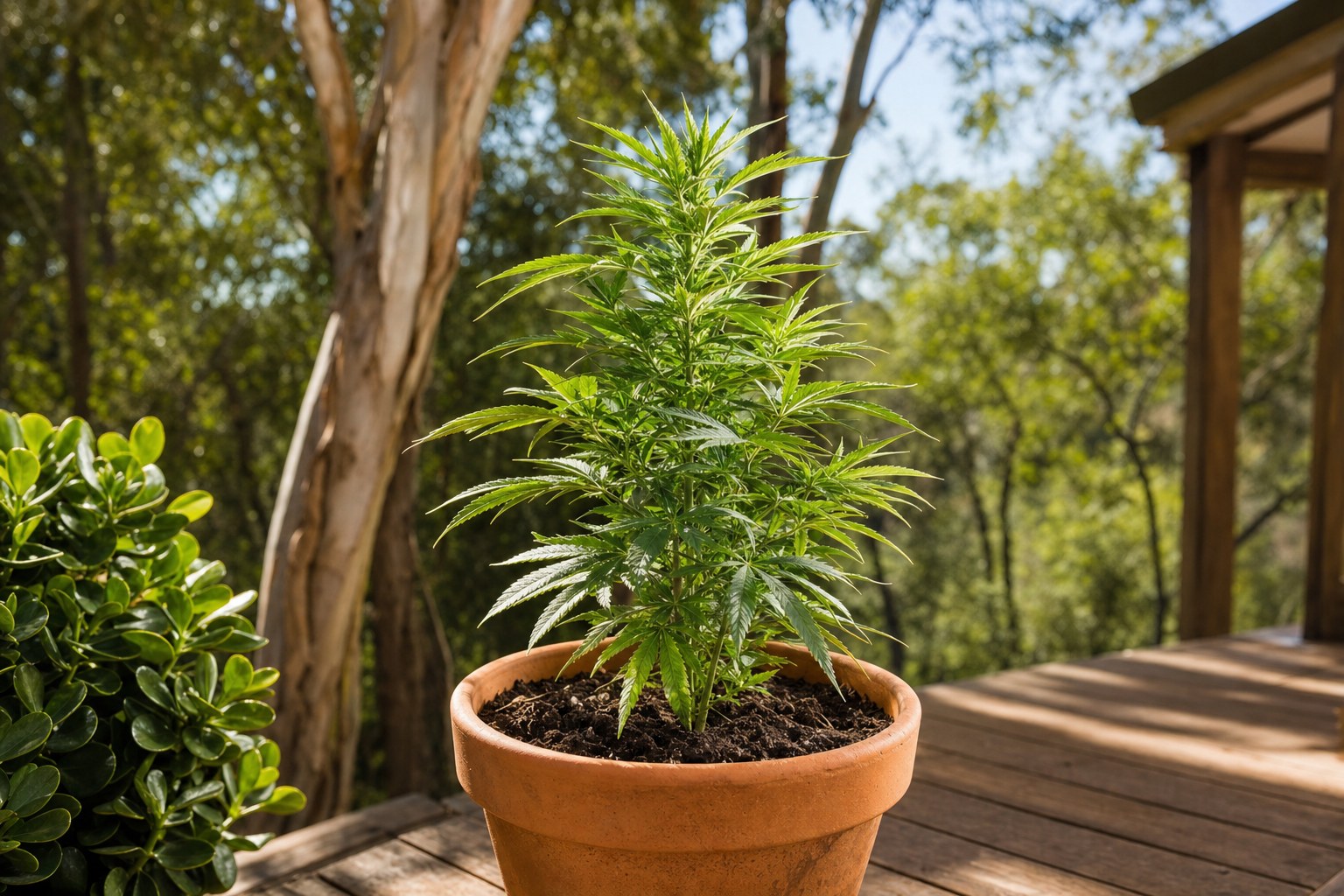
To grow cannabis in Australia, first check the laws that apply in your state or territory. Where cultivation is permitted, choose seeds suited to your climate, begin around spring, provide strong sunlight and free-draining soil, manage summer heat and moisture, then assess flower maturity in autumn. Local climate matters more than any single national schedule.
Key takeaways
- Check local rules first: cannabis cultivation laws differ across Australian states and territories, and rules can change.
- Match genetics to climate: compact, fast-flowering or hardy plants may be easier for a first outdoor grow.
- Follow southern-hemisphere seasons: photoperiod plants generally establish in spring, grow through summer and flower as daylight declines.
- Prioritise drainage and airflow: these basics help plants handle heavy rain, humidity and dense flower growth.
- Observe rather than overreact: beginners often create problems by watering, feeding or pruning too frequently.
- Use several harvest signals: consider trichomes, pistils, flower shape and the plant’s overall appearance together.
Australian cannabis laws and local rules
Before buying seeds, germinating them or preparing a garden, understand the rules at your location. Australian cannabis law is not uniform. Commonwealth settings, state or territory legislation, local restrictions, tenancy agreements and other obligations may all be relevant. Rules applying to possession do not automatically mean that cultivation is allowed.
Some jurisdictions distinguish between plant numbers, growing methods, locations and personal circumstances. Requirements may also differ for indoor and outdoor cultivation. Never assume that advice from another state or an old online discussion applies to you. Our overview of whether it is legal to grow cannabis in Australia is a starting point, but it is not a substitute for current official information or qualified legal advice.
Think about people around the garden as well. Keep any cultivation area away from children, pets and public access. Be considerate of neighbours, boundaries, odour, lighting and shared spaces. Renters should read their lease and owners corporation rules where relevant. Do not place electrical equipment outdoors unless it is designed and installed for that setting.
Beginner principle: confirm the rules before spending money or starting seeds. A suitable climate does not itself make cultivation permitted.
Choosing seeds for Australian conditions
Australia spans tropical, subtropical, temperate, alpine and arid zones, so there is no universal best seed. Start with your expected spring and autumn temperatures, summer humidity, rainfall pattern, daylight, available space and experience level. A plant that performs well in a dry inland yard may struggle through a humid coastal finish.
Feminised, regular and autoflowering seeds
Feminised seeds are selected to produce female plants in most ordinary circumstances. They can simplify space planning because growers are less likely to allocate weeks to unwanted male plants. Stress can still affect plant development, so stable light, watering and temperature conditions remain important.
Regular seeds may produce male or female plants. They suit growers who understand early plant identification and have enough room to separate plants promptly. If pollen reaches flowering females, seed production can increase while the character of the flowers changes.
Autoflowering seeds begin flowering largely according to age rather than the seasonal reduction in daylight. Their compact size and shorter timeline may appeal where space or a long outdoor season is limited. However, their brief vegetative period leaves less time for recovery after root damage, major pruning or watering errors.
Beginner-friendly traits
Look for descriptions that emphasise vigour, manageable height, straightforward feeding and resilience under the conditions you expect. In humid areas, open plant structure and a shorter flowering period can reduce exposure to prolonged autumn moisture. In hot, dry areas, resilience and moderate feeding needs may be more useful than extremely compact flowers.
Beginners can compare additional selection points in our guide to the easiest strains for beginners in Australia. Seed labels and descriptions are planning aids, not fixed outcomes. Container size, root health, weather, sunlight and daily care strongly influence the final plant.
Spring planning and site basics
Outdoor photoperiod cannabis responds to day length. Across much of Australia, spring brings longer days that support vegetative growth, while shortening days later in summer encourage flowering. The right starting window varies by latitude and local frost pattern, so use seasonal signals rather than following a date from the northern hemisphere.
Our detailed guide to when to plant cannabis in Australia explains timing in more depth. As a simple rule, wait until cold nights and frost risk have eased. Starting too early can leave young plants stalled by low temperatures, while starting very late can limit the time available for root and branch development.
Site selection
Choose a private, lawful site with abundant direct sun, airflow and easy access to water. Morning sun is useful because it dries overnight moisture. Avoid hollows where cold air settles and cramped corners where leaves remain damp. Strong coastal or inland winds may call for a windbreak that softens gusts without blocking air movement.
Check the site at several times of day. A sunny-looking spring corner may become shaded as the sun angle changes or nearby trees fill out. Also plan for mature size. Crowded plants compete for light, limit access and hold humidity within the canopy.
Soil, pots and early roots
Cannabis generally favours an airy growing medium that drains freely while retaining some moisture. Garden beds should not remain boggy after rain. Pots need ample drainage holes and should stand where runoff can escape. Pale containers, shade around the outside of a pot or a larger outer container can reduce root-zone heat during severe summer weather.
Begin with a lightly moist medium rather than saturated soil. Once a seedling appears, provide bright light and gentle airflow. Water a small area around the young root zone, then widen that area as the plant grows. Constantly wet soil limits oxygen around roots and can lead to slow growth.
Grow calendar for southern Australia
- August to September: review local rules, choose a site, prepare containers or beds and assess frost dates.
- September to November: begin after local cold risk eases, introduce young plants gradually to outdoor sun and establish roots.
- December to January: support vegetative growth, watch water demand, maintain airflow and inspect leaves regularly.
- February to March: expect many photoperiod plants to enter flowering as nights lengthen; support branches and limit lingering moisture.
- March to May: assess maturity, weather and plant health, recognising that genetics and latitude can move harvest earlier or later.
Regional notes
Tropical north: daylight variation is smaller, and warmth, humidity and heavy seasonal rain can complicate photoperiod timing. Airflow, rain cover that does not trap humidity and locally appropriate genetics deserve particular attention.
Subtropical east: long warm periods support growth, but humid weather during flowering can create challenges inside dense flowers. Leave space between plants and inspect after rain.
Temperate south and south-east: spring frost and cool autumn weather define the practical window. Fast-finishing genetics may be helpful in districts with early cold or wet autumns.
Mediterranean west and south: dry summers favour outdoor cultivation, although heatwaves and hot winds can rapidly dry pots. Afternoon protection may help during extreme conditions.
Arid and inland areas: intense sun, low humidity and large day-to-night temperature shifts require careful irrigation and root-zone temperature management. Wind can also increase water use.
Summer plant care overview
Summer is usually the main growth period for outdoor photoperiod plants. Focus on consistent fundamentals: appropriate water, sunlight, root space, moderate nutrition, airflow and routine observation. Changes should be gradual. Adding several products at once makes it difficult to identify why a plant improves or declines.
Watering without guesswork
Water demand depends on plant size, pot volume, wind, heat and medium composition. Instead of watering on a rigid timetable, check the upper layer of the medium and learn the weight of a watered pot compared with a drier one. Water thoroughly enough to moisten the active root zone, then allow some drying before watering again.
Morning watering suits many outdoor gardens because plants enter the hottest part of the day with available moisture. During extreme heat, pots may need another check later. Avoid routinely wetting flowers and foliage late in the day, especially in humid conditions.
Nutrition and pH
Young plants need less nutrition than large, established plants. Begin gently and increase only when growth and leaf colour indicate that the plant is using what it receives. Very dark leaves, burnt tips or claw-shaped foliage may indicate excess feeding, while general paling can have several causes, including root stress or unsuitable pH.
Root-zone pH influences nutrient availability. Soil-based mixes and soilless substrates have different useful ranges, so follow guidance for the medium rather than chasing one universal number. If a plant looks unwell, review recent watering, weather and feeding changes before adding more inputs.
Training, support and inspections
Low-stress training can spread branches so more leaves receive direct light and air moves through the canopy. Bend flexible young growth gradually and use soft ties with room for stems to thicken. Avoid major work during extreme heat or after flowering is well advanced.
Install stakes or a simple support frame before branches become heavy. Inspect leaf undersides, growing tips, stems and the soil surface every few days. Early observations make small issues easier to manage. Remove dead plant material, keep the area tidy and avoid moving from an affected plant to a healthy one without cleaning tools.
Autumn harvest timing
Autumn harvest is not set by the calendar alone. Seed type, latitude, planting date, weather and plant stress all influence maturity. Photoperiod plants commonly flower as nights lengthen, but individual plants may finish weeks apart. Autoflowering plants follow their own age-based timeline.
Pistils often darken and draw inward as flowers mature, while swollen floral parts make buds look fuller. Leaves may also fade late in the cycle, although yellow leaves alone do not prove readiness. The most useful close-up signal is the appearance of resin glands, commonly called trichomes.
Use a hand lens or small microscope and examine trichomes on the flower rather than relying on sugar leaves, which can change earlier. Clear heads commonly indicate an earlier stage, cloudy heads suggest greater maturity, and amber colouring indicates further ageing. Desired timing is a personal cultivation choice, but heavily weathered or damaged flowers should not be used as a benchmark.
Our guide to harvest timing with cannabis trichomes covers observation methods in detail. Check several flowers from different parts of the plant because exposed tops can mature before shaded lower branches.
Weather can affect the final decision. A forecast of prolonged rain, high humidity, frost or severe wind may alter the balance between waiting and cutting. Inspect dense flowers closely for brown tissue, unusual softness or a stale smell. Remove affected material from the garden rather than mixing it with sound flowers.
Common beginner questions
Can cannabis grow outdoors anywhere in Australia?
Many regions can support cannabis growth at some point in the year, but suitability varies widely. Tropical humidity, inland heat, southern frost and coastal wind each require different planning. Local law must always be checked separately from climate suitability.
How much sunlight does an outdoor plant need?
A sunny position generally supports stronger growth and flowering. Aim for several hours of direct sun, with more being useful when heat is not extreme. In very hot districts, temporary afternoon shade during severe weather may reduce stress, particularly for plants in pots.
Is a large pot always better?
A larger pot offers more root room and buffers moisture swings, but it is heavier, uses more medium and can stay wet for too long around a small plant. Choose a final size that matches available space, season length and expected plant size. Ensure drainage is excellent.
Why are the leaves turning yellow?
Yellowing can relate to normal ageing, watering habits, root-zone pH, nutrition, pests, temperature or limited root space. Review where yellowing began, how quickly it spread and what changed recently. Avoid responding with several new products at once.
What is the biggest beginner mistake?
Overmanagement is one of the most common. Too much water, strong feeding, repeated repotting and heavy pruning can compound stress. Establish a simple routine, keep notes and change one variable at a time. Healthy roots, suitable light and patient observation matter more than a crowded shelf of additives.