

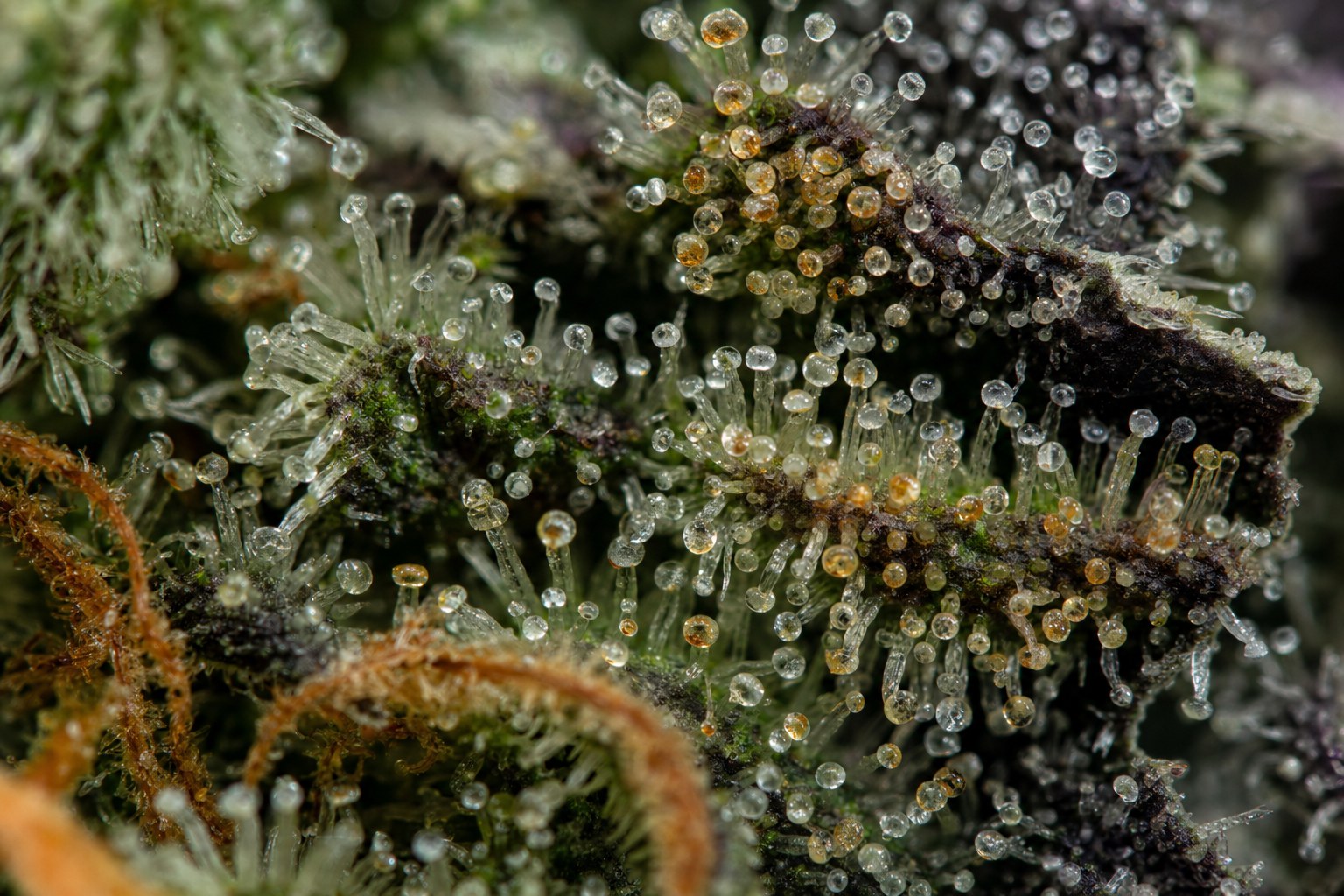
To assess when to harvest cannabis, inspect trichomes on several representative flowers with a clean loupe. Look for changes from clear to cloudy and amber heads, but do not rely on one colour ratio, one bud, pistils or a fixed date. Compare observations over several days alongside plant health, autumn weather and flower condition.
By the Outback Seed Bank grow team
Key takeaways
- Read trichomes on the flower calyxes rather than relying on sugar leaves, which can show amber earlier.
- Sample upper, middle and lower flower sites because trichomes do not all mature at the same rate.
- Use neutral light, steady hands and careful focus to distinguish clear, cloudy and amber heads.
- Record observations over several days instead of making a decision after one loupe check.
- Consider rain, humidity, mould risk, plant health and local requirements before choosing a harvest day.
- No trichome ratio guarantees a particular potency, quality or experience.
Harvest timing in an Australian autumn
Australian outdoor cannabis plants commonly approach harvest during autumn, but there is no universally correct month. Latitude, cultivar, planting date, container size, exposure and seasonal conditions all affect the window. A plant in subtropical coastal Queensland may face warm humidity and repeated showers while a plant in southern inland conditions may encounter cold nights, drying winds or an early frost.
Calendar estimates are therefore useful only as broad planning markers. The plant itself provides more relevant information, and trichomes are one of the most detailed features available for observation. Pistil colour, flower swelling, leaf ageing and aroma can add context, but each can also change because of weather, handling or plant stress.
Autumn forecasts matter because mature, dense flowers can retain moisture after rain, dew or fog. Inspect plants after wet conditions and look carefully for grey, brown, collapsed or unusually soft material. If suspicious material appears, avoid spreading it through unnecessary contact. A dry, calm inspection gives a clearer view than examining wet flowers immediately after rain.
Growers should also understand the rules that apply where they live. Australian requirements differ between jurisdictions and circumstances, so review the Australian cannabis cultivation legal overview before acting. General cultivation information does not establish that a particular activity is lawful.
What cannabis trichomes can indicate
Trichomes are tiny glandular structures visible across cannabis flowers and nearby leaves. Under magnification, many resemble a stalk topped by a rounded head. As flowers mature, those heads often shift in appearance from glass-like to milky or opaque, with some later taking on yellow, gold or amber tones.
These visual stages can help a grower judge progression, but they are not a laboratory measurement. Genetics, light exposure, heat, physical contact, age and image colour balance can all affect what the eye sees. A useful reading comes from patterns across representative flower sites rather than one isolated head.
Clear trichomes
Clear heads look transparent or glassy under suitable light. Their outlines may be visible while the interior allows light through. When most flower trichomes remain clear, growers commonly interpret the plant as still progressing towards maturity.
Recheck if bright backlighting makes cloudy heads seem transparent, if the loupe is out of focus, or if the sample comes from a shaded lower flower. Fresh surface moisture can also create reflective points that resemble trichome heads. Let wet flowers dry naturally before close examination rather than pressing or wiping them.
Cloudy trichomes
Cloudy trichomes may appear milky, pearly or opaque. Light scatters through the head instead of passing through as it does with a clear head. A broad increase in cloudy flower trichomes is often read as a sign that the plant is entering a more advanced stage of flower maturity.
Cloudiness can be subtle. Glare from a phone light or an artificial lamp may make every head look bright white, while underexposure may hide the distinction between cloudy and amber. Rotate the flower or change your viewing angle before recording the result. If practical, compare the same site under neutral daylight.
Amber trichomes
Amber heads range from pale straw or honey tones to deeper orange-brown. Some amber trichomes often appear while clear and cloudy heads are still present. Growers commonly regard a rising amber presence on flower calyxes as evidence of later maturity, but no particular percentage guarantees a defined outcome.
Amber on exposed sugar leaves deserves caution. Those leaves receive direct light and environmental exposure and can change sooner than the trichomes embedded on the flowers. Dust, bruising, heat stress and warm-coloured lighting may also create misleading tones. Confirm amber observations across several calyxes before drawing a conclusion.
How to inspect trichomes with a loupe
A handheld loupe offers a simple way to inspect trichomes without removing much plant material. Exact magnification claims are less important than obtaining a stable, sharply focused view in which individual heads can be distinguished. Clean the lens first with a suitable soft cloth, then choose a dry flower and support your hands to reduce movement.
Bring the loupe close to your eye and move your head and the lens towards the flower until the surface comes into focus. This is often steadier than holding the loupe at arm’s length. Avoid squeezing the flower. If the plant moves in the breeze, gently support the branch from beneath without rubbing the trichome-covered surface.
Use bright but diffused natural light where possible. Strong direct sun can create glare, while deep shade may flatten colour differences. View from more than one angle so reflections do not determine the reading. If supplementary light is necessary, use it for focus and then cross-check colour under neutral light.
Check the flower rather than the sugar leaves
Point the loupe towards the swollen flower structures from which pistils emerge. These calyx areas provide a more relevant sample than the small resinous leaves surrounding them. Sugar leaves can remain useful for general observation, but their trichomes often respond earlier to light, wind, heat and handling.
If leaves block the view, change angle rather than pulling the flower apart. Excessive handling can dislodge trichome heads and move moisture or debris across the surface. Where a flower cannot be inspected clearly on the plant, a very small representative sample may be easier to stabilise, provided taking it is lawful and appropriate.
Inspect several flowers in natural light
Choose sites from the upper, middle and lower parts of the plant, including flowers that receive different amounts of sun. An exposed top flower can progress differently from a shaded interior flower. Sampling only the largest top cola may therefore give an incomplete picture of the plant.
A practical inspection includes multiple calyx areas on each selected flower. Note the dominant appearance and whether clear, cloudy and amber heads are scattered or clustered. If one site differs markedly, consider whether shade, branch damage, water exposure or local stress explains the difference.
Record changes over several days
Write down the date, weather, sampled locations and approximate appearance. Simple labels such as mostly clear, mixed clear and cloudy, mostly cloudy, or cloudy with increasing amber are often more reliable than claiming an exact percentage from a small field of view.
Photographs through a loupe or a macro camera can document progression, but they have limitations. Automatic white balance, artificial lighting and screen settings can introduce colour casts. Use photographs as records rather than absolute proof, and cross-check them against direct observations under neutral light.
Checking at a similar time of day improves comparison. Daily inspection may be useful during a fast-changing or wet autumn period, while longer gaps may suit plants that still show many clear heads. Avoid repeated touching simply to check progress; a careful visual inspection is usually enough.
How to read mixed trichome colours
Clear, cloudy and amber heads commonly coexist on the same flower. Maturation is gradual, not a switch that changes every trichome together. The aim is to understand the overall direction across the plant and decide whether the observed stage aligns with practical conditions and the grower’s lawful plans.
No single ratio should be presented as a guaranteed harvest formula. Visual estimates vary between observers, and a loupe displays only a small field. Instead of chasing numerical precision, look for a repeatable shift: fewer clear heads, a broader cloudy presence, and perhaps increasing amber on the flower itself.
Why trichomes mature at different rates
Flowers develop at different times and receive different levels of light, heat and airflow. Upper sites may have greater sun exposure, while inner flowers can remain cooler and more humid. Branch position, local damage and cultivar structure add further variation. Even neighbouring trichomes may have formed on different days.
Environmental stress can also alter appearance. Intense light may discolour exposed surfaces, wind can cause abrasion, and rain can leave residue or physical damage. These signs should prompt a fresh inspection at another site rather than an immediate harvest decision based on the unusual area.
Combine trichomes with whole-plant signs
Trichomes deserve priority when the question is flower maturity, yet they make more sense alongside whole-plant observations. Check whether flowers are still visibly expanding, whether fresh pistils are appearing, whether branches remain healthy, and whether leaf changes are consistent across the plant. Pistils alone are unreliable because they may darken after wind, rain or contact, while new pale pistils can continue appearing late in flowering.
Calendar dates are similarly limited. Seed descriptions and previous seasons may provide a rough expectation, but current conditions have the final say. For broader cultivation context, see the Australian cannabis grow guide. Cultivar structure can also shape inspection and harvest planning, as illustrated in the Outback OG strain guide.
Trichome comparison guide:
- Clear: Transparent, glass-like heads may indicate earlier progression. Recheck under softer light if glare, water droplets or poor focus affect the view.
- Cloudy: Milky or opaque heads often indicate more advanced flower maturity. Recheck if artificial light makes all heads appear white.
- Amber: Yellow, honey or orange-brown heads can indicate later change. Recheck when colour appears mainly on sugar leaves or highly exposed surfaces.
- Mixed: A combination of stages is normal. Recheck representative upper, middle and lower flowers to identify the overall trend.
Before harvest, inspect for mould after rain, confirm that flower surfaces are dry enough for an accurate view, and clean the loupe between plants. Minimise contact and plan an orderly transfer into a clean, dark and well-ventilated drying space. In humid areas, environmental preparation is especially important because harvested flowers can hold moisture within dense clusters.
A sound decision framework is straightforward: sample multiple bud sites, prioritise trichomes on calyxes, compare observations over time, assess plant health and recent weather exposure, and check the applicable local rules. Harvest should be a considered decision based on a pattern of evidence, not a reaction to one amber head, one photograph or one calendar date.
Regional notes for Australian autumn
Tropical and subtropical regions: Warm autumn conditions may coincide with high humidity, showers and heavy dew. Inspect dense flowers frequently after wet weather, maintain airflow around plants and choose dry inspection periods. Cloud cover can also make colour assessment inconsistent, so use the brightest neutral light available without creating glare.
Temperate coastal regions: Autumn can alternate between mild dry spells and rain systems. Follow short-range forecasts and compare trichomes before and after weather changes. Salt-laden wind, mist and persistent moisture may leave residue, making checks across sheltered and exposed sites worthwhile.
Southern and elevated regions: Cool nights, frost risk and shorter days may become practical considerations. Cold or storm damage can change plant appearance without indicating uniform flower maturity. Compare sheltered and exposed branches, and balance trichome progression against forecast conditions.
Inland and arid regions: Dry air can reduce surface moisture while strong sun and large day-night temperature swings affect exposed flowers. Check that apparent amber colour is not confined to sun-facing sugar leaves. Windblown dust can also distort a loupe view, so inspect clean inner calyx areas from several locations.
Across every region, latitude and local microclimate matter more than a fixed national date. Repeated, careful observation is the clearest way to answer when to harvest cannabis based on trichomes during Australia’s variable autumn.