

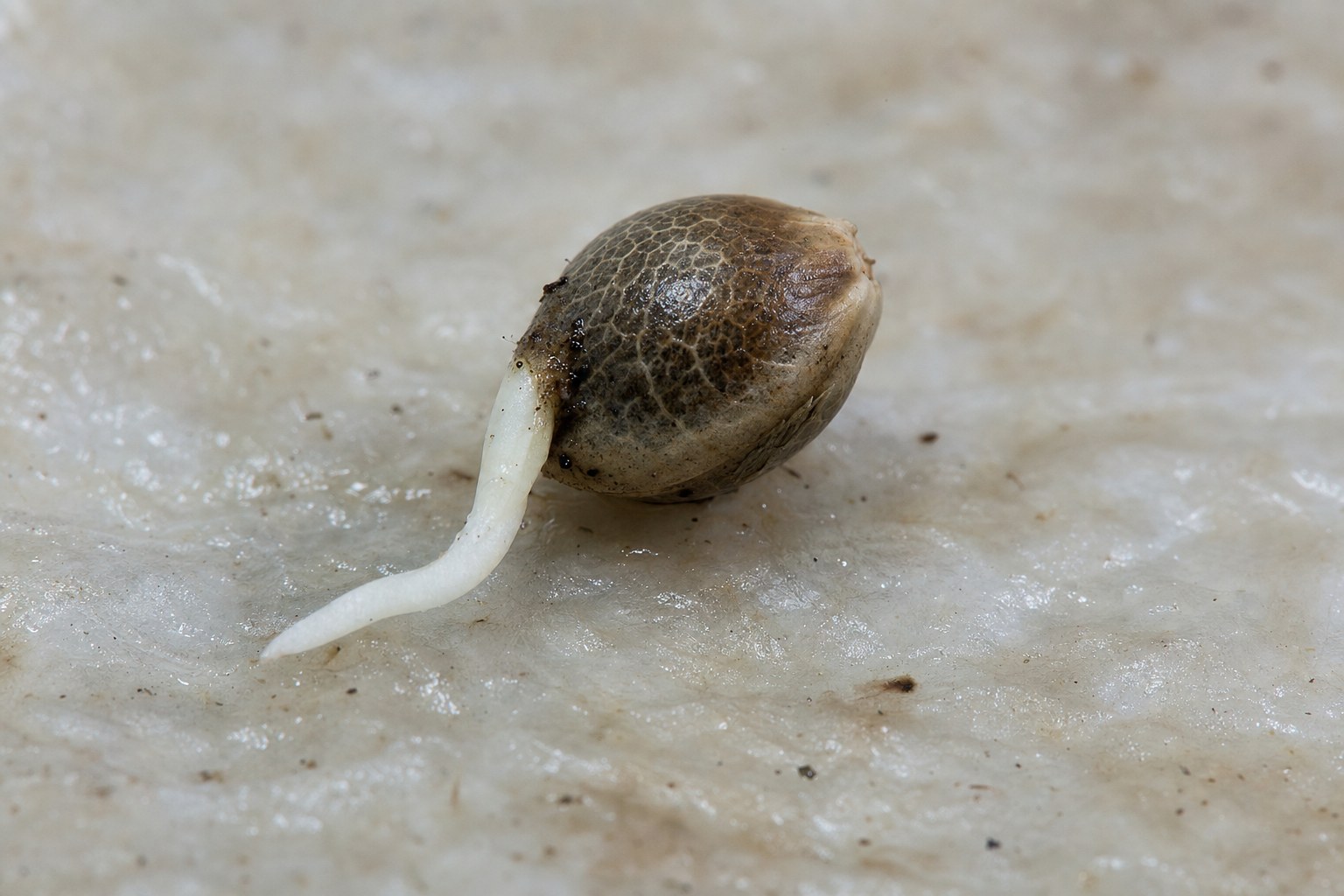
To germinate cannabis seeds, keep them warm, dark and consistently moist without saturating them. You can place seeds between damp paper towels, sow them directly into a light growing medium, or give them a short water soak before planting. Paper towel offers visibility, soil limits handling, and water works best as a brief pre-soak.
By the Outback Seed Bank grow team
Key takeaways
- Check local rules first: Laws around cannabis seeds, germination and cultivation vary across Australian states and territories.
- Aim for balance: Seeds need moisture, warmth and oxygen. A medium that is dripping wet can restrict airflow and encourage mould.
- Paper towel offers visibility: It makes seed progress easy to check, but the delicate taproot must be handled carefully.
- Direct soil means less handling: The seed stays where it will begin growing, though activity below the surface cannot be seen.
- Water is a short first step: A brief soak can hydrate the shell, but prolonged immersion can damage a seed through low oxygen conditions.
- Patience matters: Some viable seeds open quickly, while others need several days. Avoid digging, squeezing or repeatedly moving them.
Before germinating cannabis seeds in Australia
Spring brings warmer days to much of Australia, but the right starting time depends on local conditions rather than a date alone. Southern areas can still experience cold nights, while tropical regions may already be hot and humid. Before beginning, consider the law, seed condition, growing environment and likely weather during the seedling stage.
If cultivation is lawful in your circumstances, plan the seedling location before soaking or planting anything. A newly opened seed should not be left waiting while pots, medium or lighting are organised. Clean equipment, prepare labels and have the next container ready from the start.
Check the laws that apply in your state or territory
Cannabis laws are not uniform across Australia. Rules can differ for possessing seeds, germinating them, cultivating plants and using cannabis. Personal circumstances, location and the intended activity may also affect how the law applies.
Review current official requirements relevant to your state or territory before taking action. Our guides to whether cannabis seeds are legal in Australia and whether it is legal to grow cannabis in Australia provide general background, but they are not a substitute for checking the rules that apply to you.
What cannabis seeds need to begin germination
A cannabis seed begins germination when it absorbs water and internal growth processes activate. Three factors are central: moisture, warmth and oxygen. Darkness is also useful because it creates a stable environment similar to being under soil.
A commonly practical temperature range is about 20–25°C. Cooler conditions can slow activity, while excessive heat can dry the setup or stress the seed. Moisture should be steady but never swampy. Paper and soil should feel damp, not release water when lightly pressed.
Viable seeds vary in colour, markings, age and shell thickness, so appearance alone is not a perfect guide. Avoid scraping, cracking or squeezing the shell. These actions can injure the embryo and lower the chance of a healthy start.
How to germinate cannabis seeds using the paper towel method
The paper towel method is popular because progress remains visible. It is easy to see whether a shell has split and whether a white taproot has emerged. Its main drawback is that the exposed root can be damaged by rough handling, dryness or excess moisture.
Setting up the damp paper towel
- Wash your hands and clean a plate or food-safe container.
- Moisten two plain, unprinted paper towels with clean water.
- Gently press out excess water. The towels should be evenly damp without puddles.
- Lay one towel flat, place seeds several centimetres apart and cover them with the second towel.
- Put the towels inside the container or between two plates to retain humidity and exclude light.
- Keep the setup in a stable, warm location away from direct sunlight and strong heat.
Label different seed types so they are not mixed up. If you are still deciding what fits your plans, compare feminised, autoflower and regular seeds before starting.
Monitoring moisture and the emerging taproot
Check the towels once or twice daily. They should remain damp, but frequent opening can cause temperature and humidity swings. If an edge begins to dry, add a small amount of water around it rather than pouring directly onto the seed.
Germination may happen within a few days, although timing varies. The shell usually splits first, followed by a small white taproot. Do not pull away shell material or try to straighten the root. If mould appears, separate affected material, refresh the clean setup and reassess whether conditions are too wet or poorly ventilated.
Once the taproot is roughly a few millimetres to 1 centimetre long, transfer is generally easier than waiting for a long root. Extended roots can grow into paper fibres and become difficult to lift without damage.
Moving a germinated seed into soil
Fill a small pot with a light, pre-moistened growing medium. Make a hole around 0.5–1 centimetre deep. Using clean tweezers, lift the seed by its shell rather than touching the taproot. Place it with the root pointing down, then loosely cover it.
If orientation is unclear, place the seed on its side. Gravity will guide root growth. Mist or lightly water the surrounding area so the medium settles without becoming compressed. Keep it warm and consistently moist as the shoot moves towards the surface.
How to germinate cannabis seeds directly in soil
Direct sowing mirrors the seed’s natural pathway and removes the transfer step. The emerging root begins in its growing medium and is not exposed to paper or tweezers. The trade-off is limited visibility: growers must wait for emergence without repeatedly investigating below the surface.
Preparing a light, evenly moist growing medium
Choose a fine, airy seed-starting mix with good drainage. Dense garden soil can compact around a small seed, while a heavily enriched mix may be too strong for early growth. A small pot with drainage holes is easier to manage than a large container that stays wet for a long period.
Moisten the medium before sowing and mix it evenly. It should hold together lightly when squeezed but should not drip. Let excess water drain before planting. Starting with uniform moisture reduces the need for heavy watering after the seed is in place.
Planting depth, orientation and gentle watering
Make a hole approximately 0.5–1 centimetre deep. Place the seed point down if its shape makes the pointed end obvious; otherwise, laying it sideways is suitable. Cover it loosely rather than packing the surface firm.
Add only enough water to settle the upper layer. A spray bottle, pipette or very gentle pour can help avoid moving the seed. Maintain moisture in the immediate area, but do not repeatedly soak the whole pot. Good drainage and air spaces in the medium are essential.
Caring for the seed until emergence
Keep the pot warm and sheltered from harsh sun, cold draughts and large temperature shifts. A clear humidity cover can slow surface drying, but it should include some airflow and should be removed after the shoot emerges.
Do not dig up the seed to check progress. Disturbing the medium may break a new root or change its orientation. Instead, monitor temperature, moisture and time. When the seedling appears, introduce gentle light promptly and increase airflow gradually. For the next stages, see our broader guide on how to grow cannabis in Australia.
How to germinate cannabis seeds in water before planting
A water soak hydrates the outer shell before the seed moves into paper towel or soil. It is best regarded as a short pre-soak, not a complete germination environment. Seeds left underwater for too long receive limited oxygen and may become soft, damaged or vulnerable to mould.
- Fill a clean glass with room-temperature water.
- Place the seed in the water without forcing it below the surface.
- Keep the glass in a dark, stable location at roughly 20–25°C.
- Check periodically for swelling, sinking or a small split in the shell.
- Transfer the seed to damp paper towel or prepared soil within about 12–24 hours.
Some seeds float at first and later sink as they absorb water. Floating is not a reliable viability test, so avoid discarding a seed solely for remaining at the surface. If the shell opens earlier, move it promptly and handle it by the shell.
A soak can be useful for older or harder-shelled seeds, but longer is not necessarily better. Do not add household chemicals, fertiliser or other inputs. Plain water, clean equipment and a timely transfer provide a simpler environment with fewer variables.
Paper towel vs soil vs water: which method is best?
The best method is the one you can manage consistently. Paper towel provides the clearest view and makes timing the transfer straightforward. Direct soil minimises handling and lets the root establish immediately. Water rapidly hydrates the shell, but it should lead into one of the other two methods.
- Choose paper towel if you want to observe opening and can transfer a small root carefully.
- Choose direct soil if you prefer fewer handling steps and can maintain steady medium moisture.
- Choose a short water pre-soak if you want to hydrate the shell before using paper towel or soil.
No approach assures success. Seed viability, storage history, temperature, oxygen, moisture and handling all influence the outcome. Running a simple, clean process is usually more useful than adding extra steps.
Spring grow calendar and regional notes
Temperate southern Australia
In areas such as southern Victoria, Tasmania and cooler parts of South Australia or New South Wales, early spring nights can remain cold. Germination is easier in a stable indoor position, followed by gradual adjustment to outdoor conditions when temperatures are suitable. Consult our guide on when to plant cannabis in Australia before settling on timing.
Warm coastal and subtropical areas
Coastal New South Wales and southern Queensland may warm earlier, but spring weather can bring humidity and heavy rain. Prioritise drainage, airflow and shelter from downpours. Damp paper and soil need close attention because warm, stagnant conditions can encourage mould.
Tropical northern Australia
Northern regions follow wet and dry patterns more strongly than four distinct seasons. High heat can accelerate drying, while rising humidity can keep media wet. A shaded, well-ventilated germination position may be more stable than a hot windowsill.
Dry inland and western regions
Inland conditions can shift sharply between warm days and cool nights. Dry air may pull moisture from paper towel or the soil surface quickly. Use a covered container or small humidity dome with modest ventilation, and inspect moisture regularly without flooding the setup.
Beginners may also benefit from comparing characteristics in our guide to the easiest strains for Australian beginners. Seed type does not replace good technique, but matching growth habits to climate, space and experience can make planning clearer.
Final comparison
Learning how to germinate cannabis seeds is mainly about maintaining a warm, moist and oxygen-rich environment. Paper towel gives useful visibility but requires a careful transfer. Direct soil limits root handling but asks for patience while growth remains hidden. Water can help hydrate a seed, yet it is most suitable as a brief pre-soak before paper towel or soil.
Whichever method you choose, prepare the next stage first, keep tools clean, avoid excessive water and allow the seed time to respond. Check the rules that apply in your location before germinating or cultivating cannabis, and adjust spring timing to your regional climate rather than relying on the calendar alone.