

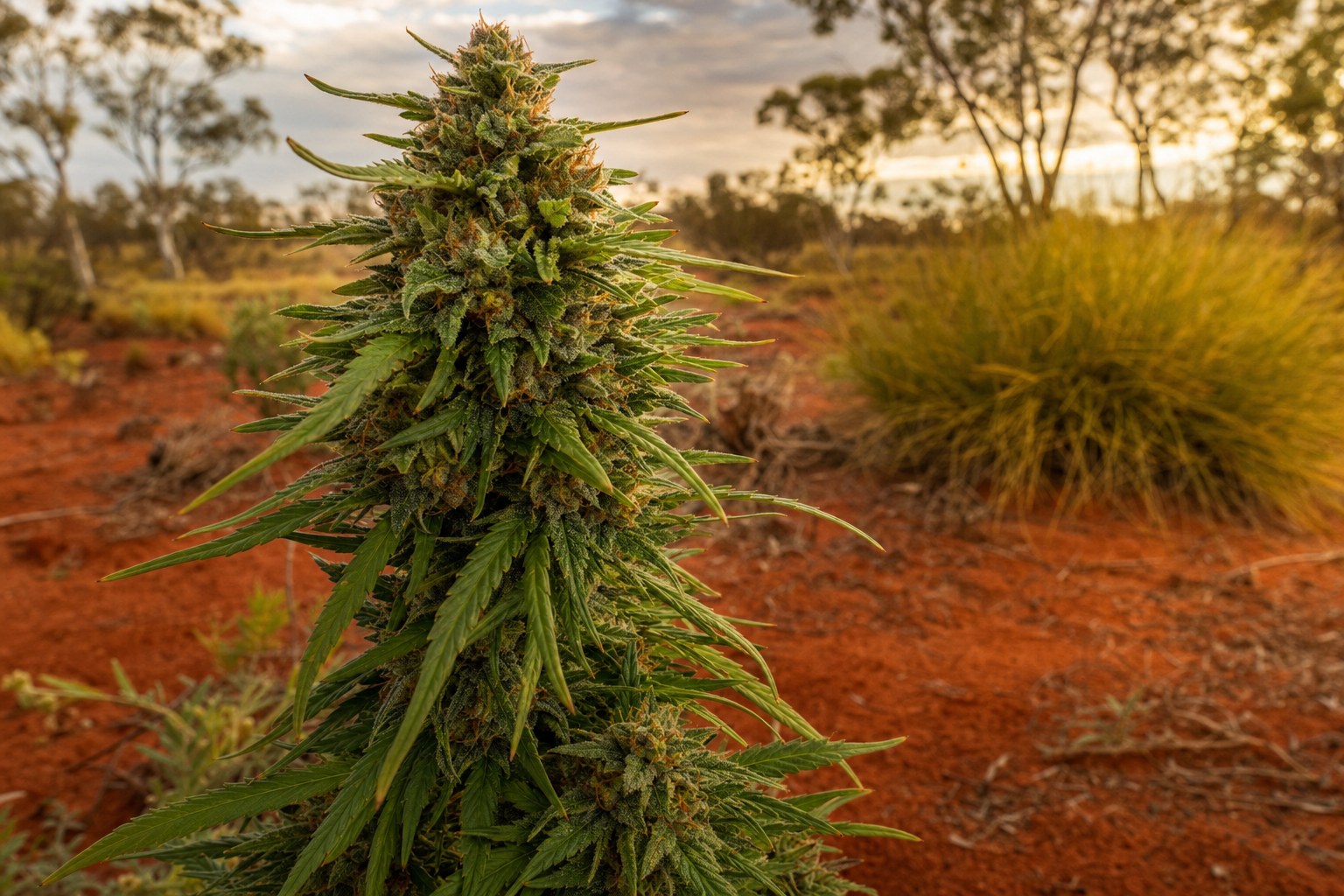
The Outback OG strain is an OG-style cannabis option selected by the Outback Seed Bank grow team for growers planning around Australia’s strong sun, varied climates and southern-hemisphere seasons. Its appeal lies in a compact, sturdy profile and familiar earthy aroma, while actual growth, timing and harvest quality depend on local conditions, grower decisions and the final seed record.
Key takeaways
- Australian selection focus: Outback OG was chosen with local seasonal planning, variable summer weather and practical space management in mind.
- OG-style profile: Growers can expect an earthy, pine-led and fuel-like direction, subject to variation between individual plants and the final product record.
- Location matters: Direct sun, airflow, privacy, drainage and access to water should all be assessed before planting.
- Seasonal timing: Spring is generally for preparation and establishment, summer for active growth, and autumn for close observation of plant maturity.
- Regional variation: Tropical humidity, southern cool spells, inland heat and coastal exposure can produce very different outcomes.
- Check local rules: Cannabis seed and cultivation laws differ across Australia. Review current state or territory requirements before acting.
Meet the Outback OG strain
Outback OG is presented as a locally focused interpretation of the classic OG-style plant: robust-looking, aromatic and suited to growers who value manageable structure. The selection is intended to make sense within Australian grow planning rather than assuming that one overseas timetable applies across the country.
That distinction is important. Australia includes humid tropical zones, dry inland districts, cool southern regions and exposed coastal areas. No cannabis strain performs identically across all of them. Outback OG should therefore be viewed as a considered option, not a promise of fixed behaviour in every garden.
Before ordering or planning a season, visit the Outback OG seed page and confirm the current format, listed traits and availability. Product details should remain the primary reference because seed format and final specifications can change. Growers comparing broader options can also read the guide to the best strains for outdoor Australian conditions.
Why the Outback Seed Bank grow team selected Outback OG
The Outback Seed Bank grow team selected Outback OG around practical priorities relevant to Australian growers: a structure that may be easier to manage than a highly sprawling plant, an aromatic identity associated with OG-style cannabis, and a growth pattern that can fit a conventional spring-to-autumn outdoor plan where cultivation is permitted.
Selection for Australian conditions does not mean universal resistance to heat, drought, wind, pests or high humidity. These pressures vary significantly, even between nearby properties. Rather, the selection reflects a preference for balanced plants that growers can assess and manage according to their setting.
Selection priorities for varied Australian conditions
A useful Australian selection must account for more than maximum daytime temperature. Night-time conditions, humidity, rainfall patterns, wind exposure, soil drainage and day length can be just as influential. In some districts, intense summer sun is the central issue. Elsewhere, prolonged leaf wetness or an early autumn cool change may be more significant.
Plant shape was another consideration. An OG-style plant commonly attracts growers who want strong branching and dense flower development without selecting an especially tall, long-season profile. Even so, individual expression can vary. Container size, root space, planting date, light exposure and training choices may all change the final height and width.
The team also prioritised a recognisable aromatic direction. Earth, pine, resinous herbs and fuel-like notes are commonly associated with the broader OG category. The balance and strength of these notes will depend on the individual plant and growing environment, so they should be understood as a profile direction rather than a fixed sensory formula.
What growers should consider before choosing a location
Start with legality. Rules for possessing seeds and cultivating cannabis are not uniform across Australia, and permissions may depend on jurisdiction and circumstances. Read are cannabis seeds legal in Australia? and is it legal to grow cannabis in Australia? then check current official requirements in your state or territory before taking action.
Where cultivation is lawful, assess the site across a full day rather than relying on a single midday inspection. Buildings, fences and trees can alter light and airflow as the sun moves. An area that appears bright in winter may receive very different exposure during spring and summer.
Good drainage is particularly important after heavy rain. Low pockets and compacted soil can remain wet long after the surface looks dry. Coastal growers should also consider strong wind and salt exposure, while inland growers may need to think about reflective heat from walls, paving or metal fencing.
Privacy and security should be considered alongside horticulture. Avoid locations accessible to children, pets or unauthorised visitors. Also consider whether routine observation is convenient. A site that is difficult to reach can make it harder to notice weather damage, irrigation problems or changes in plant condition.
Outback OG characteristics at a glance
- General style: OG-influenced cannabis with a sturdy, branching appearance.
- Likely visual direction: Green foliage, resinous flower development and potentially dense colas under suitable conditions.
- Aroma direction: Earthy, pine-like, herbal and fuel-toned.
- Seasonal fit: Best considered within a conventional southern-hemisphere spring, summer and autumn plan where lawful.
- Management focus: Air movement, weather awareness, sensible watering and adequate space around branches.
- Variation: Expression and timing can differ by plant, location and cultivation conditions.
Plant structure and appearance
Outback OG is expected to follow a stocky to moderately stretching OG-style pattern, with a central framework supported by side branches. Actual proportions should not be assumed before the final product specifications are checked. Plants grown with abundant root room may become substantially larger than those kept in smaller containers.
Flower clusters may form with a dense, chunky appearance as maturity approaches. Density can be visually appealing, but it also makes airflow and humidity awareness important. Leaves should not be packed against walls or surrounding vegetation, and branches need enough room to move without repeatedly rubbing against hard surfaces.
Colour may shift as the season progresses. Green remains the expected base, while cooler nights, plant variation and late-season development can influence leaf or flower tones. Colour alone is not a reliable maturity signal, and dramatic changes can also reflect environmental stress.
Aroma and flavour profile
The expected aromatic profile sits in the classic OG range, led by earth, pine and savoury herbal notes with a sharper fuel-like edge. Some plants may lean towards woody or peppery nuances, while others may present a brighter resinous character. Growing environment, harvest timing and post-harvest handling can influence what is ultimately noticeable.
Aroma can become more apparent later in flower, which has implications for site selection and discretion. Growers should consider neighbours, shared boundaries and local requirements before choosing any aromatic cannabis variety. No specific aroma intensity should be assumed for every seed or setting.
Expected growing pattern
Outback OG should be planned as a seasonal plant rather than a year-round outdoor crop. Under natural outdoor light, spring generally supports establishment and vegetative development, while shortening days later in summer and autumn influence flowering. Latitude and local microclimate can shift this broad pattern.
Avoid relying on a fixed flowering date. Seed-grown plants are living individuals, and their development can differ. Planting time, day length, weather, root volume and stress all contribute to the final schedule. The grower’s role is to observe the plant and adjust high-level planning without forcing a calendar developed for another region.
Planning around Australian seasons
Spring preparation and planting considerations
Spring is the main planning and establishment period for many outdoor Australian growers where cultivation is permitted. Before planting, review recent local frost dates, expected temperature swings and the amount of direct light available. Southern and elevated districts may remain cool well into spring, while northern areas can warm earlier but bring rising humidity.
Prepare the location before the plant needs it. Consider drainage, wind exposure, access to water and enough space for later branch growth. Large changes to the site are easier before roots and foliage occupy the area. Growers seeking a broader timing overview can consult when to plant cannabis in Australia.
A gradual transition to stronger outdoor light can reduce stress for plants started in a sheltered environment. Sudden exposure to intense spring sun, dry wind or cold nights can slow early development. The appropriate approach depends on the location and established cultivation plan.
Summer heat, sun and airflow
Summer can bring rapid growth alongside heatwaves, storms, hot wind and sharp changes in water demand. Observe the whole site during extreme weather. Dark containers, masonry and enclosed corners can become much hotter than the reported air temperature. Morning checks may not reveal conditions reached in late afternoon.
Water decisions should respond to the root zone and weather rather than a rigid timetable. Excess moisture and prolonged dryness can both create problems. Allowing adequate drainage and checking conditions before adding water is more useful than assuming every hot day requires the same response.
Air movement becomes increasingly relevant as branching and foliage develop. Natural airflow can help reduce pockets of stagnant humidity, but exposed sites may experience damaging gusts. The goal is a balanced position with air exchange and suitable shelter, not an enclosed corner or an unprotected wind tunnel.
Autumn monitoring and harvest timing considerations
Autumn is a period for close observation. Shorter days, cooler nights, rain and changing humidity can alter plant development and flower condition. Regional timing differs substantially: a warm coastal autumn does not behave like an elevated inland site or a cool southern district.
Do not select a harvest date solely from a generic week count. Observe overall flower development and, where lawful, use magnification to examine resin glands alongside other maturity indicators. The guide to harvest timing and cannabis trichomes explains this observational approach in more detail.
Weather forecasts should form part of autumn planning. Extended rain, strong wind or an abrupt cold spell may affect decisions, but a forecast alone does not establish readiness. Consider plant maturity, local conditions and applicable rules together.
Australian grow calendar and regional notes
Spring: September to November
Use spring for legal checks, site assessment and establishment. Frost-sensitive southern or elevated locations may need a later start than warm northern districts. Monitor changing sun angles and avoid assuming that early spring warmth will continue without interruption.
Summer: December to February
Expect stronger sun and potentially faster growth, but plan for heatwaves, thunderstorms and water-demand changes. In tropical and subtropical districts, humidity and heavy rain may be more pressing than dry heat. Inland growers should watch hot wind and rapid moisture loss, while coastal sites may face salt-laden exposure.
Autumn: March to May
Monitor maturity, overnight humidity and changing rainfall patterns. Cooler southern regions may experience faster seasonal transitions than warmer northern areas. Maintain airflow around developing flowers and inspect plants after significant weather events.
Winter: June to August
Winter is best framed as an off-season planning period for outdoor growers. Review notes from the previous season, compare seed options, inspect potential locations and check rule changes. Outdoor conditions are unsuitable for conventional seasonal cannabis growth in many Australian regions during this period.
Final word from the Outback Seed Bank grow team
The Outback OG strain was selected as a launch-ready Australian option for growers drawn to sturdy OG-style structure, earthy and pine-led aroma, and a conventional spring-to-autumn planning cycle. Its local relevance comes from thoughtful selection priorities, not a claim that every Australian climate will produce the same result.
Success begins with realistic expectations: verify the final Outback OG product record, understand your microclimate, choose an appropriate location and follow current state or territory rules. Plant expression, flowering progression and harvest quality will always vary with genetics, weather and cultivation conditions.