

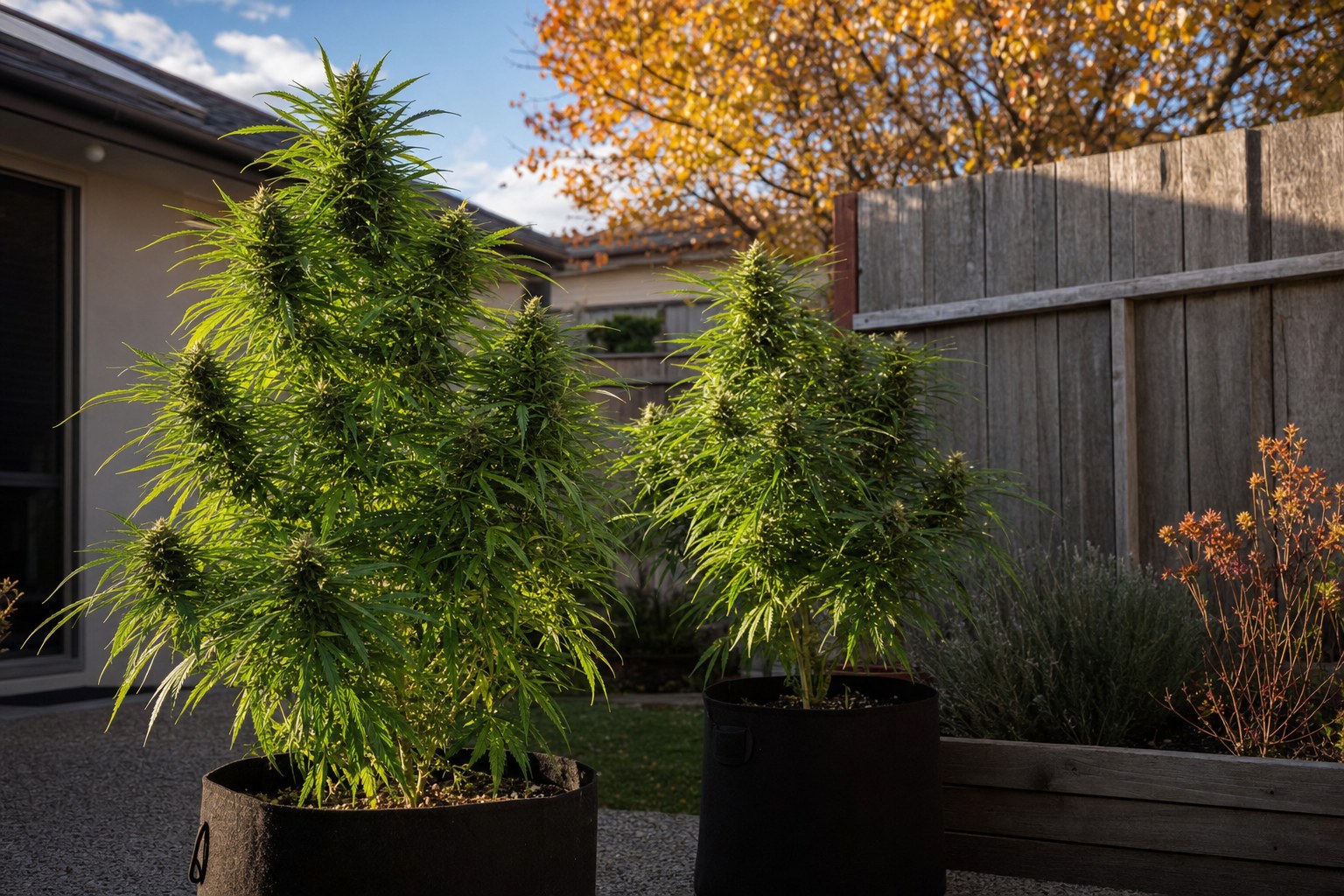
In the ACT, an adult aged 18 or over may generally cultivate up to two cannabis plants at their Canberra residence, with a maximum of four plants per household. Strict conditions apply: plants cannot be grown in public, be readily accessible to the public or children, or be cultivated artificially. Federal and other laws may still apply.
Publication date: 1 September 2026
Last reviewed: 1 September 2026
By: Outback Seed Bank grow team
This article provides general information about the ACT cannabis grow law. It is not personal legal advice, a compliance certificate or an assurance that particular conduct is lawful. Legislation, official guidance and enforcement settings can change. Check the latest consolidated ACT legislation and official government information, and obtain advice from a qualified Australian legal adviser where your circumstances are unclear.
Key takeaways
- ACT rules apply to adults aged 18 or over and only within the Australian Capital Territory.
- The general limit is two cannabis plants per adult, capped at four plants for a household.
- An adult may generally possess up to 50 grams of dried cannabis or 150 grams of fresh cannabis.
- Plants must be at the person’s residence and must not be in a public place or readily accessible to the public.
- Artificial cultivation, including hydroponic or other cultivation using artificial light or heat, remains restricted.
- Selling, gifting or otherwise supplying cannabis is not authorised by the personal possession amendments.
- Public consumption and exposing a child or young person to cannabis smoke remain prohibited.
- Seed acquisition, importation, mailing and interstate movement raise separate ACT and Commonwealth questions.
ACT cannabis grow law at a glance
Canberra’s framework is best understood as a narrow removal of specified ACT offences for limited personal conduct. It is not full legalisation and does not establish a general commercial cannabis market. Conduct outside the stated limits can still expose a person to legal consequences, while federal law may overlap with local rules.
The changes commenced on 31 January 2020. They concern certain personal possession and cultivation conduct by adults in the ACT. They do not apply throughout Australia, and they do not mean an ACT resident can carry the same permissions across the New South Wales border. Our broader overview of whether it is legal to grow cannabis in Australia explains why location matters.
Who the ACT rules apply to
The personal cultivation provisions apply to people aged 18 or over. A person under 18 does not receive the same protection simply because they live with an eligible adult or at premises where plants are kept.
The territorial boundary is also important. Queanbeyan and surrounding New South Wales communities are not governed by ACT cultivation settings. Visitors should not assume that being close to Canberra changes the law applying at their accommodation or residence. Moving cannabis across a border can introduce separate possession, transport and supply issues.
Housing arrangements can add another layer. A lease, social housing agreement, strata rule, body corporate requirement or workplace policy may restrict conduct independently of the ACT’s criminal law settings. Permission under one legal provision does not necessarily override contractual obligations, property rules, fire requirements, electrical standards or nuisance laws.
Plant, possession and household limits
An eligible adult may generally cultivate no more than two cannabis plants. The overall maximum is four plants at one household, regardless of how many adults live there. For example, a hypothetical home occupied by three eligible adults is not entitled to six plants; the household cap remains four.
Adults may generally possess up to 50 grams of dried cannabis or 150 grams of fresh cannabis. These are possession limits, not targets or allowances to supply another person. The legal definitions and factual distinction between fresh and dried material can matter, so readers should consult the legislation rather than estimate how officials or a court might classify particular material.
Ownership and control may also be relevant. Merely saying that extra plants belong to another housemate may not resolve questions about who cultivated, possessed or controlled them. Household members should not rely on informal labels to assume they are within the law.
Where cannabis plants may be grown in Canberra
Limited personal cultivation is connected to a person’s place of residence. It is not a general permission to establish plants on vacant land, in a community garden, at a workplace, in parkland or at another public location. A garden belonging to a friend or relative is not automatically the grower’s residence.
Private property and public visibility
Plants must not be cultivated in a public place or where they are readily accessible to the public. Whether a courtyard, balcony, front garden or shared outdoor area satisfies that condition can depend on its physical layout, access arrangements and legal character.
Visibility and accessibility are related but not identical. A plant visible over a fence is not necessarily accessible, yet an unfenced front garden or shared apartment courtyard may create a different issue. The legislation’s exact wording should be checked for the individual premises. This article does not recommend concealment or imply that screening makes otherwise unlawful cultivation permissible.
Rental residents should check their lease and seek written clarification where necessary. Landlords, property managers and authorised tradespeople may have lawful access in defined circumstances. Apartment balconies can also be affected by strata rules, common-property boundaries, odour, water drainage and public-access questions.
Outdoor growing and restrictions on artificial cultivation
The ACT settings do not authorise artificial cultivation. Official explanations describe this as including hydroponic cultivation and cultivation using artificial sources of light or heat. Equipment choices can therefore carry legal significance even where the number of plants is within the personal limit.
Natural outdoor cultivation at a residence remains subject to every other condition, including age, plant numbers, household limits, public accessibility and child access. Electricity, building and tenancy requirements may also apply independently. A person should not assume that ordinary horticultural equipment is acceptable without checking how the statutory definition operates.
This page deliberately does not provide operational growing instructions. Readers seeking seasonal context can review when to plant cannabis in Australia, but a planting calendar does not establish legal permission.
Regional and seasonal notes
Canberra has a southern-hemisphere growing cycle: spring runs from September to November, summer from December to February, autumn from March to May and winter from June to August. These seasons do not change statutory plant or possession limits.
Seasonal growth may affect how visible plants become from a street, neighbouring property or shared area. Leaf fall and changing daylight in autumn can also alter screening provided by surrounding vegetation. These practical changes make it sensible to reassess boundaries, authorised property access and shared-space arrangements without using privacy measures to evade the law.
Canberra’s cold winters, warm summers and variable conditions do not create legal exceptions for artificial light, artificial heat or hydroponic systems. Nor does weather allow additional plants as backups. If seasonal conditions make a proposed setup inconsistent with the legislation or property obligations, the safer course is to pause and seek qualified advice.
What ACT law does not allow
The personal-use amendments are limited. They should not be described simply as making cannabis legal in Canberra because that shorthand hides important restrictions. Commercial cultivation, unrestricted possession, public use and supply are not created by these rules.
Selling, sharing and supplying cannabis
Selling cannabis remains unlawful outside any separately authorised framework. Giving cannabis away, sharing harvested material or supplying it without payment can also amount to supply. The absence of profit does not necessarily make a transfer lawful.
This distinction matters in shared households. Each adult’s possession and involvement must be assessed on the facts; the household plant cap is not permission to distribute cannabis among residents or visitors. Posting cannabis, carrying it to another address or taking it across a jurisdictional border can create further risks.
Using cannabis in public places
The ACT amendments do not permit cannabis use in public places. A public park, footpath, shopping precinct or publicly accessible event space should not be regarded as an authorised consumption area. Private venues may also impose their own conditions of entry.
Separate laws apply to drug driving and workplace conduct. The fact that cannabis may have been possessed within an ACT quantity limit does not authorise driving with a relevant drug present, unsafe work or a breach of an employment policy. Legal consequences depend on the applicable provisions and facts.
Cannabis around children and young people
A person must not cultivate cannabis where a child or young person can access it. The law also restricts exposing a child or young person to cannabis smoke or vapour. Parents, guardians and household members should examine actual access rather than assuming a verbal rule or elevated shelf is enough.
Shared homes require particular care. Visitors, changing household arrangements and access through side gates or common areas can affect the situation. Child-safety obligations and family-law or housing consequences may also arise separately and require individual advice.
Cannabis seeds and the ACT legal framework
The status of a limited number of plants at a private ACT residence does not automatically answer how seeds may lawfully be acquired. Possession, acquisition, importation, mailing, gifting, germination and movement are distinct acts that may be governed by different ACT or Commonwealth provisions.
Why plant permissions do not settle seed acquisition
The ACT amendments did not create an unrestricted retail seed market or a blanket permission to import cannabis seeds. Commonwealth controls may apply to imported goods, postal items and border movements. Interstate activity can also involve the law of another state or territory, even when the intended destination is Canberra.
Readers can consult our general explanation of whether cannabis seeds are legal in Australia, but should verify the latest official wording before ordering, receiving, sending or carrying seeds. Product descriptions, overseas guidance and online comments are not substitutes for Australian legal advice.
A hypothetical adult who may lawfully keep two qualifying plants at an ACT residence should not infer that every method of obtaining the seeds is lawful. Likewise, a parcel addressed to Canberra is not exempt from Commonwealth controls merely because the recipient intends personal cultivation within local numerical limits.
Check current consolidated ACT legislation, ACT Government guidance, policing information and relevant Commonwealth requirements. Where acquisition, importation, post, ownership or movement is involved, advice from an independent qualified legal adviser may be appropriate.
Before relying on the ACT rules
Legal outcomes depend on evidence and individual circumstances. Definitions such as residence, public place, cultivation, possession and supply can be significant. Police, agencies and courts may assess facts differently from a householder’s informal understanding.
Use this verification checklist before making a decision:
- Confirm the current consolidated ACT law, commencement history and any recent amendments.
- Confirm that every person relying on the adult provisions is at least 18.
- Count plants per adult and across the entire household.
- Check fresh and dried possession quantities separately.
- Confirm that cultivation would occur at the relevant person’s residence.
- Assess whether the place is public or readily accessible to the public.
- Check that no artificial cultivation method is involved.
- Assess actual access by children and young people.
- Identify any sale, gift, transfer, transport, posting or interstate element.
- Review the lease, strata rules, housing agreement and other property conditions.
- Seek qualified legal advice if any fact or legal interaction is uncertain.
The central distinction is simple: ACT law allows limited personal conduct in defined circumstances. It does not provide unrestricted legality for cultivation, possession, acquisition, supply, public use, importation or interstate movement.
Spring, summer, autumn and winter never expand the statutory limits. Before acting, confirm the latest official ACT and Commonwealth information because laws, definitions and guidance may change. This page should be reviewed promptly following legislative amendments, relevant court decisions or updated government guidance.