

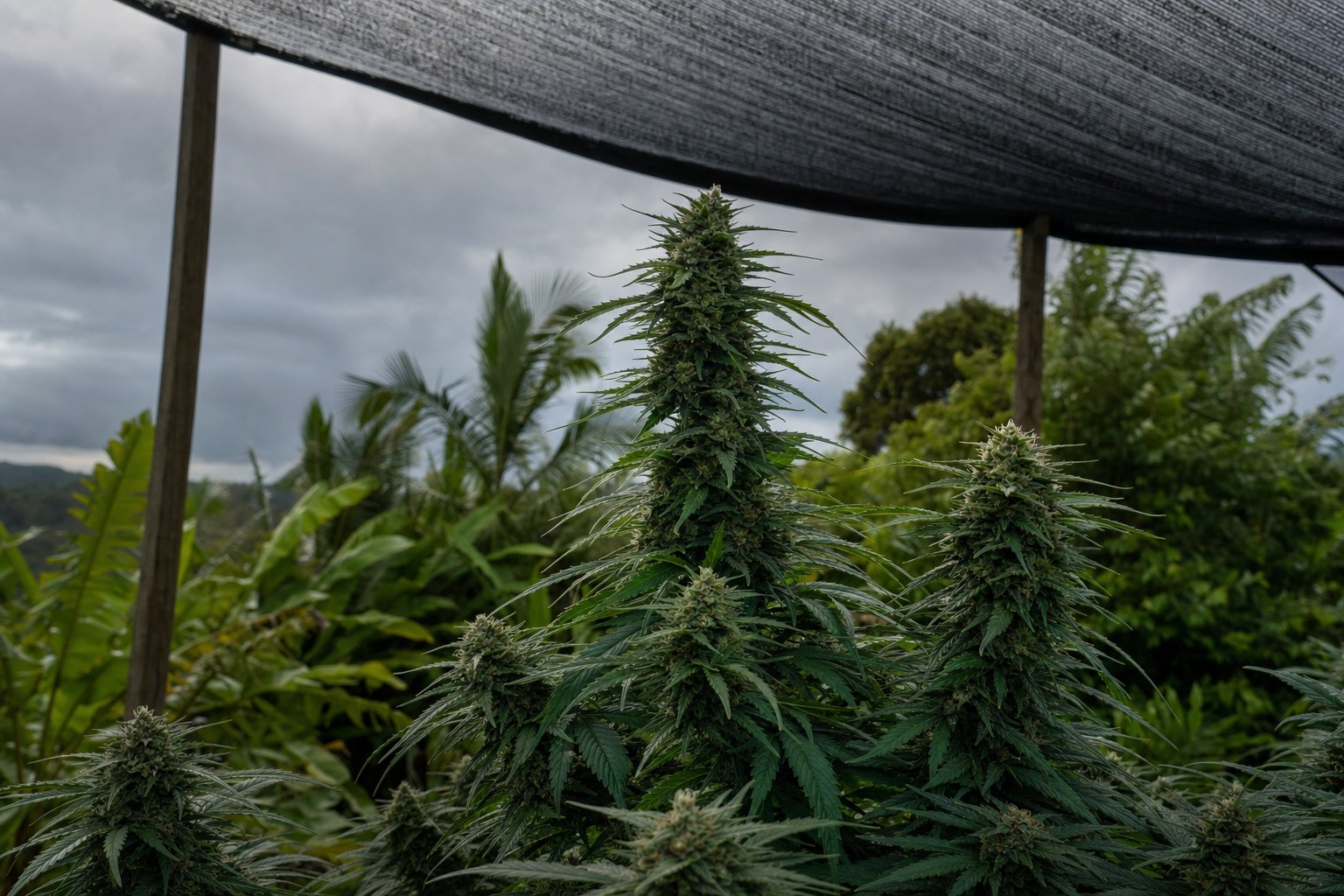
Growing weed in Queensland requires current legal authority and careful planning for the state’s heat, humidity, intense sun and variable spring rainfall. Unauthorised cannabis cultivation may carry serious penalties. If you are properly licensed or otherwise authorised, prioritise lawful site planning, airflow, weather monitoring and conservative water management suited to your local conditions.
By the Outback Seed Bank grow team
Key takeaways
- Check the law first: Queensland generally prohibits unauthorised cannabis cultivation, and seeds should not be bought or germinated without confirming the current rules.
- Local conditions matter: tropical North Queensland, the south-east coast, elevated districts and the inland can experience very different spring weather.
- Air movement is essential: crowded, enclosed or constantly damp foliage is more vulnerable to mould and other humidity-related problems.
- Use shade thoughtfully: afternoon protection can moderate harsh exposure, but dense shade or poorly positioned cloth may hold humid air around plants.
- Water according to the growing medium: do not rely on a fixed calendar when rain, wind, temperature and container size can change daily.
- Plan for storms: spring can bring heavy rain, gusty winds, hail and rapid temperature changes, particularly in coastal and subtropical districts.
Before growing weed in Queensland: check the current law
Cannabis cultivation is regulated in Queensland and across Australia. A person should not assume that possessing seeds, germinating them or growing a small number of plants is permitted. Rules may differ according to the substance, purpose, authority held and location, while Commonwealth requirements can also apply.
This article offers general climate and horticultural context for people who hold all required permissions. It is not legal advice and does not suggest that home cultivation is lawful. Regulations and enforcement settings can change, so check current Queensland Government and Commonwealth information before taking any practical step.
Queensland rules, licences and local restrictions
Queensland does not provide a general home-growing allowance for recreational cannabis. Commercial, research and other authorised activities may require multiple approvals, strict operating procedures, suitable premises and ongoing record keeping. Holding one approval does not necessarily satisfy every state, Commonwealth or local requirement.
Authorised operators may also need to consider planning controls, building requirements, electrical safety, water use, waste handling, workplace obligations, biosecurity and site security. Rental agreements, body corporate rules and insurance conditions may impose additional limits even where another form of authority exists.
Local councils can regulate matters such as structures, drainage, noise, lighting and land use. Shade structures, protected growing areas and water infrastructure may require separate consideration. Confirm what applies to the specific property rather than relying on advice about another council area.
Why laws should be checked before buying or germinating seeds
Legal status can become relevant before a plant appears. Acquisition, possession, importation, storage and germination may each be regulated. Product descriptions, online availability or overseas rules are not evidence that an activity is permitted in Queensland.
Check the current position before ordering or possessing seeds, preparing a site or investing in equipment. If the rules are unclear, seek independent legal advice from a suitably qualified Queensland professional. Keeping written records of licences, official correspondence and approval conditions can also help authorised operators maintain clear compliance systems.
Understanding Queensland’s spring growing conditions
Queensland spring runs from September through November, but there is no single statewide growing climate. September may remain mild in elevated southern districts while northern areas are already hot and humid. By November, many regions face stronger ultraviolet exposure, warmer nights and a rising chance of thunderstorms.
For authorised cultivation, planning should begin with local observations rather than broad seasonal assumptions. Compare recent weather, long-term patterns and the property’s own sun, wind and drainage behaviour. A low corner that stays damp after rain may perform very differently from a nearby raised, breezy position.
Heat, humidity and rainfall vary across the state
Heat places additional demand on plants because water can leave foliage and the growing medium quickly. High humidity changes that balance: the air may feel wet while a container remains surprisingly dry, or the surface may appear dry while deeper material stays saturated. That is why appearance alone is an unreliable watering guide.
Rainfall can be equally uneven. A storm may deliver intense rain to one suburb and miss another. Coastal showers can keep foliage damp for long periods, whereas inland heat and wind may draw moisture from exposed containers rapidly. Weather monitoring is therefore more useful than following a generic weekly routine.
Warm nights deserve attention because plants and growing media may have less opportunity to cool. When warmth is combined with wet foliage and stagnant air, mould pressure can increase. Licensed growers generally need a site plan that supports air exchange and allows regular inspection after humid nights or rain.
Coastal, tropical and inland microclimates
Tropical north: Spring heat and humidity can build early, with heavy rainfall and storm activity becoming more likely as summer approaches. Covered spaces that lack ventilation may hold excessive warmth. Sites also need preparation for intense rain and strong winds.
Central and northern coast: Sea breezes may support air movement, but salt exposure, humid nights and wind-driven rain can complicate conditions. Nearby buildings, fences and dense vegetation can create sheltered pockets where damp air lingers.
South-east Queensland: Spring can alternate between dry, warm periods and humid storm cycles. Urban surfaces often radiate heat after sunset, while hills and valleys produce sharply different sun and airflow patterns. Afternoon storms can arrive quickly.
Elevated and southern inland districts: Nights may remain cool early in spring even when days are sunny. Later in the season, dry winds and strong sun can increase water demand. Large day-to-night temperature swings call for close observation rather than assumptions based on daytime heat.
Western Queensland: Low humidity may reduce some damp-weather concerns, but extreme exposure, drying winds and abrupt storms create other challenges. Containers can heat quickly in direct sun, and exposed structures must be appropriate for local wind conditions.
Planning for heat and humidity
Good site planning is more effective than reacting after weather stress appears. For authorised projects, assess the full movement of sun and shade across the site, not just conditions at midday. Note walls, metal fences, paving and roofs that reflect or radiate heat. Also identify wind tunnels and enclosed corners.
Drainage should move excess rainfall away from the growing area without causing erosion, nuisance runoff or waterlogging elsewhere. Electrical equipment must be suitable for the environment and installed in accordance with applicable safety requirements. Temporary improvisations around water and electricity can create serious hazards.
Choosing a site with morning sun and afternoon protection
Morning light is often useful in humid regions because it helps foliage dry after dew or overnight showers. In very exposed locations, some afternoon protection may moderate the period of greatest heat. The ideal balance depends on latitude, elevation, surrounding surfaces and seasonal cloud cover.
A site should not be so shaded that foliage stays damp or growth becomes dense and weak. Observe the location over several clear and cloudy days. As spring advances, the sun’s path changes, so a space that seems suitable in September may receive substantially different exposure in November.
Protection can come from an appropriately designed shade structure, but nearby trees and buildings may introduce other issues. Dense vegetation can restrict airflow, drop debris or conceal pest activity. Solid walls can reflect heat or block breezes. Evaluate the whole setting rather than focusing only on hours of sun.
Using shade cloth without restricting airflow
Shade cloth should moderate exposure without turning the growing area into a sealed, humid pocket. It needs adequate clearance from foliage and a layout that permits warm air to escape. Cloth draped directly onto plants can trap moisture, rub against leaves and perform poorly during wind.
Selecting a structure requires professional judgement about local wind loading, anchoring and council requirements. Queensland storms can place substantial force on cloth and frames. A poorly secured structure may damage property or injure people, so use compliant materials and qualified assistance where required.
Avoid assuming that a darker cloth is always better. Excessive shade can reduce useful light and prolong surface moisture. The aim is balanced exposure appropriate to the site, with open sides or other lawful design features that maintain air exchange.
Allowing enough space around plants
Spacing affects airflow, inspection access and the speed at which foliage dries. Closely packed plants can create a humid interior even when the wider day feels breezy. Leaves touching walls, fences or neighbouring plants can also retain moisture and make routine observation difficult.
Authorised operators should plan for mature plant dimensions rather than the size at placement. Leave practical access for checking foliage, containers, supports and drainage after rain. Remove unrelated clutter from the area so it does not block air movement or harbour pests.
Spacing alone cannot compensate for a poorly selected site. A broad but enclosed courtyard may remain hotter and more stagnant than a smaller, well-ventilated area. Review sun, airflow, reflected heat and rain exposure together.
Watering during a Queensland spring
Water management is one of the hardest parts of growing weed in Queensland because spring conditions change rapidly. Fixed schedules can lead to excess moisture after storms or insufficient moisture during hot, windy periods. Assessment should instead reflect the actual condition of the growing medium and the recent weather.
Licensed growers should use a consistent observation and record-keeping process appropriate to their approved operation. Rain, cloud, wind, temperature, container material, plant size and drainage all influence how quickly moisture changes. Containers exposed to sun may behave differently from those only a short distance away in shade.
Checking the growing medium before watering again
Surface colour is not enough to show what is happening deeper in a container or bed. The upper layer may dry while the root zone remains wet, particularly after heavy rain. Conversely, wind and container heat can draw moisture out faster than expected.
Use non-destructive checks appropriate to the approved setup and compare observations over time. Consider the weight and drainage behaviour of containers, recent rainfall and whether foliage appears affected by heat, wind or prolonged saturation. Avoid responding to one sign in isolation, as several environmental stresses can look similar.
Water should be able to move through the medium and leave the growing area safely. Standing water around containers or structures signals a drainage issue requiring attention. Continually wet conditions can reduce oxygen around roots and increase the likelihood of unwanted biological growth.
Timing also matters at a general level. In humid districts, repeatedly wetting foliage late in the day can extend overnight dampness. Where authorised systems require irrigation, direct delivery to the growing medium and suitable oversight may limit unnecessary leaf wetness. Any automated setup should be checked regularly rather than assumed to be operating correctly.
Queensland spring grow calendar
September: assess and prepare
Confirm every legal approval before activity begins. Map morning and afternoon sun, inspect drainage and identify protected but ventilated positions. In southern or elevated areas, remain alert to cool nights. In the tropical north, heat planning may already be the higher priority.
October: monitor rapid changes
Day length, ultraviolet exposure and temperatures rise across much of Queensland. Reassess shade as the solar angle changes. Watch for storm forecasts, inspect structures and review whether surrounding vegetation is beginning to restrict airflow. Compare moisture observations with rainfall rather than relying on memory.
November: prepare for summer patterns
Humidity, storms and warm nights become more prominent in many coastal and northern districts. Check drainage after heavy rain, keep access paths clear and inspect supports following strong wind. Inland sites may need closer attention to drying conditions, while tropical sites may face repeated wet periods.
Regional notes for authorised growers
Far North Queensland generally demands the strongest focus on ventilation, storm readiness and avoiding persistently damp spaces. Along the central and south-east coasts, changing sea breezes and afternoon storms make daily local observations valuable. Elevated areas can retain cooler nights longer into spring, while inland districts often require planning for dry wind and intense sun.
Microclimates can outweigh regional labels. Two properties in the same town may differ because of slope, tree cover, soil, nearby water, buildings or exposure. Keep location-specific records and adjust only within the conditions of all applicable approvals.
Final perspective
Beating Queensland heat and humidity is not about finding one universal watering interval or shade percentage. It begins with lawful authority, then relies on thoughtful site selection, open airflow, suitable drainage, weather awareness and regular observation. Queensland’s scale makes local knowledge especially important.
If cultivation is not expressly authorised, do not buy, possess or germinate cannabis seeds. If it is authorised, follow every licence condition and obtain qualified advice for legal, structural, electrical, water and workplace matters. A conservative, documented approach is better suited to Queensland’s variable spring than a rigid routine copied from another climate.