

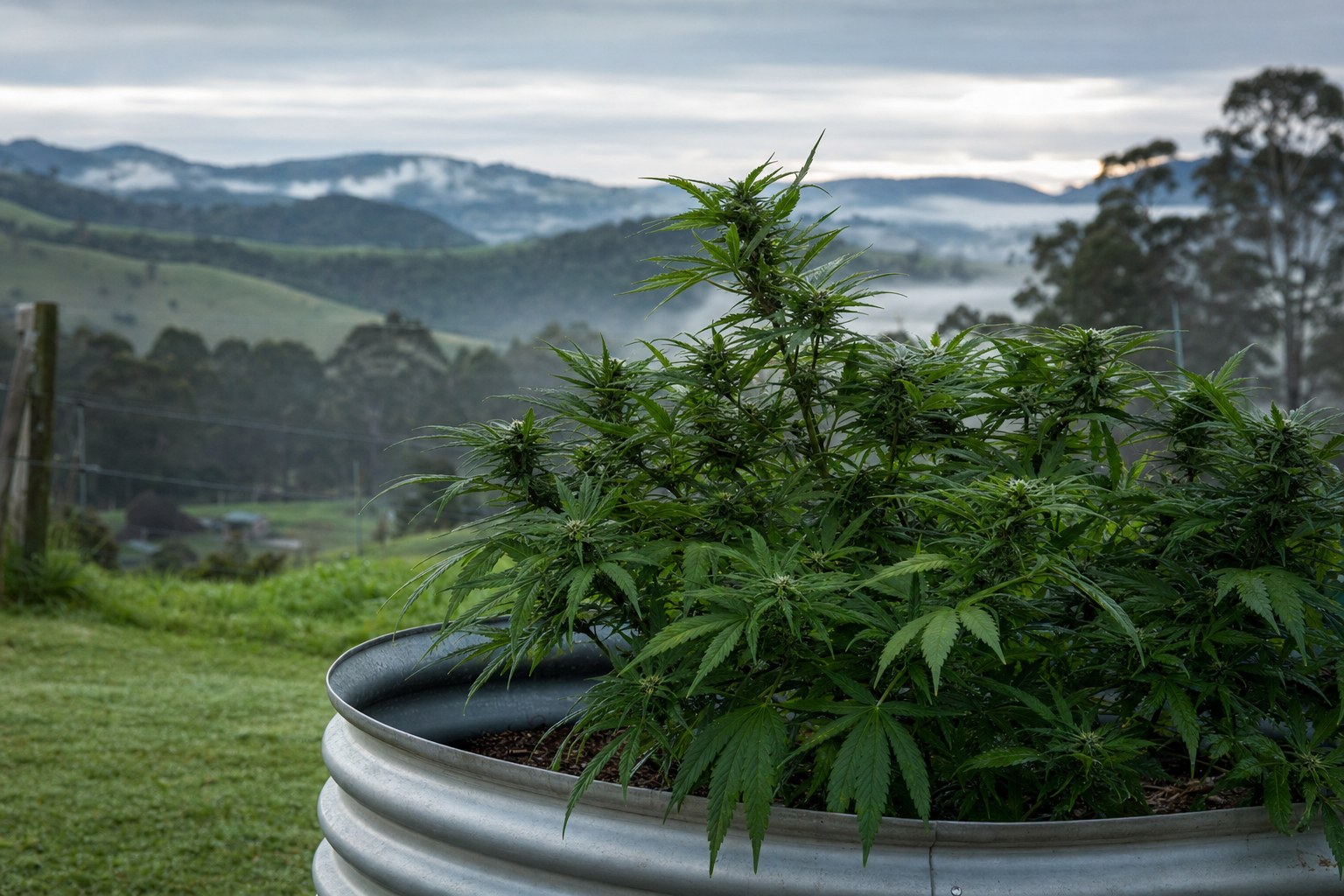
Growing cannabis in Victoria calls for careful timing, strong sunlight, shelter from cold winds and genetics suited to a compact outdoor season. Cool nights can slow growth, while spring weather swings and autumn moisture may narrow the productive window. Success depends on matching planting dates and plant type to your local conditions while checking current Victorian rules.
Key takeaways
- Victoria is not one climate: coastal districts, alpine areas, inland plains and suburban heat pockets each have different temperature and moisture patterns.
- Wait for reliably mild spring conditions rather than planting outdoors simply because the calendar says spring.
- Choose the sunniest practical position, with shelter from cold winds and soil or potting mix that drains freely.
- Compact, fast-finishing or autoflowering genetics may suit locations with a short frost-free window.
- Late-season airflow, rain protection and regular inspection become increasingly important as nights cool.
- Always check current state and local requirements before obtaining seeds, germinating plants or setting up a grow space.
Growing cannabis in Victoria: what the cool climate changes
Victoria’s outdoor season is generally shorter and less forgiving than seasons in warmer parts of Australia. Frost can linger into spring in elevated and inland districts, while cool overnight temperatures may return early in autumn. Even where frost is uncommon, several grey or windy days can reduce growth and keep soil wet.
Cannabis grows most vigorously when roots are warm, leaves receive abundant direct light and moisture levels remain reasonably steady. Victorian growers therefore benefit from flexibility. Seedlings can be kept in a bright, protected position until outdoor conditions settle, and containers can be moved when a sharp cold change, hail event or extended rain period is forecast.
Local observation matters more than broad climate labels. A north-facing brick wall may create a warm pocket, while a low section of the same garden may collect cold air overnight. Record first and last frosts, hours of direct sun, strong wind directions and how quickly the site dries after rain.
Regional variation across coastal, alpine and inland areas
Coastal Victoria often has moderated temperatures but may experience strong winds, salt exposure and persistent humidity. Shelter that still allows air movement is valuable. Plants placed behind a permeable screen generally receive gentler airflow than plants boxed into a stagnant corner.
Melbourne and surrounding suburbs contain many microclimates. Dense inner areas may stay warmer overnight, while exposed outer suburbs can be several degrees colder. Buildings and fences alter shade through the season, so assess the sun path rather than relying on a single spring observation.
Alpine and high-country districts have the tightest outdoor window. Late frosts, cold nights and rapid autumn cooling favour portable containers, protected spaces and earlier-finishing plants. Inland northern and western districts can offer stronger summer heat and lower humidity, but hot winds and fast-drying soil become major considerations. Irrigation reliability and afternoon root-zone protection may matter as much as cold tolerance.
Cool nights, spring weather swings and the shorter outdoor window
Spring in Victoria can shift quickly from warm sunshine to cold rain. Young plants exposed too early may stall, develop pale growth or remain wet for long periods. Rather than using a fixed statewide date, look for a stable run of weather and overnight temperatures appropriate for active growth. In frost-prone districts, local frost history should guide the final move outdoors.
Cold soil is especially limiting. Dark containers can warm rapidly in sunshine but lose heat overnight, while large beds change temperature more slowly. Mulch helps moderate moisture and temperature once the soil has warmed, but a heavy layer placed over cold, saturated ground may keep it cool. Apply it with local conditions in mind.
Check the current Victorian rules before growing
Cannabis laws and administrative requirements can change. Before buying seeds, germinating them or cultivating plants, check current Victorian legislation and any relevant Australian requirements. Do not assume that rules applying in another state or territory also apply in Victoria.
Personal cultivation, possession and seed rules can change
Rules may distinguish between seeds, live plants and harvested cannabis, and they may address possession, cultivation methods, quantities and where activity occurs. Penalties and enforcement settings can also change. Use current official Victorian information and, if your circumstances require it, seek independent legal advice.
This cultivation guide describes climate and garden planning only. It is not legal advice and does not establish that any particular activity is permitted. Check the position that applies at the time and place you intend to act.
Local restrictions, rental conditions and neighbour considerations
State law is not the only consideration. Rental agreements, owners corporation rules, planning controls, electrical standards and property conditions may affect what can be placed or altered. A greenhouse, shade structure, water tank or electrical installation may have separate requirements.
Consider privacy, odour, shared boundaries, pets, children and garden access. Avoid water runoff onto neighbouring land and do not let lighting spill beyond the property. Any equipment should be suitable for its environment and installed in line with applicable standards. Thoughtful site selection can reduce conflict and keep ordinary garden activity discreet.
Planning a Victorian outdoor grow
A good plan starts with the site rather than the seed catalogue. Observe the proposed area from morning to late afternoon, including shadows cast by buildings and trees. Check drainage after substantial rain and identify wind tunnels between structures. Then select the cultivation method and genetics that fit those conditions.
Choosing a sunny, sheltered and well-drained position
Prioritise direct sun, particularly from late morning through afternoon. A north-facing aspect is often useful in southern Australia because it captures more winter and shoulder-season light. Shelter from cold southerly and westerly winds can limit physical stress, but solid barriers may create turbulence or trap humid air. Permeable screening and generous spacing are often better.
Drainage is essential during wet Victorian spells. In-ground soil should not remain waterlogged after rain. Improve heavy ground with a raised structure and an appropriate free-draining soil blend rather than digging a small amended pocket into dense clay, which can act like a basin. Keep foliage away from constantly damp fences and thick vegetation.
Using raised beds, containers or protected spaces
Raised beds warm earlier, drain well and provide substantial root volume. They work best where the grower can fill them with a balanced mix and irrigate evenly. Containers offer mobility and tighter control over root media, making them practical for courtyards, frost-prone gardens and sites where shelter changes with the weather.
Container size affects stability. Small pots dry and cool quickly, while very large pots are difficult to move. Choose a manageable middle ground and use drainage holes that remain unobstructed. Raise pots slightly above paving so excess water can leave freely, and avoid dark pots in harsh inland afternoon sun unless the root zone is shaded.
A greenhouse or clear rain cover can extend protection, but heat and humidity may build rapidly on sunny days. Ventilation is essential. Open protected spaces early enough to exchange damp air, and use a minimum and maximum thermometer to learn how sharply temperatures vary.
Selecting genetics for a shorter season
For growing cannabis in Victoria, consider expected finish time, plant size and resilience under cool or changeable conditions. Fast-flowering photoperiod plants can complete their main flowering phase earlier than long-season types. Autoflowering plants operate on age rather than shortening day length, offering a compact schedule where the frost-free window is limited.
Feminised seeds can reduce the amount of space devoted to unwanted male plants, although every plant still needs observation. Compact plants may suit containers and sheltered suburban spaces, while large, late-finishing plants can be difficult to protect from autumn rain. Descriptions are guides rather than promises; local weather and cultivation choices remain influential.
A southern-hemisphere seasonal timeline
Late winter: prepare the site and equipment
Use August to inspect the location, clean reusable pots, test drainage and organise supports. Repair greenhouse vents and check that containers can be moved safely. If using a bed, prepare it early enough for the mix to settle, but avoid repeatedly working saturated soil because this damages structure.
Track overnight lows and the site’s actual sunlight. Late-winter sunshine can be misleading when cold soil, frost and short days remain. There is rarely an advantage in placing tender seedlings outside before the environment supports steady growth.
Spring: start cautiously and watch overnight temperatures
September can remain wintry across much of Victoria. Protected propagation may be more practical than immediate outdoor planting, subject to current rules. As conditions improve through October and November, acclimatise young plants gradually. Begin with limited exposure to direct sun and wind, then increase it over several days.
Cold changes remain possible well into spring, especially inland and at elevation. Keep portable plants under cover during hail, frost or prolonged cold rain. Water according to pot weight and root demand rather than a rigid daily schedule. Small plants in cool media use moisture slowly.
Summer: manage water, heat and plant structure
December and January usually deliver the strongest vegetative growth, but conditions vary from humid coastal periods to hot inland winds. Water deeply enough to moisten the active root zone, then allow suitable air exchange before watering again. Morning irrigation gives excess moisture time to drain and makes it easier to assess plants during daylight.
Use supports before branches become heavy. Soft ties, stakes or a simple frame can reduce storm damage without constricting stems. Maintain space between plants and remove dead fallen material from the growing area. During heatwaves, shade the container rather than heavily shading the entire canopy unless leaf stress is severe.
Late summer and autumn: focus on airflow and weather forecasts
Photoperiod plants generally move further into flowering as nights lengthen. From February onward, inspect flowers and inner branches frequently. Cool nights, dew and rain can leave dense growth damp. Good spacing, sensible pruning and rain shelter with open sides can reduce risk without creating stagnant conditions.
Autumn strategy depends heavily on region. Coastal growers may face humidity and wind-driven rain, alpine growers may see early cold, and inland growers may shift rapidly from hot days to chilly nights. Do not rely only on a projected harvest week. Observe plant maturity alongside the seven-day forecast and the condition of individual flowers.
Regional notes for Victorian growers
Melbourne, Geelong and coastal districts
Allow for wind, variable humidity and suburban shade. Secure pots against gusts without creating an enclosed pocket, and reassess sunlight as the sun angle lowers. Near the coast, rinse salt residue from non-cannabis garden structures and position sensitive plants away from direct salt-laden wind.
High country and frost-prone valleys
Prioritise mobility, early-finishing genetics and reliable overnight protection. Cold air settles in low areas, so an elevated bench or upper slope may be warmer than the valley floor. Portable containers also allow a plant to follow the sun while remaining sheltered during sudden weather changes.
Northern and western inland Victoria
Plan for high evaporation, hot winds and intense afternoon sun. Larger soil volumes, mulch applied after warming and a dependable irrigation setup help keep root moisture steadier. Pale outer pots or insulated sleeves can moderate root-zone heat. Check plants early on extreme days rather than waiting until leaves are heavily wilted.
Common mistakes in a short Victorian season
- Starting outside too early: a warm week does not mean frost and cold rain have finished.
- Choosing a shaded corner for privacy: inadequate light leads to weak structure and a damper canopy.
- Overwatering cool plants: roots use less water during low temperatures and cloudy periods.
- Ignoring autumn forecasts: several damp nights can change flower conditions quickly.
- Using a closed rain cover: weather protection without ventilation can trap heat and moisture.
- Choosing plants that finish too late: long flowering schedules may run into Victoria’s colder autumn weather.
Final thoughts from the Outback Seed Bank grow team
Victoria rewards growers who plan around local weather rather than idealised dates. Find the warmest sunny position, keep drainage and airflow strong, and retain the flexibility to respond to spring cold, summer heat and autumn moisture. Match genetics to the usable outdoor window, keep simple weather records and review current rules before taking any cultivation step.