

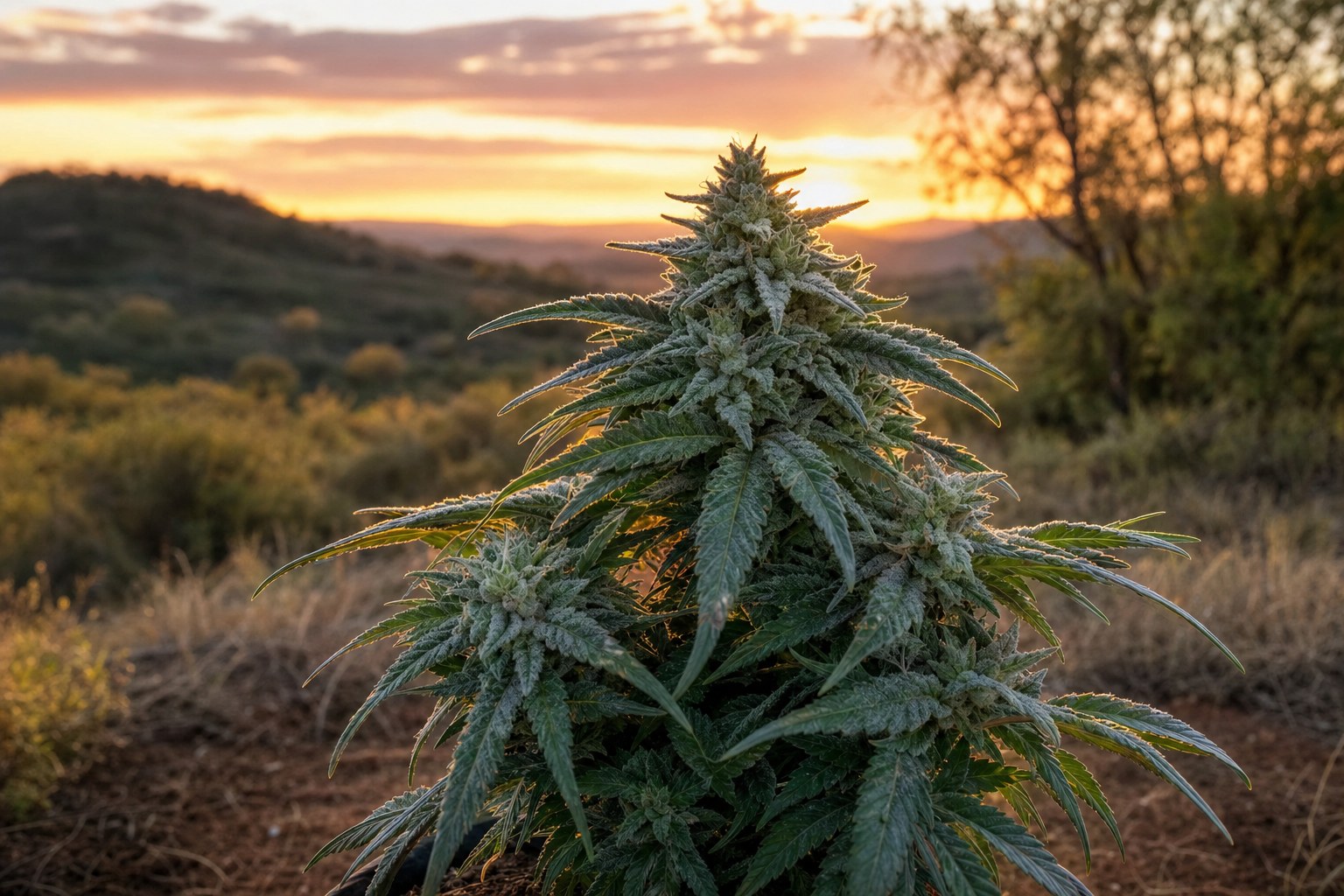
Northern Lights seeds in Australia suit growers seeking compact plants, manageable branching and a relatively short flowering phase. Feminised seeds provide control over plant training and seasonal timing, while autoflower seeds offer a faster, less light-dependent cycle. Always confirm the laws, licence requirements and cultivation conditions that apply in your state or territory before germinating cannabis seeds.
Key takeaways
- Compact growth: Northern Lights commonly forms a stocky plant with a dominant central stem, broad leaves and closely spaced flowering sites.
- Seed choice matters: Feminised photoperiod plants offer greater timing control, while autoflower plants suit short schedules and smaller spaces.
- Climate planning: Outdoor photoperiod crops generally begin in spring, grow through summer and flower as daylight decreases toward autumn.
- Humidity awareness: Dense flowers need airflow and regular inspection, especially in tropical, subtropical and wet coastal areas.
- Regional variation: Australian conditions range from humid northern summers to cool southern autumns, so there is no single national planting date.
- Legal awareness: Seed possession, germination and cultivation are separate legal issues. Check current local rules and any authorisation requirements.
Northern Lights strain overview
Northern Lights is widely recognised as an indica-dominant cannabis strain with compact growth, broad foliage and resinous flowers. Its restrained stretch can make canopy management more straightforward than it is with tall, narrow-leaf plants. Even so, the final shape depends on the seed line, container volume, root health, light intensity, nutrition, temperature and training used by the grower.
The strain is often considered approachable because established plants can respond well to basic topping, low-stress training and selective pruning. That reputation should not be mistaken for an automatic result. Seed quality, phenotype variation and environmental stability still influence plant vigour, flowering time, aroma and yield. Australian growers also need to account for intense sunlight, heatwaves, dry winds, sudden rain and major differences between regions.
Indoors, Northern Lights can fit tents, cabinets and dedicated rooms where height is limited. Outdoors, a sunny but sheltered position can support strong seasonal growth. Dense flowers make late-season weather especially important: good spacing, airflow and protection from prolonged rain help reduce the risk of mould and damaged flowers.
Plant structure and appearance
A typical Northern Lights plant develops a sturdy main stem, short-to-medium gaps between nodes and broad, deep-green leaves. Untouched plants often favour one central cola with substantial side branches beneath it. Topping can create several leading shoots, while gently tying branches outward helps light reach lower growth and produces a flatter canopy.
Flowering stretch is generally moderate, although individual plants can still increase noticeably in height after the light cycle changes or autumn nights lengthen. Flowers tend to build in dense clusters and may show a thick layer of trichomes by maturity. Some phenotypes display darker green or purple colour in cool conditions, but colour alone is not a dependable indicator of readiness.
Use several signs when judging maturity, including the overall swelling of flowers, the condition of pistils and trichome appearance under magnification. Environmental stress can darken pistils early, so relying on a single visual cue may lead to poor timing.
Aroma and flavour profile
Northern Lights commonly expresses earthy, pine-like and woody aromas, sometimes accompanied by sweet, herbal or lightly spicy notes. The profile can become stronger during late flowering, particularly when plants are disturbed or temperatures rise. Phenotypes vary, and growing conditions influence how clearly each note develops.
Indoor growers should plan ventilation with odour management in mind. A correctly sized extraction fan and carbon filter can help manage strong aromas, while moving air through rather than merely around the room supports a more stable environment. Avoid aiming powerful fans directly at flowers for long periods, as constant wind pressure can dry surfaces unevenly and stress leaves.
Northern Lights seed options in Australia
When comparing Northern Lights seeds in Australia, start with the desired schedule, available height and growing method. The broad categories are feminised photoperiod, autoflower and crossed varieties. Labels describe likely characteristics rather than identical outcomes. Cannabis plants grown from seed retain natural variation, so two seeds from the same pack may differ in structure, aroma, speed and response to training.
Confirm whether possessing seeds is permitted where you live and whether germination requires specific authority. Australian rules can differ between states and territories, and requirements may also depend on the purpose and setting. Do not assume that a seed listing or seed possession automatically authorises cultivation.
Feminised Northern Lights seeds
Feminised Northern Lights seeds are selected to produce female plants at a high frequency. They are useful when growers want to make efficient use of limited lawful plant numbers or indoor floor space. Because standard feminised Northern Lights is photoperiod-sensitive, the grower controls indoor flowering by changing the light schedule. Outdoors, decreasing daylight toward late summer and autumn initiates the transition naturally.
Photoperiod plants can remain in vegetative growth while days or indoor light periods are long. This gives growers time to top, shape, transplant and recover plants before flowering. It also means an indoor cycle can become longer if plants are kept in vegetative growth for an extended period. Outdoors, starting very early may produce a much larger plant than expected, so consider visibility, wind exposure, root space and any conditions attached to lawful cultivation.
Northern Lights autoflower seeds
Northern Lights autoflower seeds begin flowering mainly according to age rather than a seasonal reduction in daylight. Their complete cycle is usually quicker than that of photoperiod plants, making them relevant to short weather windows or compact indoor spaces. They can also be run under a consistent daily light schedule indoors.
The trade-off is limited recovery time. Heavy pruning, root disturbance, overwatering or nutrient stress early in life can reduce final size because the plant continues advancing toward flowering. Many growers therefore sow an autoflower in its finishing container, use gentle branch positioning and avoid major interventions. Outdoors, strong spring or summer light generally supports better growth than weak winter conditions, even though flowering is not controlled by day length.
Northern Lights crosses
Northern Lights crosses combine its compact, resinous tendencies with characteristics from another parent line. A cross may introduce additional height, a different aroma, more branching, altered flower density or greater variation between seedlings. The Northern Lights name does not mean every cross will behave like a classic compact selection.
Read the stated growth pattern and flowering type carefully. Check whether the seeds are photoperiod or autoflower, and allow extra vertical space when the second parent is associated with strong stretch. Growers seeking uniformity may prefer a well-described, stable line, while those comfortable selecting among varied plants may enjoy the broader expressions found in some crosses.
Planning around Australian growing seasons
Australia spans tropical, subtropical, arid, temperate and cool-climate zones. A calendar that works in southern Victoria may be unsuitable for coastal Queensland or the Top End. For outdoor photoperiod plants, local daylight, minimum temperatures, rainfall and humidity are more useful than a date printed for the entire country.
Spring planting and summer growth
In temperate regions, spring is the usual establishment period for outdoor photoperiod plants. Seedlings need protection from cold nights, heavy rain, hot drying wind and abrupt exposure to intense sun. Harden indoor-started plants gradually by increasing their outdoor light exposure over several days rather than moving them straight into full midday sun.
Vegetative growth accelerates as days lengthen and soil temperatures rise. This is the time to build an open structure with early topping or low-stress training. Space branches so that light and air can move through the canopy. During heatwaves, check containers frequently because small pots can dry rapidly and root zones can become excessively hot. Mulch can moderate soil temperature outdoors, but keep wet material away from the main stem.
Water according to root-zone moisture rather than a fixed daily timetable. Thorough watering followed by an appropriate drying interval encourages healthy root development. Constantly saturated media can limit oxygen around roots, while repeated severe wilting slows growth. Pots need free drainage, and saucers should not remain full after irrigation.
Autumn harvest timing
Photoperiod Northern Lights generally flowers as nights become longer. In many temperate Australian locations, this places flowering across late summer and autumn, though the exact timing varies by latitude and phenotype. Watch the plant rather than selecting a fixed harvest date months in advance.
Autumn brings shorter days, cooler nights and, in some districts, increased rain or morning dew. Dense flowers should be inspected regularly. Remove dead leaf material, maintain spacing between branches and avoid leaving flowers wet after rain. If plants are legally grown in movable containers, a bright covered position during prolonged downpours can reduce weather exposure without sacrificing daytime airflow.
Harvest readiness is best assessed with magnification and whole-plant observation. Check flowers from several areas because exposed tops may mature sooner than shaded lower branches. After cutting, dry branches in a dark, clean and ventilated space with moderate conditions. Fast drying can flatten aroma, while stagnant damp air raises the likelihood of mould.
Adjusting for regional climate differences
Tropical north: Warmth permits broad planting windows, but photoperiod behaviour can be less intuitive because seasonal day-length changes are smaller. High humidity, monsoonal rain and insect pressure make open plant structure and shelter especially important. Choose the drier part of the local year where the lawful schedule allows.
Subtropical east: Long warm seasons can support vigorous growth. Summer storms and humid autumn nights may challenge dense flowers, so avoid overcrowding and consider starting early enough that flowering does not extend unnecessarily into persistently wet weather.
Temperate south-east and south-west: Spring establishment and autumn flowering usually align well with natural photoperiod cycles. Late frosts can damage young plants, while early autumn rain may affect mature flowers. Coastal sites often require more humidity management than dry inland districts.
Cool southern and elevated districts: The outdoor window is shorter, and cold nights arrive earlier. Sheltered positions, an indoor seedling start and timely plant selection can help make use of the available season. Large late-flowering plants may struggle to finish before persistent cold and wet conditions.
Arid and inland areas: Low humidity can reduce some moisture-related issues, but extreme heat, intense ultraviolet exposure and rapid evaporation create other pressures. Afternoon shade during severe heat, larger containers, mulch and wind shelter can stabilise the root zone. Ensure airflow remains available around any shade structure.
Growing Northern Lights indoors and outdoors with legal awareness
Indoor Northern Lights plants benefit from stable temperature, adequate extraction and an evenly lit canopy. Allow space for moderate flowering stretch and keep lights at a distance appropriate to the equipment. Pale upper leaves, upward-curling edges or stalled growth can indicate excess heat or light intensity. A simple canopy with several evenly spaced tops usually uses indoor light more efficiently than one tall central stem.
Outdoors, prioritise direct sun, drainage and wind protection. Support heavy branches before they lean, using soft ties that do not cut into stems. Keep the area tidy and inspect leaf undersides, branch junctions and flowers routinely. Respond to pests with lawful, crop-appropriate methods, and avoid spraying mature flowers with unsuitable products.
Northern Lights is compact, but it is not automatically discreet, odour-free or suitable for every climate. Plan for the plant’s full size, aroma and flowering conditions before sowing. Most importantly, verify current Commonwealth, state or territory rules and any licence, permit, prescription-related or authorised cultivation conditions relevant to you. This guide provides general horticultural information and does not establish that cultivation is lawful in any particular location.