

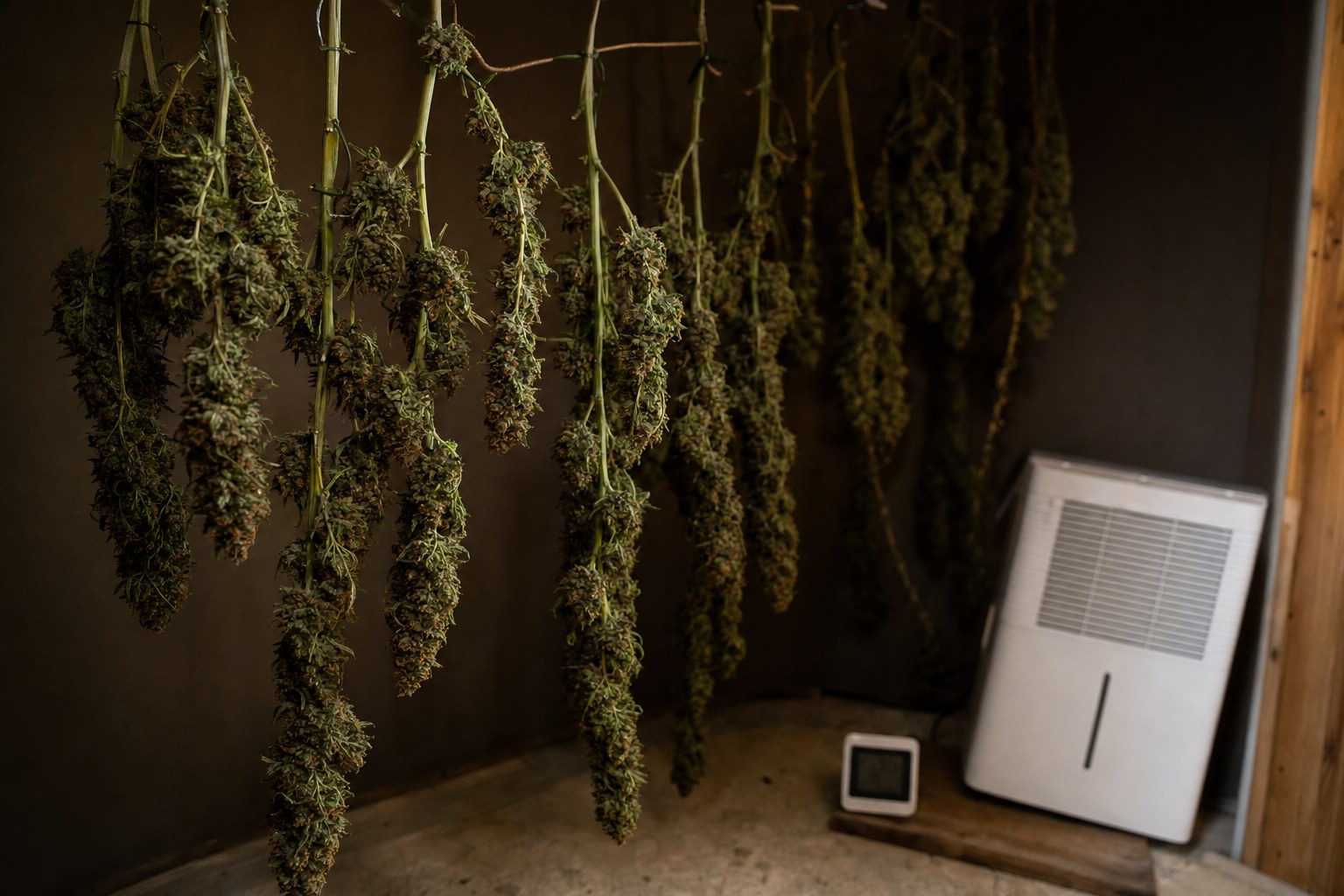
To dry harvested cannabis in humid Australian weather, hang trimmed branches in a dark, clean space with gentle air exchange, stable temperature and closely monitored relative humidity. Inspect flowers daily, adjust ventilation or dehumidification gradually, remove any mould-affected material, and move evenly dried flowers into clean containers for slow moisture equalisation and storage.
Key takeaways
- Use a dark, clean drying space that can be monitored and adjusted without large environmental swings.
- Hang branches with room between them rather than packing flowers together.
- Track relative humidity and temperature at flower height with a reliable digital hygrometer.
- Use gentle, indirect airflow. A fan should circulate room air without blowing directly onto flowers.
- Inspect dense flowers and branch junctions daily for damp pockets, musty odours or visible mould.
- Condition dried flowers gradually in clean containers, checking regularly for returning surface moisture.
- Review the rules that apply in your state or territory before cultivating, possessing or storing cannabis.
By the Outback Seed Bank grow team
Drying cannabis in humid Australian autumn weather
Australian autumn can bring warm days, cool nights and sudden rain, creating challenging conditions for freshly harvested cannabis. Coastal areas often experience persistent humidity, while inland locations may alternate between dry afternoons and damp nights. A drying room that appears suitable at midday can become much wetter after sunset, so decisions should be based on repeated readings rather than a single observation.
Drying removes moisture from harvested flowers slowly enough to retain their structure, aroma and colour. If flowers lose moisture too rapidly, the outside may become crisp while the centre and stems remain damp. If the process moves too slowly, prolonged moisture creates conditions in which mould can develop. The practical goal is steady, even moisture loss without stagnant air or sharp environmental changes.
Harvest timing affects the task. Flowers collected immediately after rain, heavy dew or irrigation may hold additional surface and internal moisture. Whenever local rules and growing circumstances permit, choose a dry part of the day and avoid carrying wet plant material into a closed room. Our guide to when to harvest cannabis by checking trichomes explains how visual maturity checks can support harvest planning.
Autumn weather forecasts are useful, but the conditions inside the drying area matter most. Buildings respond differently to outdoor humidity. A metal shed can heat rapidly during the day and cool sharply overnight, while a spare room may remain more stable but lack fresh-air exchange. Basements, garages and enclosed verandahs can conceal dampness in walls, floors or stored items.
A slow, controlled process is generally preferable to using strong heat. Heaters, ovens, direct sunlight and hot air can dry the surface abruptly and reduce aroma quality. They may also create misleading texture: flowers can feel dry outside while retaining moisture internally. Focus instead on darkness, modest temperatures, gentle circulation and regular inspection.
Prepare a dark, clean and ventilated space
Empty the proposed area before harvest and clean away dust, soil, dead leaves and unrelated stored materials. Check ceilings, window frames, curtains, timber, cardboard and corners for existing mould or condensation. Do not use a room with an unresolved damp problem. Wash and dry hanging lines, racks, scissors and collection trays before plant material enters the space.
Block direct light while maintaining safe ventilation. Darkness helps retain colour and aromatic quality, but the room should not be sealed without air exchange. Depending on the site, suitable ventilation may come from an extraction fan, a filtered vent or brief controlled airing when outdoor conditions are favourable. Screens can limit insects and wind-blown debris entering through vents.
Choose hanging hardware that can support wet branches without crowding. Coated wire, clean line or purpose-made racks may be used, provided surfaces are clean and flowers cannot fall onto the floor. Leave clear walking space so each branch can be inspected without brushing against neighbouring flowers.
A small dehumidifier can be useful in persistently damp regions, especially during rainy periods. Select equipment suitable for the room volume and empty its reservoir regularly. Position it so warm exhaust does not blow directly onto hanging material. Electrical devices should be kept away from water, overloaded boards and loose plant matter, with cords arranged to reduce trip hazards.
Monitor humidity, temperature and airflow
Place at least one digital hygrometer near flower height rather than beside the floor, ceiling, vent or dehumidifier outlet. In a large or irregular room, use a second unit on the opposite side. Comparing readings can reveal humid corners or zones receiving too much air movement. Check instrument accuracy before relying on small differences between displays.
Many growers aim for moderate relative humidity, often around the mid-50s to low-60s percentage range during the main drying period, with room temperature commonly kept near 16–21°C. These are working ranges rather than guarantees. Flower density, branch size, equipment accuracy and local weather all influence the result. Avoid chasing a number with constant, abrupt adjustments.
If humidity climbs, increase air exchange or run a dehumidifier in short, measured stages. If conditions become too dry, reduce extraction intensity and direct circulation away from the branches. Adding open water or wet towels is difficult to control and can introduce hygiene issues, so improving room stability is a better approach.
Air should move around the room without making flowers sway continuously. Point circulation fans towards a wall or open part of the room, not at the harvest. Direct fan exposure can harden outer surfaces before moisture has travelled from the centre. Check behind racks, beneath dense groups and near exterior walls, where still air can linger.
Hang branches and check moisture regularly
Remove large fan leaves and any damaged, dirty or visibly mould-affected material before hanging. Whether smaller leaves are trimmed immediately or after drying is a workflow preference. Leaving more leaf can slow moisture loss in dry inland conditions, while closer trimming may help in humid coastal weather. Do not retain questionable material merely to increase final weight.
Cut branches into manageable sections and hang them individually with visible gaps. Very large whole plants may dry unevenly and can conceal damp pockets where branches overlap. Small isolated flowers can go onto clean mesh racks, but turn or reposition them gently so the contact surface does not remain damp.
Record the date, morning and evening humidity, temperature, equipment changes and observations. A simple written log makes patterns easier to recognise. For example, readings that rise every night may indicate that extraction needs to run longer after sunset, while rapid daytime drops may suggest a fan or dehumidifier is operating too aggressively.
Inspect once or twice daily with clean hands and minimal handling. Look inside larger flowers and around branch junctions. Smell can also provide an early warning: fresh plant aromas are expected, but sour, musty or ammonia-like odours require immediate investigation. Avoid squeezing flowers repeatedly, as compression can damage resinous surfaces and transfer moisture.
Drying time varies widely. Branch thickness, flower density and weather can make calendar-based rules unreliable. Thin stems may begin to snap rather than fold when flowers are approaching a suitable storage condition, but this is only one indicator. Large stems can remain flexible after smaller flowers are ready, and brittle stems do not prove that dense centres are evenly dry.
Assess several samples from different room positions. Flowers should feel dry on the surface without crumbling into dust, and small stems should have lost much of their flexibility. If outer areas are crisp after only a short period, reduce direct airflow and inspect the room for excessive heat or low humidity. If surfaces remain wet or cool and clammy, improve spacing and environmental control.
Respond to mould and uneven drying
Visible fuzzy growth, grey or white patches, unusual browning inside flowers, collapsing tissue or a persistent musty smell can indicate mould. Isolate the affected branch carefully so spores and fragments are not shaken across the room. Bag and discard suspect material according to local waste requirements. Do not blend it with unaffected flowers or assume that removing the visible patch makes the remainder suitable.
After finding mould, inspect adjacent branches, hanging lines and nearby surfaces under good light. Review recent humidity readings and look for the underlying issue, such as crowding, condensation, stagnant corners or wet material entering the room. Clean the affected area and adjust spacing, extraction or dehumidification before returning unaffected branches.
Uneven drying is more common than a perfectly uniform batch. Smaller flowers may be ready before dense tops, while branches near vents can dry faster than those against walls. Remove ready material in stages rather than waiting for the wettest branch. Reposition remaining branches to improve spacing, but avoid moving them directly into a strong air stream.
If flowers feel dry outside but noticeably damp after being enclosed briefly, internal moisture is still equalising. Return them to the drying space in a thin, well-spaced arrangement and reassess. Do not leave warm or damp flowers tightly sealed. Condensation inside a container is a clear sign that the material needs more drying time.
Regional notes and autumn calendar
Tropical and subtropical regions
Northern Queensland, the Top End and humid parts of coastal Queensland may retain high moisture well into autumn. Indoor environmental control, generous branch spacing and backup plans for power or equipment failure are especially important. Check overnight readings because humidity often peaks before dawn.
Temperate coastal regions
Coastal New South Wales, Victoria, Tasmania and southern Western Australia can experience cool, wet autumn systems. Cooler air does not automatically mean safer conditions; relative humidity can climb as temperature falls. Watch for condensation on windows and external walls, and avoid placing racks against cold surfaces.
Dry inland regions
Inland conditions can pull moisture from flower surfaces quickly during warm, dry afternoons. Use less direct circulation, monitor more frequently and avoid placing harvest material in hot sheds. Night-time temperature drops can still cause humidity spikes, so maintain monitoring across the full day.
Simple autumn workflow
- Before harvest: Clean the room, test ventilation, check hygrometers and review the forecast.
- Harvest day: Remove damaged material, divide large plants and hang branches with ample spacing.
- Early drying: Record conditions twice daily and correct sharp humidity changes gradually.
- Middle stage: Compare flowers from different positions and rotate room placement only where needed.
- Final stage: Assess surface texture, small stems and dense centres before moving material into containers.
- Storage: Continue checking for moisture equalisation, odour changes and condensation.
Growers planning an entire outdoor season can consult our broader Australian cannabis growing guide for climate-aware timing and general cultivation considerations.
Store dried cannabis and review local rules
Once flowers are evenly dry, place them loosely in clean, dry, airtight glass containers. Do not compress them or fill containers completely; some open space makes inspection and gentle movement easier. Label each container with the harvest date and plant identifier so different batches are not confused.
During the initial conditioning period, open containers regularly in a clean, dry room and inspect the contents. If flowers become softer, clump together or produce an unexpectedly damp smell, remove them and return them to the drying space. As moisture becomes stable, checks can become less frequent. A small container hygrometer can provide additional information, but it should support rather than replace physical inspection.
Store containers in a cool, dark location away from sunlight, heat sources, children, pets and anyone without authorisation to access them. Avoid plastic bags for long-term storage because they offer limited protection from compression and environmental fluctuation. Keep containers clean, clearly labelled and undamaged.
Cannabis laws differ across Australian states and territories, and rules may address cultivation, possession, plant numbers, storage, supply and access. Circumstances can also vary between personal and authorised frameworks. Review current official requirements that apply to your location and situation. Our overview of cannabis seed rules in Australia provides general context but is not legal advice.
A successful humid-climate drying process is built on cleanliness, space, patient moisture loss and consistent observation. Equipment helps, but daily inspection remains the grower’s most useful control.