

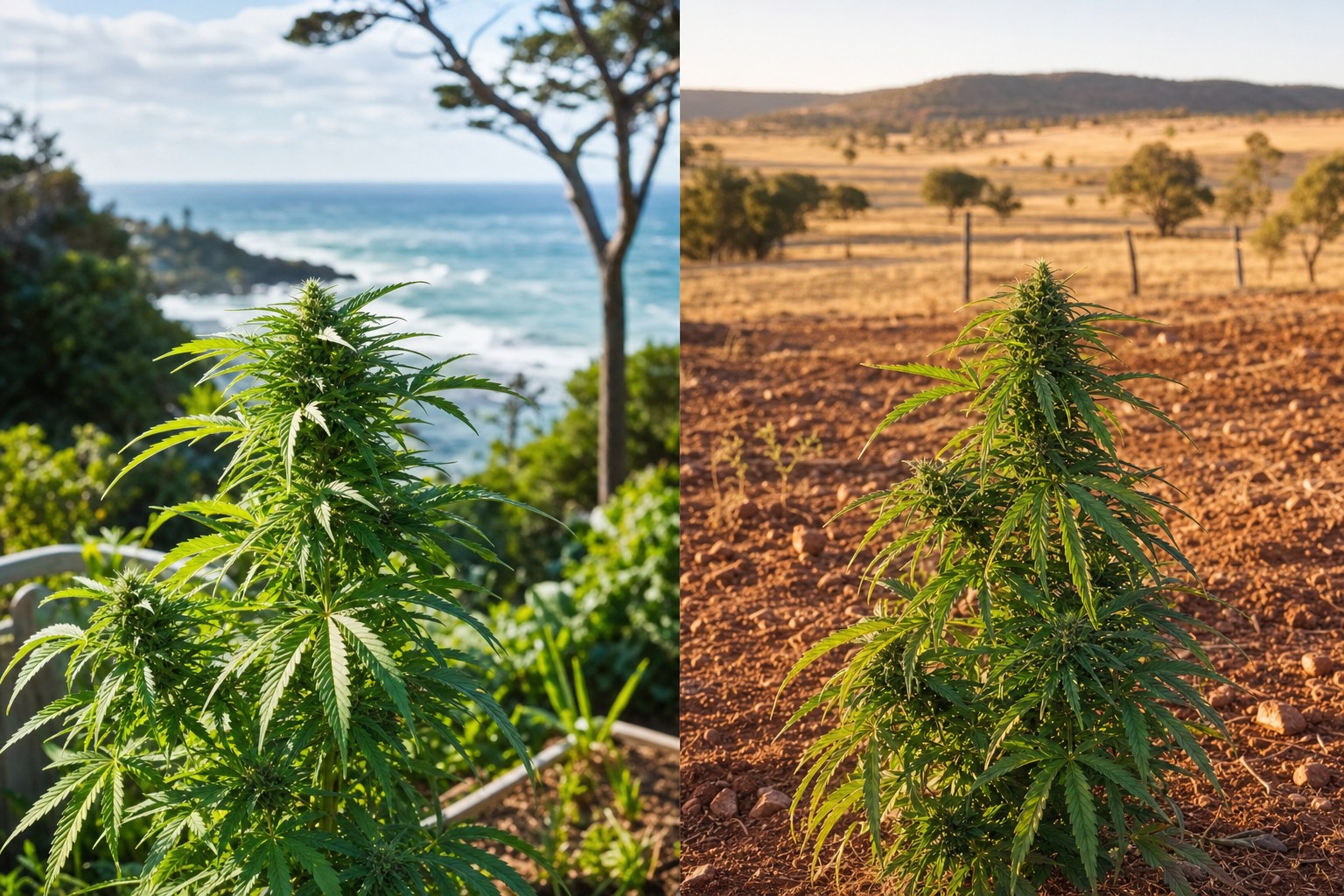
Growing weed in NSW requires location-specific planning: coastal gardens face humidity, frequent rain and salt exposure, while inland gardens encounter dry heat, rapid moisture loss and sharper temperature swings. Before planning any cannabis-related activity, independently confirm current NSW, Commonwealth and local rules. Then use local forecasts, site conditions and plant maturity—not a single statewide calendar—to guide decisions.
By the Outback Seed Bank grow team
Key takeaways
- Check the rules first: Cannabis laws and local restrictions can change and must be confirmed independently.
- Coastal NSW: Prioritise drainage, airflow, morning sun and shelter from salt-laden wind.
- Inland NSW: Plan for dependable water, intense afternoon heat, cold nights and possible late or early frosts.
- Follow conditions: Local forecasts, elevation, soil and plant maturity matter more than fixed dates.
- Choose carefully: Match seed type and growth duration to the usable warm-weather window at your site.
Growing weed in NSW: check the rules before you plan
Climate suitability does not establish whether cultivation is permitted. Before possessing seeds, germinating seeds or growing cannabis, review current state, Commonwealth and local requirements. Our guides to whether it is legal to grow cannabis in Australia and cannabis seed rules in Australia provide general background, but they are not legal advice.
Why cannabis laws and local restrictions must be checked independently
Requirements may differ according to jurisdiction, circumstances and intended activity. Planning controls, tenancy conditions, fire restrictions, water rules and property agreements may also be relevant. Check current information through official government channels and obtain qualified advice where necessary. Do not assume that advice applying elsewhere in Australia applies in NSW.
Coastal vs inland NSW growing conditions at a glance
NSW covers subtropical coastal districts, temperate tablelands, western slopes and hot semi-arid country. Even neighbouring properties can have different frost exposure, wind, drainage and shade. “Coastal” and “inland” are therefore starting points rather than precise growing zones.
Coastal NSW: humidity, rainfall, airflow and salt exposure
Coastal gardens commonly experience humid nights, regular showers and slower drying after rain. Dense vegetation, fences and buildings can further restrict airflow. Near the ocean, strong wind may carry salt and damage exposed foliage. A bright position with free drainage, morning sun and space around each plant is generally preferable to a sheltered but damp corner.
Inland NSW: dry heat, water demand, wind and temperature swings
Inland conditions often combine intense sunshine, hot winds and low humidity, causing containers and exposed soil to dry quickly. Day-to-night temperature differences can be substantial, particularly at elevation. Reliable water access, mulch, wind moderation and some protection from severe afternoon heat may be more useful than maximising all-day exposure.
Spring planning for NSW conditions
Spring is a transition rather than a fixed start date. Soil may remain cold after sunny days, and coastal storms or inland cold snaps can interrupt warming trends. The Australian cannabis planting calendar offers broad timing context, but local observations should decide whether conditions are suitable.
Coastal spring priorities: drainage, airflow and weather protection
Clear blocked drainage before extended rain arrives and avoid low points where water collects. Space plants with their expected mature size in mind, rather than their small spring footprint. Temporary shelter from driving rain can be useful if it remains open-sided and does not trap humid air. Inspect supports before exposed sites receive strong onshore wind.
Inland spring priorities: late cold snaps, warming soil and reliable water
Check historical frost patterns and current forecasts before relying on daytime warmth. Raised beds and dark containers may warm sooner, although containers also experience faster temperature and moisture changes. Establish a dependable watering system early and test its coverage. Wind protection should reduce harsh gusts without creating deep shade or stagnant air.
Managing summer conditions
Summer brings vigorous growth potential alongside NSW’s most demanding weather. Coastal storms can keep foliage wet, while inland heatwaves can rapidly exceed a site’s normal water capacity. Inspect plants and growing media regularly, adapting to actual conditions rather than following an inflexible watering timetable.
Coastal summer risks: prolonged moisture and limited airflow
Water at soil level where practical and allow enough space for air to move through the site. Avoid repeatedly soaking already-wet growing media. Remove fallen leaves and keep surrounding vegetation from crowding plants. After rain, inspect dense growth and shaded areas for persistent moisture or physical damage.
Inland summer risks: extreme heat, rapid drying and water stress
Water demand can rise sharply during consecutive hot, windy days. Mulch helps moderate surface temperature and moisture loss, but should not be packed tightly against the stem. Large containers generally change moisture more slowly than small pots. Afternoon shade cloth may reduce severe radiant heat, provided it is secure and allows ventilation.
Preparing for autumn weather and harvest timing considerations in NSW
Inland and coastal NSW differ markedly in autumn. Coastal gardens may remain humid and receive rain later into the season, while inland locations can cool rapidly overnight. Review local forecasts and plant maturity rather than relying on a fixed date. Monitoring conditions can reduce exposure to cold, rain, wind or prolonged humidity as the season changes.
Harvest readiness is a plant-specific observation, not simply a calendar event. The guide to harvest timing and trichome observation explains visual maturity indicators. Weather still matters: consider how a forecast event may affect the site, while avoiding assumptions that an early harvest or a longer wait will guarantee a particular outcome.
Autumn planning for coastal and inland NSW
Begin autumn preparation before conditions deteriorate. Check plant supports, access paths and drainage, and keep local weather alerts visible. Shorter days can make previously sunny locations more shaded as the sun angle changes.
Coastal autumn priorities: rain exposure, humidity and airflow
Coastal growers should watch sequences of wet days rather than rainfall totals alone. Repeated showers, calm nights and dense foliage can slow drying. Maintain open space around plants, inspect after storms and ensure any overhead cover sheds water safely while remaining ventilated.
Inland autumn priorities: falling night temperatures and early frost risk
Track overnight minimums closely, especially in valleys, hollows and elevated districts. Cold air settles into low areas, so two sites on one property may experience different temperatures. Keep portable containers away from frost pockets where lawful and practical, and make sure fixed sites are not exposed to cold drainage flows.
Choosing a cannabis seed type for the NSW season
Seed type affects scheduling, garden layout and how much flexibility is available when conditions change. No category guarantees performance. Genetics, seed quality, cultivation decisions and weather all influence the result. Compare general options in our guide to feminised, autoflower and regular seeds.
Feminised, autoflower and regular seed considerations
Feminised seeds are selected when growers want to minimise the likelihood of male plants. Autoflower seeds generally follow an age-driven flowering pattern and may suit shorter seasonal windows, although their compact timeline leaves less room to recover from early stress. Regular seeds can produce male or female plants and require identification and additional planning.
Matching growth duration to local seasonal constraints
Start with the usable warm period between the site’s spring cold risk and autumn weather decline. Coastal growers may favour timing that avoids the wettest late-season conditions. Inland growers may need to balance summer heat against early autumn cold. The guide to outdoor cannabis varieties for Australia outlines useful selection factors without promising a result.
Site selection checklist for coastal gardens
Drainage, morning sun and natural ventilation
- Choose ground that drains freely after heavy rain.
- Use morning sun to support earlier drying.
- Leave space between plants, walls and thick hedges.
- Avoid roof runoff points and enclosed courtyards.
- Confirm that irrigation does not keep wet soil saturated.
Shelter from strong wind and salt-laden air
Use a permeable windbreak rather than a solid barrier that creates turbulence. Observe prevailing wind before positioning plants. Farther from the ocean, salt exposure may be minor, but headlands and open coastal strips can receive strong salt-laden gusts. Supports should allow normal movement without stems rubbing against ties.
Site selection checklist for inland gardens
Dependable water access and moisture conservation
- Confirm water availability before peak summer demand.
- Check irrigation coverage and pressure during hot periods.
- Use mulch to slow evaporation from exposed soil.
- Select sufficiently large beds or containers.
- Inspect moisture below the surface rather than judging by colour alone.
Afternoon heat, exposed soil and frost pockets
A west-facing wall can intensify afternoon heat, while bare ground reflects heat towards foliage. Conversely, a low hollow may become a frost pocket in spring and autumn. Look at the site across a full day and consider how sun angle, wind and cold-air movement change through the season.
Common NSW climate-planning mistakes
Viewing the whole state as one growing zone
Advice suitable for the Northern Rivers may be poorly matched to the Monaro, Central West or far west. Elevation and distance from the coast can matter as much as latitude. Use district weather records and observations from the property itself.
Following a fixed calendar instead of local conditions
A date can prompt a review, but it cannot confirm warm soil, frost clearance or plant readiness. Before germination, understand the process through the cannabis seed germination guide, then decide whether the local growing window is suitable.
Underestimating humidity, heat or sudden weather changes
Average conditions conceal extremes. A humid week, east coast low, inland heatwave or abrupt cold change may matter more than a monthly average. Keep basic contingency plans for drainage, shade, supports and water, and review them as forecasts change.
Coast or inland: deciding which guidance fits your location
Use coastal guidance when humidity, recurring rain, restricted drying or salt-bearing wind dominate the site. Use inland guidance when water demand, dry wind, radiant heat and large temperature swings are the primary constraints. Tablelands and escarpment districts may need elements of both. For broader cultivation context, see how to grow cannabis in Australia.
Frequently asked questions about growing cannabis in NSW
When does the outdoor season begin in NSW?
There is no single NSW start date. Assess local frost history, soil warmth, daylight, rainfall and forecasts. Coastal northern districts often warm earlier than elevated or inland sites, but short-term weather can shift practical timing.
Are coastal conditions more challenging than inland conditions?
Neither is universally easier. Coastal sites often require stronger humidity, drainage and airflow planning. Inland sites usually need greater attention to water reliability, heat, wind and frost. The better setting is the one whose constraints can be managed responsibly.
How should NSW growers respond to an unusually wet or hot spring?
Reassess rather than relying on the original calendar. In wet weather, prioritise drainage, spacing and ventilation. During unusual heat, check moisture more often, moderate harsh afternoon exposure and avoid unnecessary disturbance. Follow short-range local forecasts.
Where can readers check current cannabis laws in NSW?
Review current NSW and Commonwealth government information and any relevant local requirements. Rules should be checked independently before possessing seeds, germinating or cultivating cannabis. This article provides general climate information only, not legal advice or a guarantee of cultivation outcomes.