

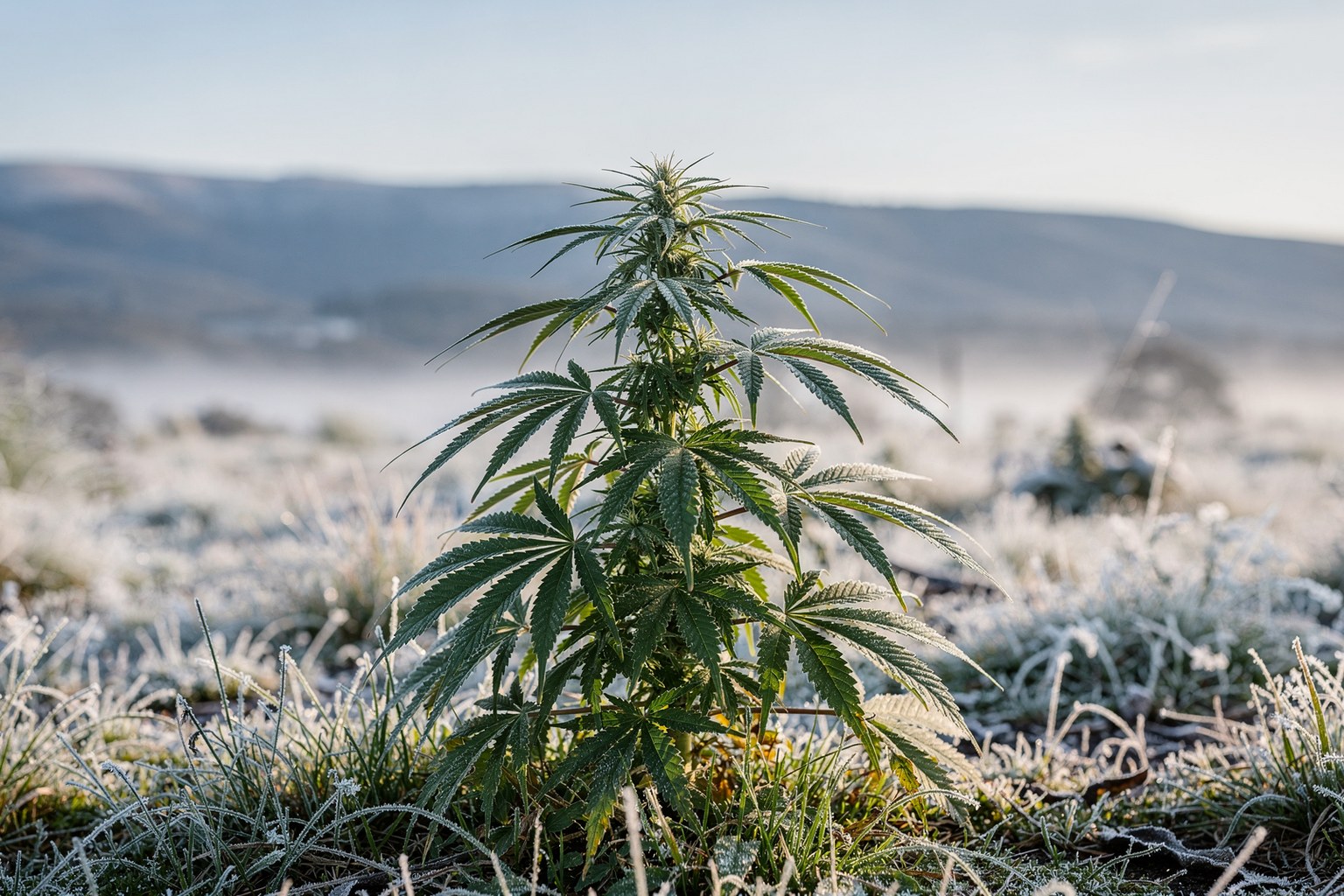
The best strains for Victoria and Tasmania are varieties that finish flowering early, tolerate cool nights and resist damp autumn weather. Quick indica-leaning types such as Northern Lights, Critical and Hindu Kush, along with compact autoflowers, are popular choices because they complete their cycle before the cold, wet end of the season arrives.
By the Outback Seed Bank grow team.
Key takeaways
- Finishing time is the priority: In cool regions, a variety that ripens early is more valuable than one with impressive size potential.
- Dense flowers need dry air: Compact structure is useful, but very dense flowers can struggle in damp autumn conditions.
- Indica-leaning genetics often suit: Many varieties with Afghan or Hindu Kush ancestry developed in mountain climates with short seasons.
- Autoflowers sidestep day length: Their age-based flowering lets them finish within the warmest part of summer.
- Local microclimate matters: A sheltered, sunny garden in Hobart behaves very differently from an exposed site in the Victorian high country.
What a cool Australian climate means for cannabis
Most of Australia is known for heat, but the south-east corner and Tasmania have a distinctly cooler climate. Melbourne, Ballarat, Bendigo and the Victorian high country experience cool springs, warm but variable summers and autumns that can turn cold and wet quickly. Tasmania is cooler again, with a shorter frost-free period in many districts and frequent rain on the west coast.
For cannabis, these conditions create two challenges. First, the frost-free season is shorter, so plants have less time to grow and flower. Second, autumn brings cooler nights, heavier dews and rain, just as many photoperiod varieties are building their flowers. Plants that are still flowering in late autumn face a higher risk of mould and slowed ripening.
Our regional guides to growing in Victoria and growing in Tasmania describe these seasons in detail. This article focuses on the varieties that tend to cope best with them.
Traits that matter in a short southern season
When comparing varieties for a cool climate, a few characteristics matter more than headline claims about size or strength.
- Flowering time: Shorter flowering periods mean harvest arrives before the worst of the autumn weather. Catalogue descriptions usually list an indoor flowering range in weeks, which gives a useful comparison between varieties even though outdoor timing varies.
- Structure: Moderately open plants with good airflow between branches dry out faster after rain than very bushy ones.
- Cold tolerance: Some varieties develop purple tints and keep ripening steadily when nights are cool, while others stall.
- Mould resilience: No variety is immune, but some have a reputation for coping better with humid conditions. It is worth regarding such reputations as tendencies rather than guarantees.
- Plant size: Medium-sized plants are easier to shelter, cover or move than towering ones when the weather turns.
Quick-finishing indica-leaning varieties
Varieties with Afghan and Hindu Kush ancestry descend from plants that evolved in mountainous regions with short growing seasons, cold nights and significant temperature swings. That heritage makes them natural candidates for southern Australian gardens.
Northern Lights
Northern Lights is one of the best-known indica-leaning varieties in the world. It is valued for compact, sturdy growth and a relatively short flowering period. Its manageable size suits small Melbourne courtyards and suburban backyards, and its long history means a great deal of grower experience exists for it.
Critical
Critical is known for finishing quickly and producing generously for its size. It is often listed as beginner-friendly, and its fast finish is an obvious advantage in regions where autumn rain is a concern. Like most productive varieties, its dense flowers benefit from good airflow late in the season.
Hindu Kush
Hindu Kush takes its name from the mountain range between Afghanistan and Pakistan. It is generally compact, with broad leaves and a resinous character. Its mountain origins make it a fitting choice for cooler districts, and it is often described as straightforward to grow.
Hardy hybrids with a long cool-climate history
Many hybrids bred in northern Europe were developed with cool, damp summers in mind. Varieties built on Skunk and Afghan genetics were refined for exactly the kind of short seasons found in Tasmania and southern Victoria.
When reading catalogue descriptions, look for wording such as suitable for temperate or cool climates, short flowering and medium height. These descriptions indicate that a variety was selected for conditions closer to southern Australia than to the tropics. Long-flowering sativa-dominant varieties, by contrast, are usually better suited to Queensland or the Northern Territory, where autumn remains warm.
Cheese-type and Skunk-type varieties
Varieties in the Cheese and Skunk families have a long track record in cool, damp regions of Europe. Their pungent aroma is distinctive, and many of them finish in a reasonable time for southern Australian gardens. They are worth considering for growers who prefer photoperiod plants but still need a manageable season.
Autoflowers for the shortest seasons
Autoflowering varieties begin flowering according to age rather than day length. This allows them to be sown once the soil has warmed and harvested within the warmest part of summer, avoiding the cold, wet weeks of late autumn entirely. In Tasmania and the Victorian high country, this can be a decisive advantage.
Blue Cheese Auto
Blue Cheese Auto combines the familiar Cheese aroma with fruity notes and a compact, autoflowering habit. Its modest height makes it easy to grow in containers that can be moved under cover during storms.
Northern Lights Auto
Northern Lights Auto carries the classic Northern Lights character into an autoflowering form. It suits growers who want a well-known variety but cannot rely on a long season.
Some growers in warmer parts of Victoria even fit two autoflower cycles into one summer. Our article on autoflowers and two harvests in one summer explains how that timing works and where it is realistic.
Matching a variety to Victorian and Tasmanian conditions
Choosing a variety is easier when it is matched to a specific site rather than to a whole state.
Melbourne and the bay suburbs
The urban heat of Melbourne and the moderating influence of Port Phillip Bay give inner suburbs a slightly longer season than surrounding areas. Quick photoperiod varieties such as Critical or Northern Lights can finish before the weather breaks in many years, especially in sheltered, north-facing gardens.
Gippsland, the Dandenongs and the high country
Higher rainfall, cooler nights and earlier autumn weather make autoflowers and the fastest photoperiod varieties the safer choices. Good airflow and a sunny position matter even more here.
Northern Victoria
Inland areas such as Bendigo, Shepparton and Mildura have hotter, drier summers. A wider range of varieties is possible, although frost can still arrive early in some years.
Tasmania
The east coast and the Tamar Valley are drier and sunnier than the west and south-west. Autoflowers are a popular choice across the state, and compact indica-leaning photoperiod varieties suit sheltered gardens around Hobart and Launceston.
Late-season considerations in cool districts
Even with a quick-finishing variety, the last few weeks before harvest are when cool-climate gardens face the most pressure. Shorter days, heavier dews and the first autumn fronts all arrive together. A few general principles help plants reach the finish line.
- Airflow around flowers: Removing a few large, shading leaves from the interior of the plant and keeping surrounding vegetation low helps flowers dry after rain or dew.
- Temporary cover: A simple frame with clear plastic sheeting over the top, open at the sides, keeps rain off flowers without trapping humid air.
- Moving containers: Plants in pots can spend wet nights under a carport or veranda and return to full sun in the morning.
- Regular checks: Looking inside the densest flowers every few days makes it possible to spot grey mould early, before it spreads.
Reading catalogue descriptions sensibly
Seed descriptions often include flowering times, height ranges and climate suitability. These figures are useful for comparing one variety with another, but they come from particular conditions and should be read as guidance rather than promises. A variety listed as finishing in eight weeks indoors may take somewhat longer outdoors in a cool Tasmanian autumn, when temperatures and light levels are lower. Comparing several varieties on the same basis, and favouring those described as suitable for temperate or cool climates, is a more reliable approach than chasing the largest yield figure.
Keeping simple notes from one season to the next is also worthwhile. Recording sowing dates, flowering onset and harvest dates for each variety quickly shows which ones suit a particular garden, and that local knowledge becomes more valuable every year.
Regional notes
In southern Australia, spring runs from September to November, and the soil warms gradually through these months. Cool-climate gardeners often wait until the soil has warmed properly before planting out, because young plants in cold soil grow slowly. Once summer arrives, the focus shifts to keeping plants healthy and well ventilated so that flowers can ripen before the first cold autumn rains. Choosing a quick-finishing variety from the start makes this timing far easier.