

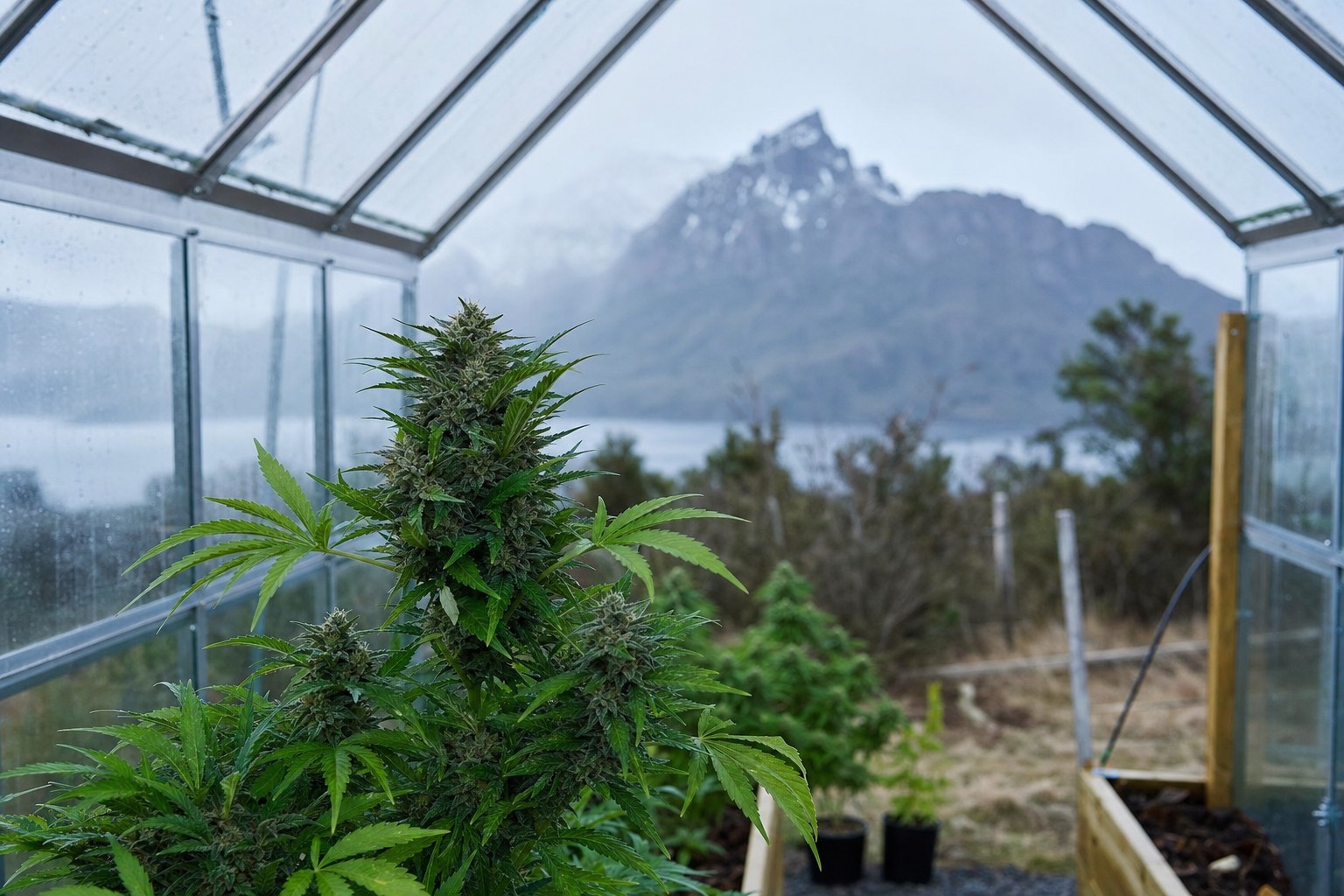
Growing cannabis in Tasmania requires careful timing, a sheltered site and close attention to cold snaps, wind and autumn moisture. The most workable outdoor period generally runs from spring into early autumn, but conditions vary sharply by elevation and region. Always confirm current Tasmanian and Commonwealth requirements before possessing seeds or undertaking cultivation.
Key takeaways
- Tasmania has a shorter, cooler outdoor season than most mainland regions.
- Late spring cold, strong wind and increasing autumn moisture can narrow the useful growing window.
- Long summer daylight can support vegetative growth, but sunshine does not guarantee warm nights.
- Hobart, inland valleys and the north-west coast have distinct temperature, rainfall and humidity patterns.
- A small greenhouse or sheltered structure may provide greater environmental control, provided airflow and heat are managed.
- Anyone considering cultivation must first understand the current laws applying to their location and circumstances.
Growing cannabis in Tasmania: climate and legal context
Growing cannabis in Tasmania is primarily a question of whether a plant can complete its seasonal development before cool, damp autumn weather becomes persistent. Tasmania’s southern latitude delivers long summer days, but it also brings cool nights, variable spring conditions and an earlier autumn slowdown than many mainland growers expect.
The island should not be viewed as one uniform climate zone. Coastal exposure, elevation, slope, frost pockets and distance from Bass Strait or the Southern Ocean can create major differences over relatively short distances. A protected suburban courtyard in Hobart may behave very differently from an exposed rural block at the same latitude.
General Australian planning principles are covered in the Australian cannabis growing guide. Tasmania still requires a more conservative calendar, with extra allowance for delayed spring warmth and rapidly changing conditions near the end of summer.
Check current Tasmanian and Commonwealth requirements before taking any action
Cannabis laws and regulatory requirements can differ according to jurisdiction, licence status, purpose and specific circumstances. Do not assume that private property, a small plant count, possession of seeds or personal intentions make cultivation lawful. Check current Tasmanian legislation and applicable Commonwealth requirements before acquiring seeds, germinating them or preparing a cultivation space.
Rules can change, and informal online discussion is not a substitute for current official information or qualified legal advice. Consider possession, cultivation, access, electrical work, structures, water use and any lease or body corporate conditions relevant to the site. This article provides general climate and horticultural information only. It does not confirm that cultivation is permitted in any particular situation.
Why Tasmania’s latitude, elevation and local microclimates matter
Tasmania sits at a more southerly latitude than Australia’s major mainland growing regions. Summer brings long daylight hours, yet average temperatures remain comparatively mild. Plant development may slow when nights are cold, even after bright and pleasant days. At higher elevations, this difference becomes more pronounced, with colder air, stronger exposure and a shorter frost-free period.
Microclimates can either extend or compress the practical season. A north-facing position, which receives stronger sun in the southern hemisphere, may warm earlier in spring and retain useful light later in the year. A low hollow can collect cold air overnight, while a nearby slope remains several degrees warmer. Walls, fences and dense vegetation may provide wind protection, although excessive enclosure can restrict air movement.
Observe a prospective site across several weeks rather than judging it on one sunny afternoon. Record direct sun, overnight minimum temperatures, prevailing wind and how long foliage stays wet after rain. The broader Australian climate regions guide provides context for comparing cool-temperate areas with warmer parts of the country.
Understanding Tasmania’s short outdoor season
Calendar dates are only a framework. Conditions in any year may arrive earlier or later, and inland or elevated sites can differ substantially from the coast. For outdoor planning, use local observations and weather records alongside the seasonal outline below. Keep decisions flexible rather than forcing a fixed mainland schedule onto a Tasmanian site.
Spring, September–November: variable temperatures and late cold snaps
September often remains too unsettled for exposed outdoor growth. Cold soil, strong fronts, hail and frost are possible in many districts. Even where daytime sunshine feels warm, overnight temperatures can fall quickly. Early starts therefore need environmental protection and careful monitoring rather than reliance on the calendar alone.
October usually offers increasing daylight, but conditions can still swing between mild afternoons and cold, wet periods. A compact greenhouse, cold frame or bright sheltered space may buffer wind and rain. Ventilation is important whenever sunlight raises the internal temperature. Enclosed structures can become hot during the day and then cool sharply after sunset.
November is generally more dependable, although late cold snaps remain possible. Before any lawful germination activity, read the seed germination guide and assess whether the intended environment can provide stable warmth. Moving a young plant abruptly from a protected setting to an exposed site can cause stress. Gradual adjustment to direct sun, wind and cooler nights is the more conservative approach.
Summer, December–February: long daylight hours and changing coastal conditions
December and January provide Tasmania’s strongest combination of day length and warmth. These months are the core outdoor growth period in many lower-elevation districts. A sunny north-facing position can make good use of the long days, but containers and greenhouse spaces still require regular checks because Tasmanian weather can change quickly.
Wind deserves particular attention. Strong westerly flows and coastal gusts can dry containers unevenly, move branches repeatedly and lower the temperature around exposed plants. Wind-permeable screening is often more useful than a completely solid barrier, which can create turbulence. Stable supports should be installed without damaging roots, and lightweight pots should be secured against movement.
Greenhouses offer shelter from direct rainfall, but they do not remove the need for airflow. Open vents or doors when conditions allow, monitor temperatures at plant height and avoid packing foliage tightly against walls. Water according to the root zone rather than a fixed timetable. Cool, cloudy periods usually mean slower moisture use than bright, windy days.
Outdoor conditions in Victoria share some cool-temperate planning issues, so the guide to growing cannabis in Victoria offers a useful mainland comparison. Tasmania typically demands even closer attention to cool nights and the timing of autumn weather.
Autumn, March–May: falling temperatures and increasing moisture
March can remain mild, especially in sheltered parts of the south-east, but daylight shortens quickly and nights become colder. Morning dew may persist longer on leaves and flowers. This combination of dense growth, cool air and extended surface moisture increases environmental pressure, particularly where airflow is weak.
Spacing, shelter from prolonged rain and removal of dead plant material can reduce risk. Inspect sheltered inner growth after wet nights rather than looking only at the exterior. A greenhouse should remain ventilated whenever weather permits because closing every opening can trap humid air. Water early enough for surface moisture to dissipate before evening, while still responding to actual root-zone needs.
April becomes increasingly uncertain. Frost risk rises inland and at elevation, while coastal districts may experience repeated damp weather. Photoperiod plants that finish late can be poorly matched to this narrowing window. Fast seasonal selections may be considered by people who are legally authorised, but labels and broad category descriptions are not performance guarantees.
Visual readiness also varies between plants and environments. The trichome observation guide explains general signs used when assessing plant maturity. Do not rely on an advertised number of weeks without also considering actual development and forecast conditions.
By May, outdoor suitability is limited across much of Tasmania. Cold nights, short days and persistent moisture commonly make continued exposed growth impractical. Waiting for an arbitrary calendar date can add weather exposure without delivering equivalent development.
Winter, June–August: cold conditions and limited outdoor suitability
Winter is generally unsuitable for normal outdoor cannabis growth in Tasmania. Short daylight hours, low sun angles, frequent cold conditions and frost restrict development. Elevated and inland areas face particularly severe limitations, while coastal moderation does not provide summer-like light or warmth.
Winter is better used for lawful planning and site assessment. Track where sunlight reaches in June compared with summer, identify drainage problems, inspect wind exposure and repair any permitted garden structures. Clean equipment, assess electrical safety through appropriately qualified professionals and review water storage before spring demand begins.
Indoor cultivation is not automatically lawful, and it can introduce electrical, heat, humidity and fire hazards. No lighting or climate-control system should be installed without checking legal requirements, equipment specifications and safe electrical capacity. A greenhouse also remains subject to planning, property and access considerations.
Regional climate differences across Tasmania
Regional notes help refine the statewide calendar, but individual blocks still need direct observation. Elevation, slope and shelter can outweigh distance between towns. Compare nearby weather stations where possible, giving preference to locations with similar altitude and exposure.
Hobart and the drier south-east
Hobart and parts of the south-east are relatively dry by Tasmanian standards. Lower rainfall can make outdoor planning more manageable, particularly in sheltered positions, but dry does not always mean warm. Cool nights, intense wind and rapid weather changes remain important constraints.
North-facing slopes and courtyards may capture useful warmth. Rain shadows can reduce prolonged wet periods, yet containers may dry quickly under strong wind. Check moisture below the surface before watering and maintain drainage so sudden rain does not leave roots saturated. Mulch can moderate surface fluctuations, provided it is not piled against the stem.
Autumn may remain workable longer here than in wetter western districts, but local exposure matters. Sites near hills or low basins can experience colder overnight conditions. The guide to South Australian cultivation conditions provides a contrast with drier mainland climates, although Tasmania’s cooler nights and shorter warm season remain decisive differences.
Launceston, the Tamar Valley and inland temperature swings
Launceston and the Tamar Valley can experience warm summer afternoons alongside cool nights. Inland sites may also face stronger frost risk in spring and autumn than exposed coastal locations. Cold air settles in low areas, making small changes in elevation surprisingly important.
A site partway up a north-facing slope may offer better cold-air drainage than the valley floor. Watch for fog and dew persistence, particularly where surrounding vegetation limits airflow. Sheltered does not need to mean sealed: a location should reduce harsh wind while allowing damp air to move away.
Spring patience is especially valuable inland. A run of warm days does not necessarily mark the end of frost risk. Monitor overnight forecasts and soil conditions, and keep protection practical if lawful plants are moved outdoors. In autumn, use local minimum temperatures and moisture patterns to guide decisions rather than assuming conditions match Hobart.
The north-west coast
The north-west coast is strongly influenced by Bass Strait. Temperatures may be more moderate than inland districts, with fewer extreme swings in some exposed coastal areas, but cloud, wind, rainfall and humidity can be more persistent. Productive soils do not remove the challenges created by extended leaf wetness and reduced sunshine.
Choose the sunniest available lawful site with reliable drainage and wind protection. Raised containers or beds may help where ground remains wet, but containers are also more exposed to temperature variation and wind. Avoid crowding, keep foliage away from greenhouse walls and maintain clear air paths through any enclosure.
Summer conditions can still support strong growth when light and warmth align. The key is not to confuse mild coastal temperatures with a long finishing season. As autumn approaches, repeated damp periods can arrive while plants are still developing. Conservative timing and regular observation are therefore more valuable than seeking maximum plant size.
Across Tasmania, the most resilient approach is to plan around the local frost-free window, prioritise shelter without sacrificing ventilation and reassess conditions throughout the season. Long summer days are an advantage, but success depends on fitting the plant’s full cycle inside a cool, changeable climate rather than relying on daylight alone.