

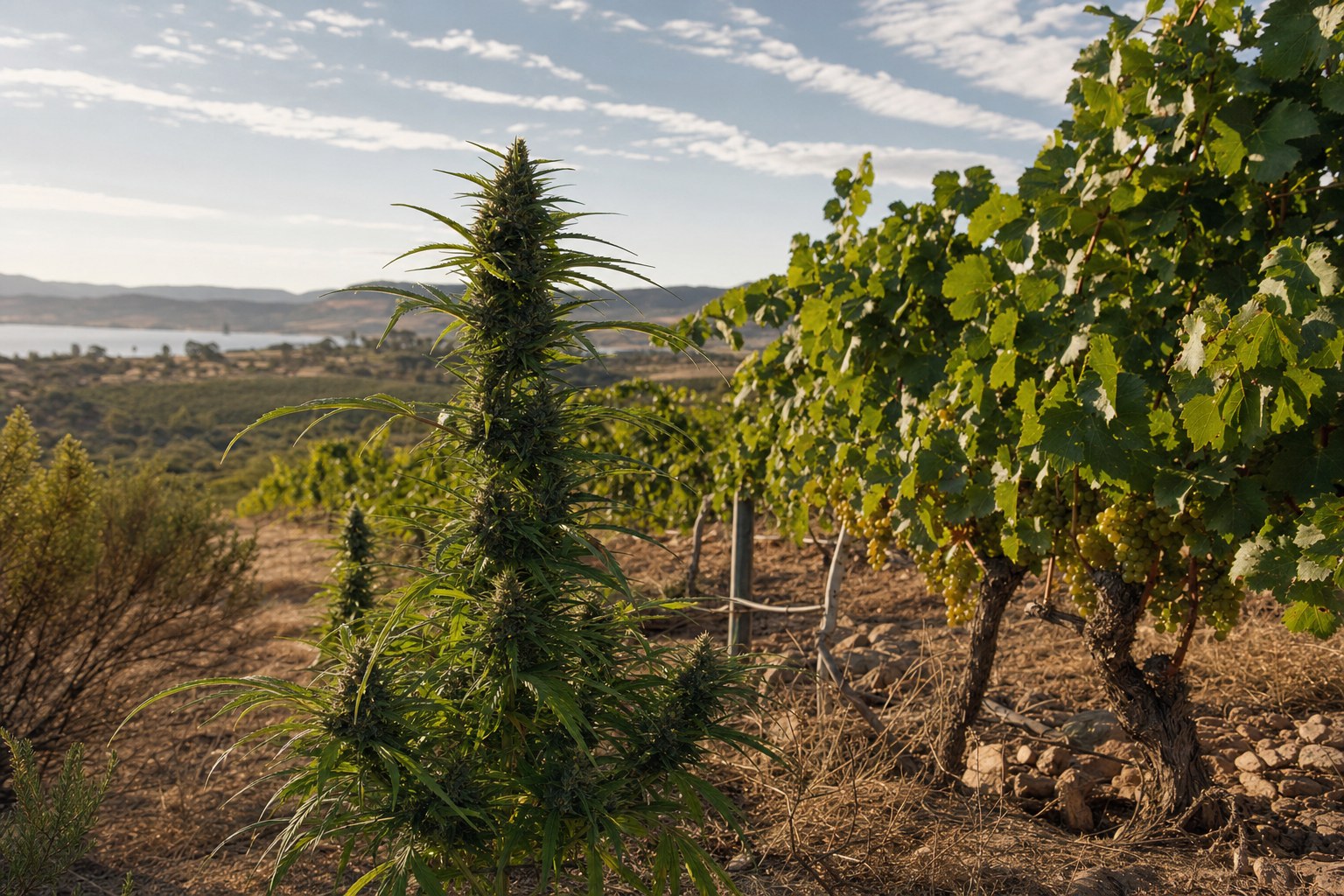
For people researching growing weed Adelaide, the central horticultural issue is South Australia’s Mediterranean-type climate: hot, dry summers, cooler wetter winters and a variable spring. Climate suitability does not mean cultivation is lawful. Always check current South Australian and Commonwealth requirements, and do not cultivate cannabis unless you are legally authorised.
By the Outback Seed Bank grow team. This article provides general educational information rather than legal, medical or professional horticultural advice.
Key takeaways
- Adelaide generally has hot, dry summers from December to February and cooler, wetter winters from June to August.
- Spring runs from September to November, but warmth, rainfall, wind and frost exposure can vary considerably by location and year.
- Drying winds, intense sunlight and low summer humidity can increase moisture stress in exposed gardens.
- Coastal influence, hills, dense suburbs and inland districts can create noticeably different local conditions.
- Climate observations never establish legal permission. Check current laws and licence conditions before acquiring seeds, germinating them or cultivating cannabis.
Growing weed in Adelaide: legal context and responsible research
Searches for growing weed Adelaide often combine climate questions with uncertainty about the law. Those are separate issues. A site may appear horticulturally suitable while cultivation remains prohibited without appropriate authorisation. South Australian and Commonwealth requirements can also change, so overseas articles, old forum posts and assumptions based on another state are not reliable substitutes for current official information.
Before taking any action, confirm the rules that apply to possession, seed acquisition, germination and cultivation. We cannot provide legal advice or determine whether an individual qualifies for an exemption, approval or licence. Seek independent legal advice if your obligations are unclear. Where cultivation is not expressly lawful and authorised, use this article only as general information about South Australian weather and garden microclimates.
If you are legally authorised, follow every applicable licence condition, safety requirement, water rule, fire restriction and local limitation. Keep seeds and related items secure and out of reach of children and pets. Respect neighbours, property boundaries and biosecurity obligations. Never use prohibited pesticides, and handle tools, electrical equipment and garden structures safely.
Our general Australian cannabis growing overview adds national seasonal context, but it does not establish what is lawful in South Australia. Check the law before applying any cultivation information.
Understanding South Australia’s Mediterranean conditions
Adelaide is commonly associated with a Mediterranean-type seasonal pattern, but that broad description does not capture every garden. Coastal suburbs may experience moderating sea influence, while exposed hills can be windy and inland sites may face wider temperature swings. Built-up areas, walls, paving, slope direction, vegetation and elevation can create further differences over short distances.
Regional South Australia is even more varied. Conditions on an exposed hilltop near Adelaide are not interchangeable with those in a sheltered metropolitan courtyard or an inland district. Bureau of Meteorology observations for the relevant location can provide useful historical and current weather context. Even then, past averages do not guarantee a particular season or outcome.
Hot, dry summers from December to February
Summer in South Australia runs from December to February. Adelaide can experience prolonged dry conditions, intense sunlight, hot northerly airflow and episodes of extreme heat. Plants in exposed positions may lose moisture quickly through both foliage and growing media. Containers can heat and dry faster than surrounding ground, particularly when placed beside reflective walls, metal fencing, paving or bare soil.
Heat does not act alone. Wind can accelerate moisture loss, while reflected sunlight can raise local stress beyond what a general forecast suggests. A sheltered position may remain calmer but can also retain heat if airflow is poor. Any authorised horticultural assessment should therefore consider sun exposure, air movement, reflective surfaces and the way a site behaves during the hottest part of the day.
Summer also brings bushfire weather and possible water restrictions. Lawful garden planning must never conflict with emergency directions, total fire bans or water rules. Avoid garden work during dangerous heat, use suitable sun protection and secure loose structures before severe weather.
Cooler, wetter winters from June to August
Winter runs from June to August. Around Adelaide, this period is generally cooler and wetter than summer, with shorter daylight hours and more frequent overcast conditions. Rainfall can leave poorly drained areas wet for longer, while cool nights may slow evaporation. Exposed hills and inland districts can feel substantially colder than sheltered coastal or inner-suburban sites.
Low-lying locations may collect cold air, and frost risk can differ between nearby properties. Dampness can also persist around dense vegetation, solid fences and shaded walls. These features matter to general garden health because cold, wet and stagnant conditions can place pressure on roots and foliage. Winter observations can be useful when mapping drainage, frost pockets and sheltered zones for any future lawful horticultural use.
Spring conditions from September to November
Spring in South Australia runs from September to November. It is a transition rather than a fixed block of mild weather. Early spring may retain cool nights and periods of rain, while late spring can introduce hot days, stronger drying winds and rapidly increasing sunlight. Severe storms or abrupt temperature changes are also possible.
For authorised growers, spring is best approached as an observation period rather than a guaranteed planting signal. Calendar dates alone cannot confirm that a location has warmed, that frost exposure has passed or that water demand will remain stable. Current forecasts, local records and direct site observations provide a more grounded picture than generic timing claims.
Autumn conditions from March to May
Autumn runs from March to May. Early autumn may continue summer-like heat and dryness, while later weeks can bring cooler nights, rain and shorter days. The speed of this transition varies between years and regions. Coastal influence may soften some temperature shifts, whereas inland areas can cool more sharply after sunset.
Late-season rain, dew and reduced evaporation can alter moisture conditions around dense foliage. At the same time, warm spells may continue to dry exposed containers or shallow soils. This overlap makes routine observation important in any lawful garden. A fixed assumption that autumn is uniformly cool or wet can obscure meaningful short-term changes.
How Adelaide’s climate can affect cannabis plants
Cannabis responds to its immediate environment rather than a city-wide climate label. Heat, light, wind, humidity, root-zone conditions and day length interact. A sheltered coastal garden and a dry hilltop plot can produce very different environmental pressures, even when both are described as being in greater Adelaide.
Heat, intense sunlight and drying winds
Intense sunlight supports plant growth, but sudden exposure or extreme heat may place plants under stress. Hot winds can increase water loss and cause growing media to dry unevenly. Physical barriers may moderate direct wind, although solid barriers can create turbulence or restrict airflow. Any structural change should comply with property, safety and licence requirements.
Visual observations can help identify environmental pressure without promising a particular result. Persistent wilting during heat, scorched-looking leaf areas or rapidly drying containers may indicate that a site is especially exposed. Similar symptoms can have multiple causes, however, so one sign should not be treated as proof of a single issue.
Low humidity and rapid moisture loss
Adelaide’s dry summer air can increase evaporation from containers and exposed soil. Growing media composition, container material, plant size, wind and shade all influence how quickly moisture changes. This is why a universal watering timetable is unsuitable: it may be excessive for one site and inadequate for another.
Where cultivation is authorised, moisture should be assessed according to actual site conditions rather than a rigid calendar. Drainage remains relevant even in a dry climate because repeated irrigation in poorly draining media can leave roots wet. Conversely, small or heat-exposed containers may shift from moist to dry quickly. No watering volume or frequency can be responsibly specified without verified details about the plant, medium, weather and legal growing system.
Cool nights, rain and seasonal variability
Cool nights can change the rate at which water leaves the growing environment. Rain may be welcome after a dry period, yet repeated rainfall can increase dampness in shaded or poorly ventilated spaces. Strong temperature differences between day and night can also create condensation on some surfaces.
Year-to-year variability deserves particular attention. One spring may warm steadily, while another may include late cold snaps, heavy rain or early heat. The same applies to autumn, when a dry extension of summer can be followed by an abrupt cool change. Flexible observation is therefore more useful than assuming the previous year will repeat.
Planning around South Australia’s spring
For lawful and authorised cultivation, planning between September and November should begin with site assessment, not an unsupported planting date. Record when direct sunlight reaches the area, how long surfaces retain heat, where wind accelerates and where rainwater collects. Revisit observations at different times of day because a position that looks sheltered in the morning may be exposed later.
General information about cannabis seed germination does not override South Australian law. Germination itself may be restricted, so confirm authorisation before acting. Likewise, discussions of harvest observations and trichomes are educational only and do not imply permission or a predictable harvest window.
Assessing sunlight, exposure and local microclimates
A basic microclimate review can consider slope direction, nearby buildings, large trees, fencing, paving and elevation. North- and west-facing surfaces may receive strong afternoon sun, while south-facing or enclosed spaces can remain cooler and shaded. Hilltop sites may have broad sun exposure but stronger wind. Valleys and low points may collect cooler air at night.
Look beyond the proposed plant position. A metal fence can radiate heat, a masonry wall can store warmth after sunset and an overhanging tree can alter both light and rain exposure. Coastal air, local topography and urban development can all modify the wider forecast. These observations cannot guarantee performance, but they can reveal whether generic Adelaide guidance fits the specific property.
If containers, screens or other equipment are lawful under the relevant authorisation, they should be stable and safely positioned. Do not block access routes, drainage paths or firefighting infrastructure. Consider the effect of wind on lightweight items and follow restrictions during storms or bushfire conditions.
Regional notes for South Australia
Adelaide Plains and coastal suburbs
Locations closer to the coast may experience sea breezes and somewhat moderated temperatures, but exposure differs street by street. Salt-laden wind, open aspects and sandy soils can create distinct garden conditions. Dense development may also produce pockets of stored heat around masonry, roofs and paving.
Adelaide Hills and elevated sites
Elevation can bring cooler nights, stronger wind and greater variation between slopes and valleys. Frost exposure may be more relevant in some inland or low-lying pockets. A sunny hill position can still become dry and windswept, so the label “cooler hills” should not be interpreted as consistently damp or sheltered.
Inland and northern districts
Inland locations may experience hotter daytime conditions, lower humidity and larger temperature swings than coastal Adelaide. Water availability and restrictions may be especially important during dry periods. Regional forecasts and observations should be used rather than extending metropolitan assumptions across the state.
Australian regional guides can provide comparison, but conditions and laws are not interchangeable. Our climate overviews for Victoria, New South Wales, Queensland and Western Australia should be read only as regional context. Always verify the law for the jurisdiction where you are located.
A cautious spring research calendar
September: observe the transition
Review winter drainage, cold-air pockets and morning shade. Compare local observations with current forecasts and note whether exposed areas remain wet, windy or cool. Do not assume the first warm days signal settled spring conditions.
October: reassess changing exposure
As daylight and solar intensity increase, check how walls, fences and paving affect afternoon heat. Observe whether vegetation changes airflow or creates damp shaded areas. Continue monitoring cold nights, rain events and strong winds rather than relying on monthly averages.
November: prepare for summer pressure
Late spring may begin to resemble summer. Review heat exposure, water rules, bushfire readiness and the stability of lawful garden equipment. Make no assumption that mild October conditions will continue into December. Extreme weather directions and personal safety must take priority over garden activity.
Final perspective
Growing weed Adelaide is best understood as both a legal research question and a climate question. South Australia’s Mediterranean pattern can involve intense summer heat, dry air, variable spring weather and cool, wetter winters, but every site behaves differently. Coastal influence, hills, inland exposure and built surfaces can all reshape local conditions.
No climate description guarantees a cultivation outcome or grants permission. Before acquiring seeds, germinating them or cultivating cannabis, check current South Australian and Commonwealth rules and obtain independent advice where needed. If you are not legally authorised, do not cultivate; use these seasonal notes only as general horticultural information.